


For non-emergencies use our contact form
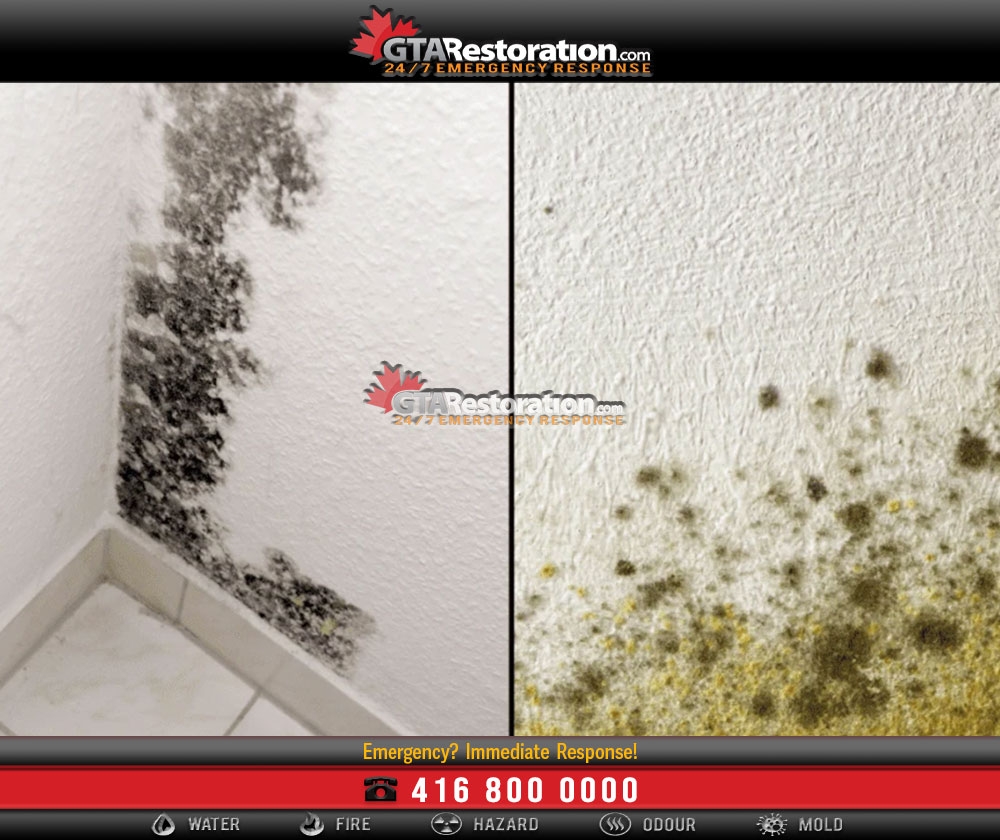
What Is the Difference Between Mold and Mildew?
The difference between mold and mildew can be hard to see. Both names describe types of fungal growth. They often appear in wet areas of a home.
Mold may look like dark, green, or white patches. People often use the word mildew for light, flat growth on damp surfaces. However, colour alone cannot tell you which type of fungus is present.
Both can signal a moisture problem. For this reason, it is best to find the water source and deal with the growth.
GTA Restoration helps homeowners in Toronto and the GTA with mold and mildew contamination. Our team can check wet areas, find hidden moisture, and plan safe cleanup.
Mold vs Mildew: How to Tell the Difference
What Does Mold Look Like?
Mold can grow in many colours. You may see black, green, white, or grey patches. Some growth looks fuzzy, while other spots look flat.
Common places to find mold include:
- Wet drywall and ceilings
- Basements with damp walls
- Areas near leaking pipes
- Carpets and wood floors
- Bathrooms with poor airflow
- Places affected by floods
Mold can also hide behind walls or under floors. As a result, you may notice a musty smell before you see any growth.
What Does Mildew Look Like?
People often call light growth on damp surfaces mildew. It may look like a flat white or grey film. You may also notice it around showers or window frames.
However, mildew is not a sure way to name a fungus by sight. The term can also refer to fungi that grow on plants.
For indoor cleanup, the key issue is moisture. Any visible fungal growth needs attention, no matter what you call it.
Where Do Mold and Mildew Grow?
Both grow where moisture stays too long. Poor airflow can also make damp areas worse.
For example, a bathroom without a working fan may stay wet after a shower. A basement with a slow leak may also develop mold.
Finding the source is an important part of mold and mildew removal.
Health Risks of Mold and Mildew Contamination
Can Mold Affect Your Health?
Indoor mold can cause health problems for some people. It may lead to a runny nose, coughing, or itchy eyes. It can also make asthma symptoms worse.
Children, older adults, and people with allergies or asthma may be more sensitive.
However, a dark colour does not prove that mold is toxic. You cannot judge the health risk by colour alone.
Is Mildew Less Harmful Than Mold?
People often think mildew is always safe. However, this is not a good rule.
Any indoor fungal growth may affect sensitive people. In addition, visible growth often means the area has too much moisture.
Rather than trying to judge the risk by colour, find the cause and clean the area safely.
Health Canada advises homeowners to deal with visible mold and fix damp conditions. Read its guide to moisture and mold in the home.
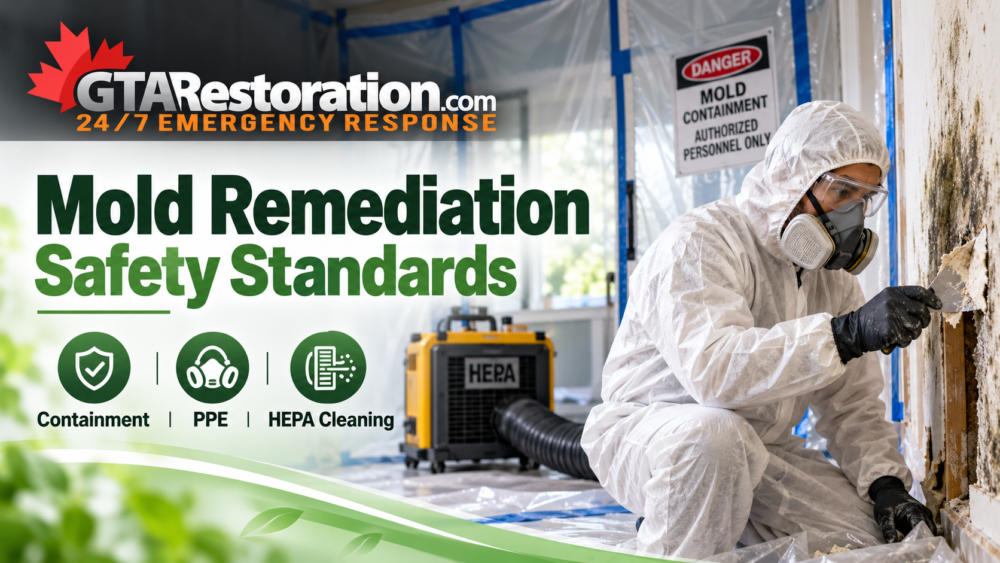
How to Remove Mold and Mildew Safely
Clean Small Areas With Care
Some small mold patches on hard surfaces may be easy to clean. First, fix the leak or moisture problem.
Next, use water and dish soap to clean the surface. Wear gloves, eye protection, and a suitable mask when needed.
Health Canada advises that bleach is not needed for normal small-area mold cleanup.
However, do not scrub large mold patches without the right safety steps. Cleaning may spread dust and mold particles.
Know When Materials Need Removal
Some wet items cannot be cleaned well. For example, badly soaked carpet or moldy drywall may need removal.
Other hard surfaces may be safe to keep after proper cleaning.
The type of material matters. So does the size of the affected area and the source of moisture.
When to Call Mold Removal Experts
Professional help may be needed when mold covers a large area. You should also seek help if it keeps returning after cleaning.
Hidden growth behind walls or a past sewage backup may need extra care.
Our mold removal team in Toronto can assess the damage and explain suitable cleanup methods.
How to Prevent Mold and Mildew in Your Home
Keep Indoor Humidity Under Control
Mold needs moisture to grow. Therefore, keeping your home dry is one of the best ways to lower the risk.
Try to keep indoor humidity between 30% and 50%. A small humidity meter can help you check the level.
Use a dehumidifier in damp rooms when needed. Also, empty and clean the unit as the maker advises.
Fix Water Leaks Early
Even a slow pipe leak can cause mold over time. Check under sinks and near toilets for wet spots.
Also, look for stains on ceilings and walls. If you find a leak, arrange repairs as soon as you can.
After a flood, dry wet materials quickly when it is safe. Some items may need removal if they stay wet too long.
Improve Airflow in Damp Rooms
Bathrooms, kitchens, and laundry rooms often have more moisture. For this reason, good airflow matters.
Run the bathroom fan during showers and after use. Also, use the kitchen exhaust fan when cooking.
Keep vents clear and check for damp spots around windows.
Check Basements and Hidden Areas
Basements can stay damp during wet weather. Watch for musty smells, wall stains, and water near the floor.
If rain enters your basement, find the source. Drainage or basement waterproofing work may help with some water problems.
Regular checks can help you spot early signs of mold and mildew.
Get Help With Mold and Mildew Contamination
Knowing the difference between mold and mildew can help you spot a possible problem. However, both terms point to the same need for action when growth appears indoors.
Start by fixing the moisture source. Then, choose safe cleaning methods based on the size and type of damage.
GTA Restoration provides mold cleanup and moisture-related restoration services across Toronto and the GTA.
Need Mold and Mildew Removal Help?
GTA Restoration provides mold cleanup, moisture checks, and property restoration services in Toronto and the GTA.
Found mold, damp walls, or a musty smell? Contact our team to discuss safe cleanup options.
Learn More
Mold Removal Toronto | Flooded Basement Prevention | Odour Removal Toronto


 Facebook
  Instagram
  LinkedIn
  X / Twitter
  YouTube

