
...
Mold Removal and Mould Remediation Toronto - GTA Restoration

Emergency? 24-Hrs

416.800.0000
  • Home Restore
  • Emergency Services
    • Emergency Plumbers 24/7
    • Water Damage Restoration
    • Flooded Basement Cleanup
    • Mold Remediation Toronto
    • Sewer Backup Remediation
    • Fire & Smoke Restoration
    • Odour Removal Toronto
    • Biohazard & Crime Scene Cleanup
    • Emergency Roofing Repair
    • Water Leak and Detection
    • Condominium Restoration
    • Basement WaterProofing
    • Property Inspection Toronto
    • Sanitizing and Disinfection
    • Insurance Claim Appraisers
    • Equipment for Rent Toronto
    • Privacy Policy & Service Terms
  • Commercial Restoration
  • Blog
    • All Blog Articles
    • Video Library
  • Our Team
  • Contact
11 September 2026 - Categories:

Warehouse Mold Remediation Example From Leak to Reopening


Disaster Restoration Emergency Plumbing Service Blog Icon

A warehouse mold event rarely begins with visible mold. It often starts with a small roof leak above racking, a failed sprinkler line, a slow plumbing leak behind a washroom wall, or moisture trapped beneath a concrete slab. This warehouse mold remediation example shows how a controlled response can stop contamination, protect inventory, and get a commercial facility operating safely again.

For warehouse operators, the priority is not simply removing what can be seen. The work must address the moisture source, prevent spores from moving through the building, document the loss for insurance, and verify that affected areas are ready for reoccupancy. Missing one of these steps can turn a localized repair into recurring mold, damaged stock, employee complaints, and avoidable downtime.

The warehouse mold remediation example

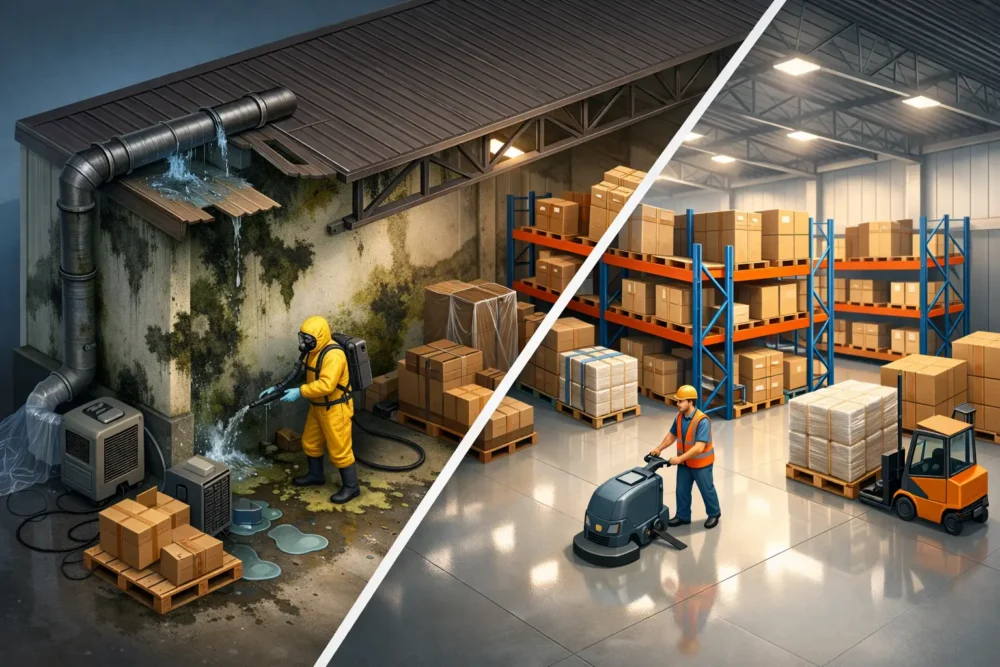
Consider a distribution warehouse where a roof drain backup allowed water to enter above a rear loading area during a weekend storm. Water traveled through ceiling insulation, ran down a masonry wall, and reached the lower section of stored cardboard packaging and two rows of palletized goods.

When the morning shift arrived, the floor was mostly dry. The immediate concern appeared to be several wet cartons and a stain on the wall. However, the facility manager also noticed a musty odor near the loading docks. A moisture inspection found elevated readings behind the wall finish, in ceiling insulation, and beneath vinyl flooring at the wall perimeter. Mold growth was visible on the back side of several wet drywall panels.

This is the point where a basic cleaning crew is not enough. The affected materials, air handling conditions, inventory exposure, and building moisture all need to be evaluated as one incident. A rushed wipe-down could leave hidden growth in place and spread spores into clean storage areas.

First response: stop the source and control access

The first operational decision was to stop additional water intrusion. The roof drain was cleared and temporarily repaired while the restoration team isolated the damaged area. Staff were directed away from the loading-bay section, and forklifts were rerouted to prevent foot traffic and equipment movement from carrying dust or spores through the facility.

The affected zone was then separated from the rest of the warehouse with a contained work area. For a smaller loss, plastic containment may be enough. For larger or more sensitive environments, such as food storage, medical supplies, or high-value inventory, the containment plan may need multiple chambers, decontamination access, and negative-air equipment with HEPA filtration.

The right containment level depends on the size of the affected area, the type of mold-damaged material, air movement in the building, and what is stored nearby. An active warehouse has more variables than an empty room. Dock doors, forklift traffic, HVAC systems, and high ceilings can all move airborne particles farther than expected.

Inspection defines the scope of work

A professional mold response begins with evidence, not assumptions. In this example, technicians used moisture meters, thermal imaging, and targeted inspection openings to identify the full path of the water. The visible wall staining represented only part of the damage.

The inspection confirmed three different conditions. Wet drywall and insulation had active mold growth and required removal. Several cartons had absorbed water and could not be safely restored. Palletized goods in sealed plastic wrap had not been directly impacted, but they needed to be moved, inspected, and protected before demolition began.

This distinction matters for cost control. Not every item near a mold event is automatically a total loss. At the same time, porous materials that are wet, visibly contaminated, or difficult to clean reliably may need disposal. Cardboard, untreated wood, ceiling tile, insulation, and some fabrics are common examples. Nonporous surfaces, such as metal racking and sealed plastic containers, can often be cleaned if they are not physically damaged and have not allowed moisture inside.

A clear scope also gives property managers and insurers the documentation they need: photos, moisture readings, affected-area maps, equipment logs, inventory observations, and a record of removed materials. This paperwork is valuable when a claim involves building ownership, tenants, product loss, or a roof or plumbing contractor.

Containment, removal, and cleaning

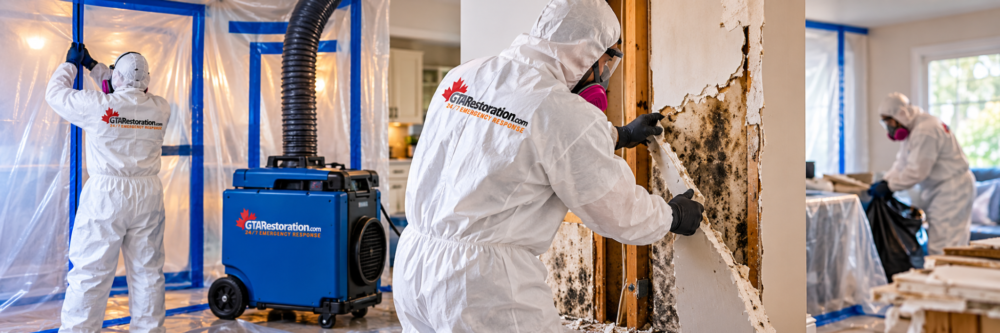
Once the scope was approved, the remediation crew established negative air pressure inside the contained work zone. This means air is drawn into the work area and filtered before being exhausted, helping keep dust and spores from migrating into clean warehouse space.

Damaged drywall was removed in controlled sections rather than torn out indiscriminately. Saturated insulation, contaminated floor covering, and unsalvageable packaging were bagged and removed through designated pathways. Workers used appropriate personal protective equipment and followed cleaning procedures designed for the materials involved.

After removal, the remaining masonry, framing, and metal surfaces were HEPA vacuumed and cleaned. If structural wood had been affected, it was treated only after it had been properly cleaned and dried. Applying paint, odor products, or antimicrobial coatings over wet or contaminated material is not remediation. It can conceal a problem temporarily while allowing moisture and growth to continue behind the surface.

For the warehouse operator, scheduling was just as important as the technical work. Demolition and high-dust cleaning were completed during off-hours where possible. Inventory movement was coordinated with the site supervisor so that shipping lanes remained open. This is a practical trade-off: full closure may allow the fastest unrestricted work, but controlled phasing can reduce business interruption when safe access routes are available.

Drying is the step that prevents a repeat event

Removing mold-damaged materials does not solve the problem unless the remaining structure reaches an acceptable dry condition. In this case, technicians installed commercial dehumidifiers, air movers, and monitoring equipment to dry the concrete perimeter, wall framing, and ceiling cavity.

Drying targets should be based on material type and unaffected comparison areas, not guesswork. Concrete can retain moisture even when it feels dry to the touch. Masonry walls may dry more slowly than framing, especially during humid weather or when the warehouse frequently opens dock doors.

Technicians recorded moisture readings each day and adjusted equipment as conditions changed. HVAC settings and ventilation were also reviewed because uncontrolled humidity can slow drying or create condensation in other parts of the building. If a warehouse maintains a specialized temperature range, drying plans must be designed around those operational requirements rather than disrupting product storage conditions.

The roof drainage issue was also corrected before reconstruction. This is essential. Mold removal without permanent source correction leaves the property exposed to another loss during the next heavy rain.

Verification before rebuilding and restocking

Before containment came down, the project manager completed a visual inspection, reviewed drying documentation, and confirmed that no dust or debris remained in the work area. Depending on the facility, client requirements, and insurer direction, independent post-remediation verification or air sampling may also be appropriate.

Air testing is not a substitute for a proper inspection and cleaning process. It is one tool among several. In a warehouse with sensitive products, employee health concerns, a large affected area, or a dispute over conditions, independent verification can provide added confidence before reopening the space.

Once the area was confirmed clean and dry, reconstruction began. New insulation and wall materials were installed, flooring was repaired, and the loading section was returned to service. The facility manager received the project file, including the moisture and drying records, photos, disposal documentation, and repair details for insurance claim support.

What warehouse managers can do immediately

If you find visible mold, musty odors, wet inventory, or unexplained moisture, isolate the area and report the issue before staff begin moving materials. Do not run fans across visible growth, pressure wash affected surfaces, or remove contaminated drywall without containment. Those actions can spread contamination and make the eventual cleanup larger.

Protect product records and document the scene with photos before disposal or major movement. Then identify the likely source, whether it is roofing, plumbing, drainage, condensation, sprinkler damage, or a neighboring tenant issue. Fast source control is the best way to reduce the scope of loss.

For commercial properties across Toronto and the GTA, GTA Restoration can coordinate emergency water control, moisture detection, mold remediation, cleaning, drying, documentation, and restoration under one response plan. In a warehouse, that coordination helps protect more than the building. It protects inventory, employees, delivery schedules, and the continuity of the operation.

A warehouse can return to service after a mold event, but only when the moisture problem is truly corrected and the cleanup is verified. Acting at the first sign of water damage gives your team the best chance to keep a contained issue from becoming a facility-wide disruption.

Share this... Spread the word!


Tags:

☛ ☛ Related Restoration Articles You May Also Like!

Emergency? Immediate response 24/7

416.800.0000 416.800.0000

For non-emergencies use our contact form

We Specialize in FAST Restoration Services!


Need Fast Restoration Service? Let our experienced team help. Your satisfaction is our priority.


We Service the GTA with a Fast 45-Minute Response Time!


“FREE VISUAL Estimate”


Restoration & Remediation

Do you need water removal services for your home or business? Are your floors, walls, furniture, or other areas affected by flooding or water damage? GTA Restoration provides professional water removal, drying, cleanup, and restoration services. Acting quickly can help reduce permanent property damage and lower the risk of mold growth. The longer water remains untreated, the greater the potential for additional damage.


Commercial & Residential Property Inspection

GTA Restoration uses professional moisture-detection technology, restoration equipment, and years of industry experience to identify water damage and locate hidden moisture. Specialized equipment allows our technicians to inspect many affected areas without unnecessary demolition, helping determine the extent of the damage before restoration work begins.


Helping You Every Step of the Way!


We understand that situations involving biohazard contamination in your home or business can be difficult and require professional attention. GTA Restoration provides dependable and experienced biohazard cleanup and remediation services for residential and commercial properties. For information about disaster restoration and recovery, visit the disaster restoration resource. For immediate assistance, contact GTA Restoration at (800) 506-6048.


Nationwide, Local Pricing

GTA Restoration offers local flood & water damage repair, mold removal/remediation, asbestos removal/abatement, fire/smoke damage repair services and much more.

Search

  • Ajax Asbestos Removal
  • Ajax Mold Removal
  • Ajax Water Damage
  • Anjou Mold Removal
  • Aurora Mold Removal
  • Aurora Water Damage
  • Beaconsfield Asbestos Removal
  • Beaconsfield Mold Removal
  • Boucherville Mold Removal
  • Brampton Asbestos Removal
  • Brampton Asbestos Removal
  • Brampton Mold Removal
  • Brampton Water Damage
  • Brossard Mold Removal
  • Burlington Asbestos Removal
  • Burlington Mold Removal
  • Burlington Water Damage
  • Burnaby Mold Removal
  • Burst Frozen Pipe Edmonton
  • Caledon Mold Removal
  • Caledon Water Damage
  • Calgary Asbestos Removal
  • Calgary Mold Removal
  • Calgary Water Damage
  • Cambridge Mold Removal
  • Cambridge Water Damage
  • Chambly Mold Removal
  • Chateauguay Mold Removal
  • Chomedey Mold Removal
  • Clarington Mold Removal
  • Concord Mold Removal
  • Concord Water Damage
  • Mississauga Mold Removal
  • Coquitlam Mold Removal
  • Cumberland Mold Removal
  • Dollard-des-Ormeaux Mold Removal
  • Dorval Mold Removal
  • Edmonton Asbestos Removal
  • Edmonton Mold Removal
  • Edmonton Water Damage
  • Etobicoke Asbestos Removal
  • Etobicoke Mold Removal
  • Etobicoke Water Damage
  • McMurray Fire Damage Services
  • Saskatchewan Asbestos Removal
  • Saskatchewan Mold Removal
  • Frozen Burst Pipe Repair Montreal
  • Frozen Burst Pipe Repair Ottawa
  • Gloucester Asbestos Removal
  • Gloucester Mold Removal
  • Hamilton Asbestos Removal
  • Hamilton Asbestos Testing
  • Hamilton Mold Removal
  • Hamilton Water Damage
  • Hampstead Mold Removal
  • Hampstead Water & Flood Damage
  • L'île-Bizard Mold Removal
  • Kahnawake Mold Removal
  • Kanata Asbestos Removal
  • Kanata Mold Removal
  • Kanata Water Damage
  • Kirkland Mold Removal
  • Kitchener Asbestos Removal
  • Kitchener Mold Removal
  • Kitchener Water Damage
  • Lasalle Mold Removal
  • Laval Asbestos Removal
  • Laval Mold Removal
  • Laval Water Damage
  • London Mold Removal
  • London Water Damage
  • Longueuil Mold Removal
  • Longueuil Water Damage
  • Markham Asbestos Removal
  • Markham Mold Removal
  • Markham Water Damage
  • Mississauga Asbestos Testing
  • Mississauga Mold Removal
  • Mississauga Water Damage
  • Montreal Air Duct Cleaning
  • Montreal Asbestos Removal
  • Montreal Asbestos Testing
  • Montreal East Mold Removal
  • Montreal Mold Removal
  • Montreal Water Damage
  • Mount-Royal Mold Removal
  • Nepean Asbestos Removal
  • Nepean Mold Removal
  • Nepean Water Damage
  • New Market Water Damage
  • New Westminster Mold Removal
  • Newmarket Mold Removal
  • North York Mold Removal
  • Oakville Mold Removal
  • Oakville Water Damage
  • Orleans Asbestos Removal
  • Orleans Mold Removal
  • Orleans Water Damage
  • Osgoode Mold Removal
  • Oshawa Mold Removal
  • Oshawa Water Damage
  • Ottawa Air Duct Cleaning
  • Ottawa Asbestos Removal
  • Ottawa Mold Removal
  • Ottawa Vermiculite Removal
  • Ottawa Water Damage
  • Pickering Mold Removal
  • Pickering Water Damage
  • Red Deer Mold Removal
  • Red Deer Water Damage
  • Richmond Hill Mold Removal
  • Richmond Hill Water Damage
  • Richmond Mold Removal
  • Rideau Lakes Mold Removal
  • Rockcliffe Park Mold Removal
  • Roxboro Mold Removal
  • Saint Laurent Mold Removal
  • Saint-Hubert Mold Removal
  • Scarborough Asbestos Removal
  • Scarborough Mold removal
  • Scarborough Water Damage
  • Sewer Backup Edmonton
  • Sewer Backup Montreal
  • Sewer Backup Ottawa
  • Sherwood Park Asbestos Removal
  • Sherwood Park Mold Removal
  • Spruce Grove Asbestos Removal
  • Spruce Grove Mold Removal
  • St. Albert Asbestos Removal
  • St. Albert Mold Removal
  • Ste.Dorothee Mold Removal
  • Surrey Mold Removal
  • Thornhill Mold Removal
  • Toronto & GTA Asbestos Removal
  • Toronto & GTA Mold Removal
  • Toronto Air Duct Cleaning
  • Toronto Water Damage
  • Unionville Mold Removal
  • Unionville Water Damage
  • Vancouver Asbestos Removal
  • Vancouver Mold Removal
  • Vancouver Water Damage
  • Vanier Mold Removal
  • Vaughan Mold Removal
  • Vaughan Water Damage
  • Westmount Mold Removal
  • Whitby Water Damage
  • Woodbridge Asbestos Removal
  • Woodbridge Mold Removal
  • Woodbridge Water Damage
  • Waterproofing
  • Kitchen & Bath Pro
  • Condo Restoration

Main Head Office


For Tips on Water Damage and Emergency Plumbing


We Work Direct with All Insurance Companies

Wᴇ ᴀʀᴇ ᴄᴏᴍᴍɪᴛᴛᴇᴅ ᴏɴ ᴡᴏʀᴋɪɴɢ ᴡɪᴛʜ ᴇᴠᴇʀʏ ɪɴsᴜʀᴀɴᴄᴇ ᴄᴏᴍᴘᴀɴʏ ᴀᴄʀᴏss Cᴀɴᴀᴅᴀ & USA.


In House Financing Available

In House Financing Available

FREE Financing Up To 24 Months NO INTEREST NO MONEY DOWN


Contact Us

Learn more ↴ GTA Restoration Tips

RELATED ARTICLES

  • How To Avoid Sprinkler Water Damage?
  • How To Deal With Floods & Water Damage?
  • Signs of Mould Growth In Your Property?
  • Avoid Mould Damage from Melting Snow
  • How to Prevent Water Damage In Summer
  • Avoid Mold Growth With Proper Air Flow
  • Prevent House Floods from Spring Rains
  • Prevent Frozen Burst Pipes in Winter
  • What To Do on Your Flooded Basement?


follow us on  LinkedIn Instagram Twitter Facebook YouTube


Our Clients

Our Vendor Clients


Affiliates

fully certified


GTA Restoration Toronto

Copyright © 2009 - 2026 All Rights Reserved. Sitemap/Links

LinkedInInstagram Twitter Facebook YouTube

Call Us 416-800-0000

Emergency? Immediate response 24/7

416.800.0000

416.800.0000

We cover all GTA 24/7.

Head Office:
250 Consumers Rd,
#10
Toronto, ON
M2J 4V6,
Open 24 hours

Downtown Office:
1 Toronto St,
#10
Toronto, ON
M5W 1A1,
Open 24 hours

For non-emergencies use our contact form


    Not sure what you need?

    Call us today to find the best product for your situation.

    416-800-0000 416-800-0000

    Head Office:
    101 Lebovic Ave,
    Unit #10
    Scarborough,
    ON, M1L 4T7
    Hours
    24-Hours Open

    Downtown Office:
    250 Yonge Street,
    Unit #1A
    Toronto,
    ON, M5B 2L7
    Hours
    24-Hours Open

    Warehouse Mold Remediation Example From Leak to Reopening

    Get a quote today


      GTA Restoration Assistant 24/7 Emergency Restoration Help
      Hi! I'm GTA Restoration's virtual assistant. How can I help with your property damage today?
      Emergency? Call 416-800-0000