...
Mold Removal and Mould Remediation Toronto - GTA Restoration

Emergency? 24-Hrs

416.800.0000
  • Home Restore
  • Emergency Services
    • Emergency Plumbers 24/7
    • Water Damage Restoration
    • Flooded Basement
    • Mold Remediation Toronto
    • Sewer Backup Remediation
    • Fire & Smoke Restoration
    • Odour Removal Toronto
    • Biohazard Cleanup
    • Emergency Roofing Repair
    • Water Leak and Detection
    • Condominium Restoration
    • Basement WaterProofing
    • Property Inspection Toronto
    • Sanitizing and Disinfection
    • Insurance Claim Appraisers
    • Equipment for Rent Toronto
    • Privacy Policy & Service Terms
  • Commercial Restoration
  • Blog
  • Our Team
  • Contact
10 July 2026 - Categories:

A Homeowner Guide to Mold Remediation Steps


Disaster Restoration Emergency Plumbing Service Blog Icon

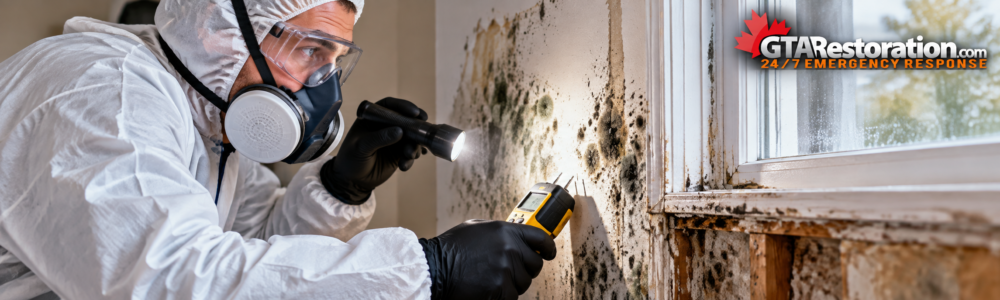
A musty smell behind a finished basement wall, a dark patch near a bathroom fan, or peeling paint beneath a window is not a problem to watch for another week. Mold follows moisture, and moisture damage can spread through drywall, insulation, flooring, and framing before the visible growth looks serious. This homeowner guide to mold remediation explains what to do first, what can be handled safely, and when the job requires a certified restoration team.

Mold remediation is not simply spraying a product on a stain. Proper work identifies the water source, isolates affected areas when needed, removes contaminated materials, dries the structure to appropriate moisture levels, and verifies that the conditions supporting mold are gone. If the underlying leak or humidity problem remains, mold can return quickly.

Start With Safety and Moisture Control

The first priority is stopping active moisture. Shut off a leaking supply line if it is safe to do so, move belongings away from wet areas, and avoid disturbing visible growth. Do not open a wall, pull up carpet, or run a household fan across a heavily contaminated area. Those actions can spread spores into adjacent rooms and HVAC pathways.

If water entered after a flood, sewage backup, appliance failure, roof leak, or burst pipe, document the damage with photos and video before cleanup begins. This record can support an insurance claim and help establish when the loss occurred. Then contact a qualified restoration provider promptly. Fast extraction, dehumidification, and moisture detection can prevent a water event from turning into a larger mold project.

People with asthma, severe allergies, compromised immune systems, or respiratory conditions should avoid contaminated areas. Keep children and pets away as well. Mold affects people differently, but recurring odor, throat irritation, coughing, eye irritation, or worsening asthma symptoms are all reasons to reduce exposure and seek appropriate medical advice.

How to Recognize a Mold Problem

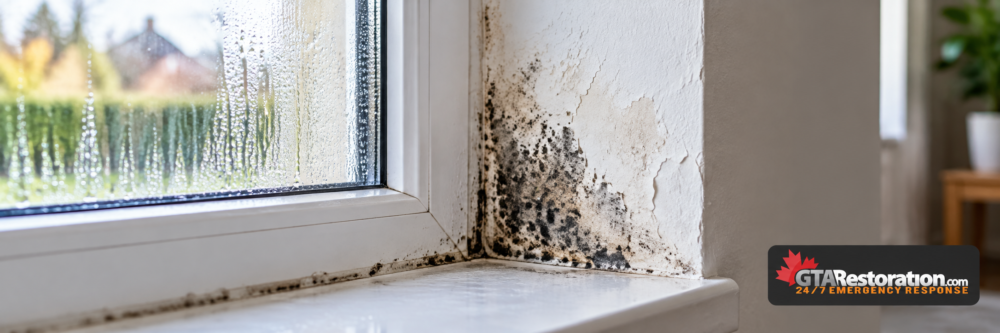
Visible mold is one signal, not the whole story. It may appear black, green, gray, brown, white, or orange, and it can grow in irregular spots, fuzzy patches, or flat discoloration. Color alone does not identify the species or the level of risk. The location, extent, moisture source, and condition of surrounding materials matter more.

A persistent earthy or musty odor often points to hidden moisture or concealed growth. Check areas where water is commonly trapped: under sinks, around toilets, behind refrigerators, near washing machines, below windows, inside utility rooms, around attic penetrations, and along exterior foundation walls. In condos and multi-unit properties, a leak from an upper unit or a shared plumbing line can affect more than one residence.

Other warning signs include warped baseboards, bubbling paint, staining on ceilings, damp carpet edges, condensation on windows, and drywall that feels soft or swollen. A mold inspection may be appropriate when the odor persists but the source is not visible, after significant water damage, or before reopening a previously flooded area.

Mold Testing Has a Role, but It Is Not Always the First Step

When mold is clearly visible and a moisture source is evident, the immediate need is usually remediation and drying, not a test result. Testing can be useful for complex, concealed, commercial, or compliance-sensitive situations, especially when an independent scope or documentation is needed. A qualified professional can determine whether air, surface, or material sampling will actually answer a useful question.

Be cautious of anyone who treats a single sample as the entire diagnosis. A credible assessment should also include moisture readings, an inspection of likely leak paths, material conditions, and a clear remediation plan.

What Homeowners Can Clean and What They Should Not

Small areas of surface mold on hard, nonporous materials may be manageable if the moisture source has been corrected and no one in the home has heightened health concerns. Wear gloves, eye protection, and a properly fitted respirator suitable for particulate exposure. Clean the affected surface with an appropriate household cleaning solution, dry it completely, and monitor the area for return growth.

Porous materials are different. Drywall, insulation, ceiling tiles, carpet padding, particleboard, and heavily contaminated fabrics may need removal because growth can extend below the surface. Painting over staining or applying fragrance products does not remove contamination. Bleach is also not a universal fix, particularly on porous building materials where it may not reach embedded growth and can leave the moisture problem unresolved.

Do not attempt a major cleanup if growth covers a large area, the contamination followed sewage or floodwater, there is significant structural damage, mold may be inside HVAC components, or the source remains unknown. These conditions call for controlled containment, specialized air filtration, proper removal procedures, and professional drying equipment.

The Homeowner Guide to Mold Remediation Process

A professional mold remediation project should be organized around the source of the problem, not just the spot you can see. The process begins with an assessment of the affected spaces, moisture mapping, and a review of possible plumbing, roof, foundation, appliance, or ventilation failures. For hidden leaks, advanced leak detection can prevent unnecessary demolition and target repairs more accurately.

Next comes containment when conditions require it. Technicians may isolate the work area with plastic barriers, maintain controlled airflow, and use HEPA-filtered air scrubbers to limit cross-contamination. The exact approach depends on the size of the affected area, the materials involved, occupancy, and whether the property is a single-family home, condo, or commercial space.

Contaminated porous materials are removed carefully and disposed of according to applicable requirements. Salvageable structural components are cleaned using methods suited to the material and level of contamination. The team then dries the area with commercial dehumidifiers, air movers, and moisture-monitoring equipment. Drying is not complete when a wall feels dry to the touch. Moisture levels within framing, subfloors, and other materials need to be evaluated before rebuilding begins.

The final phase is repair and recovery. That may include replacing drywall and insulation, restoring flooring, repairing a plumbing leak, improving ventilation, sealing a foundation entry point, or addressing roof damage. A full-service restoration provider can coordinate these steps so homeowners are not left searching for separate demolition, plumbing, drying, and reconstruction contractors during a stressful loss.

Insurance Documentation and Property Records

Coverage depends on the policy, the cause of loss, how quickly the issue was reported, and whether the damage resulted from a sudden event or long-term maintenance concern. For example, mold caused by a covered burst pipe may be handled differently than mold tied to a slow leak that went unaddressed. Avoid assuming coverage either way.

Keep photos of visible damage, records of when you discovered the issue, invoices for emergency services, moisture reports, repair estimates, and communication with your insurer. If an adjuster is involved, clear documentation of the water source, affected materials, drying work, and mitigation timeline can help keep the claim organized. Property managers and condo owners should also notify the appropriate management or board contact quickly, since responsibility may involve common elements or another unit.

Prevent Mold From Returning

The most effective prevention plan is practical and ongoing: repair leaks promptly, keep bathrooms and kitchens ventilated, maintain indoor humidity at a reasonable level, clean and inspect gutters, and check basement walls after heavy rain. Make sure clothes dryers vent outdoors, not into a garage, crawlspace, or attic. If windows frequently collect condensation, address ventilation, humidity, insulation, or air-sealing issues instead of repeatedly wiping the glass.

For basements, pay close attention to grading, downspout discharge, sump pump performance, foundation cracks, and recurring dampness along exterior walls. A dehumidifier can help manage humidity, but it cannot solve water entering through the foundation or a concealed plumbing failure.

When mold is suspected, early action protects more than finishes and furnishings. It protects the air your household breathes, limits disruption, and gives you a better chance of restoring the property before a small moisture problem becomes a major reconstruction project.

Share this... Spread the word!


Tags:

☛ ☛ Related Restoration Articles You May Also Like!

Emergency? Immediate response 24/7

416.800.0000 416.800.0000

For non-emergencies use our contact form

We Specialize in FAST Restoration Services!


Need Fast Restoration Service? Let our experienced team help. Your satisfaction is our priority.


We Service the GTA with a Fast 45-Minute Response Time!


“FREE VISUAL Estimate”


Restoration & Remediation

Do you need water removal services for your home or business? Are your floors, walls, furniture, or other areas affected by flooding or water damage? GTA Restoration provides professional water removal, drying, cleanup, and restoration services. Acting quickly can help reduce permanent property damage and lower the risk of mold growth. The longer water remains untreated, the greater the potential for additional damage.


Commercial & Residential Property Inspection

GTA Restoration uses professional moisture-detection technology, restoration equipment, and years of industry experience to identify water damage and locate hidden moisture. Specialized equipment allows our technicians to inspect many affected areas without unnecessary demolition, helping determine the extent of the damage before restoration work begins.


Helping You Every Step of the Way!


We understand that situations involving biohazard contamination in your home or business can be difficult and require professional attention. GTA Restoration provides dependable and experienced biohazard cleanup and remediation services for residential and commercial properties. For information about disaster restoration and recovery, visit the disaster restoration resource. For immediate assistance, contact GTA Restoration at (800) 506-6048.


Nationwide, Local Pricing

GTA Restoration offers local flood & water damage repair, mold removal/remediation, asbestos removal/abatement, fire/smoke damage repair services and much more.

Search

  • Ajax Asbestos Removal
  • Ajax Mold Removal
  • Ajax Water Damage
  • Anjou Mold Removal
  • Aurora Mold Removal
  • Aurora Water Damage
  • Beaconsfield Asbestos Removal
  • Beaconsfield Mold Removal
  • Boucherville Mold Removal
  • Brampton Asbestos Removal
  • Brampton Asbestos Removal
  • Brampton Mold Removal
  • Brampton Water Damage
  • Brossard Mold Removal
  • Burlington Asbestos Removal
  • Burlington Mold Removal
  • Burlington Water Damage
  • Burnaby Mold Removal
  • Burst Frozen Pipe Edmonton
  • Caledon Mold Removal
  • Caledon Water Damage
  • Calgary Asbestos Removal
  • Calgary Mold Removal
  • Calgary Water Damage
  • Cambridge Mold Removal
  • Cambridge Water Damage
  • Chambly Mold Removal
  • Chateauguay Mold Removal
  • Chomedey Mold Removal
  • Clarington Mold Removal
  • Concord Mold Removal
  • Concord Water Damage
  • Mississauga Mold Removal
  • Coquitlam Mold Removal
  • Cumberland Mold Removal
  • Dollard-des-Ormeaux Mold Removal
  • Dorval Mold Removal
  • Edmonton Asbestos Removal
  • Edmonton Mold Removal
  • Edmonton Water Damage
  • Etobicoke Asbestos Removal
  • Etobicoke Mold Removal
  • Etobicoke Water Damage
  • McMurray Fire Damage Services
  • Saskatchewan Asbestos Removal
  • Saskatchewan Mold Removal
  • Frozen Burst Pipe Repair Montreal
  • Frozen Burst Pipe Repair Ottawa
  • Gloucester Asbestos Removal
  • Gloucester Mold Removal
  • Hamilton Asbestos Removal
  • Hamilton Asbestos Testing
  • Hamilton Mold Removal
  • Hamilton Water Damage
  • Hampstead Mold Removal
  • Hampstead Water & Flood Damage
  • L'île-Bizard Mold Removal
  • Kahnawake Mold Removal
  • Kanata Asbestos Removal
  • Kanata Mold Removal
  • Kanata Water Damage
  • Kirkland Mold Removal
  • Kitchener Asbestos Removal
  • Kitchener Mold Removal
  • Kitchener Water Damage
  • Lasalle Mold Removal
  • Laval Asbestos Removal
  • Laval Mold Removal
  • Laval Water Damage
  • London Mold Removal
  • London Water Damage
  • Longueuil Mold Removal
  • Longueuil Water Damage
  • Markham Asbestos Removal
  • Markham Mold Removal
  • Markham Water Damage
  • Mississauga Asbestos Testing
  • Mississauga Mold Removal
  • Mississauga Water Damage
  • Montreal Air Duct Cleaning
  • Montreal Asbestos Removal
  • Montreal Asbestos Testing
  • Montreal East Mold Removal
  • Montreal Mold Removal
  • Montreal Water Damage
  • Mount-Royal Mold Removal
  • Nepean Asbestos Removal
  • Nepean Mold Removal
  • Nepean Water Damage
  • New Market Water Damage
  • New Westminster Mold Removal
  • Newmarket Mold Removal
  • North York Mold Removal
  • Oakville Mold Removal
  • Oakville Water Damage
  • Orleans Asbestos Removal
  • Orleans Mold Removal
  • Orleans Water Damage
  • Osgoode Mold Removal
  • Oshawa Mold Removal
  • Oshawa Water Damage
  • Ottawa Air Duct Cleaning
  • Ottawa Asbestos Removal
  • Ottawa Mold Removal
  • Ottawa Vermiculite Removal
  • Ottawa Water Damage
  • Pickering Mold Removal
  • Pickering Water Damage
  • Red Deer Mold Removal
  • Red Deer Water Damage
  • Richmond Hill Mold Removal
  • Richmond Hill Water Damage
  • Richmond Mold Removal
  • Rideau Lakes Mold Removal
  • Rockcliffe Park Mold Removal
  • Roxboro Mold Removal
  • Saint Laurent Mold Removal
  • Saint-Hubert Mold Removal
  • Scarborough Asbestos Removal
  • Scarborough Mold removal
  • Scarborough Water Damage
  • Sewer Backup Edmonton
  • Sewer Backup Montreal
  • Sewer Backup Ottawa
  • Sherwood Park Asbestos Removal
  • Sherwood Park Mold Removal
  • Spruce Grove Asbestos Removal
  • Spruce Grove Mold Removal
  • St. Albert Asbestos Removal
  • St. Albert Mold Removal
  • Ste.Dorothee Mold Removal
  • Surrey Mold Removal
  • Thornhill Mold Removal
  • Toronto & GTA Asbestos Removal
  • Toronto & GTA Mold Removal
  • Toronto Air Duct Cleaning
  • Toronto Water Damage
  • Unionville Mold Removal
  • Unionville Water Damage
  • Vancouver Asbestos Removal
  • Vancouver Mold Removal
  • Vancouver Water Damage
  • Vanier Mold Removal
  • Vaughan Mold Removal
  • Vaughan Water Damage
  • Westmount Mold Removal
  • Whitby Water Damage
  • Woodbridge Asbestos Removal
  • Woodbridge Mold Removal
  • Woodbridge Water Damage
  • Waterproofing
  • Kitchen & Bath Pro
  • Condo Restoration

Main Head Office


For Tips on Water Damage and Emergency Plumbing


We Work Direct with All Insurance Companies

Wᴇ ᴀʀᴇ ᴄᴏᴍᴍɪᴛᴛᴇᴅ ᴏɴ ᴡᴏʀᴋɪɴɢ ᴡɪᴛʜ ᴇᴠᴇʀʏ ɪɴsᴜʀᴀɴᴄᴇ ᴄᴏᴍᴘᴀɴʏ ᴀᴄʀᴏss Cᴀɴᴀᴅᴀ & USA.


In House Financing Available

In House Financing Available

FREE Financing Up To 24 Months NO INTEREST NO MONEY DOWN


Contact Us

Learn more ↴ GTA Restoration Tips

RELATED ARTICLES

  • How To Avoid Sprinkler Water Damage?
  • How To Deal With Floods & Water Damage?
  • Signs of Mould Growth In Your Property?
  • Avoid Mould Damage from Melting Snow
  • How to Prevent Water Damage In Summer
  • Avoid Mold Growth With Proper Air Flow
  • Prevent House Floods from Spring Rains
  • Prevent Frozen Burst Pipes in Winter
  • What To Do on Your Flooded Basement?


follow us on  LinkedIn Instagram Twitter Facebook YouTube


Our Clients

Our Vendor Clients


Affiliates

fully certified


GTA Restoration Toronto

Copyright © 2009 - 2026 All Rights Reserved. Sitemap/Links

LinkedInInstagram Twitter Facebook YouTube

Call Us 416-800-0000

Emergency? Immediate response 24/7

416.800.0000

416.800.0000

We cover all GTA 24/7.

Head Office:
250 Consumers Rd,
#10
Toronto, ON
M2J 4V6,
Open 24 hours

Downtown Office:
1 Toronto St,
#10
Toronto, ON
M5W 1A1,
Open 24 hours

For non-emergencies use our contact form


    Not sure what you need?

    Call us today to find the best product for your situation.

    416-800-0000 416-800-0000

    Head Office:
    101 Lebovic Ave,
    Unit #10
    Scarborough,
    ON, M1L 4T7
    Hours
    24-Hours Open

    Downtown Office:
    250 Yonge Street,
    Unit #1A
    Toronto,
    ON, M5B 2L7
    Hours
    24-Hours Open

    A Homeowner Guide to Mold Remediation Steps

    Get a quote today


      GTA Restoration Assistant 24/7 Emergency Restoration Help
      Hi! I'm GTA Restoration's virtual assistant. How can I help with your property damage today?
      Emergency? Call 416-800-0000