A frozen pipe can become a burst pipe with very little warning. One cold night, an underheated room, or an exposed water line near an exterior wall can be enough to stop water flow and create pressure inside the pipe. When that pressure releases, the result may be flooding behind walls, damaged flooring, mold risk, tenant disruption, and an urgent insurance claim.
Knowing how to prevent frozen pipes is one of the most practical steps a homeowner, landlord, condo owner, or property manager can take before sustained cold weather arrives. Prevention is usually straightforward, but it needs to address the areas where heat is lost, water is exposed, and small maintenance issues become major water damage events.
Why pipes freeze and burst
Pipes freeze when the water inside them is exposed to temperatures at or below 32°F for long enough. Pipes in exterior walls, crawl spaces, unheated basements, garages, attics, utility rooms, and cabinets under sinks are particularly vulnerable. Wind can make the problem worse by pulling heat away from exterior surfaces and allowing cold air into gaps around plumbing penetrations.
The pipe does not always burst where the ice forms. Ice blocks water flow, and pressure builds between the blockage and a closed faucet. That pressure can split a copper, plastic, or older galvanized pipe at a weak point elsewhere in the line. A pipe may remain hidden behind a wall or ceiling until the ice thaws, when water begins escaping into the property.
For multi-unit buildings, one frozen line can affect more than one suite. Commercial spaces face their own risks, especially in vacant areas, loading zones, storage rooms, and buildings with reduced overnight occupancy.
How to prevent frozen pipes before temperatures drop
The best time to protect plumbing is before a hard freeze. Start with a visual inspection of areas that are colder than the rest of the property. Look for exposed pipes, drafts, damaged insulation, open vents, and water lines that run close to exterior walls.
Insulate exposed water lines
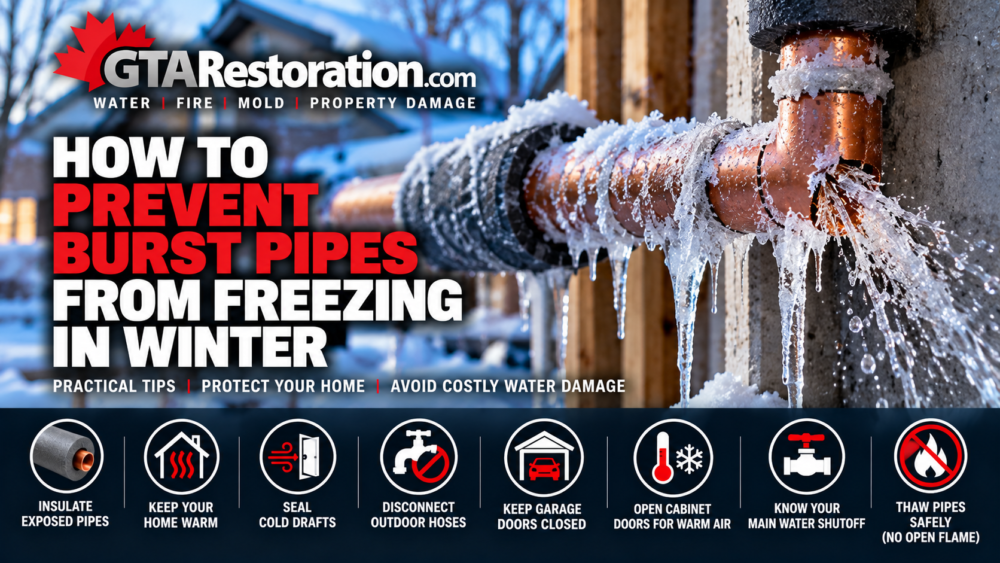
Foam pipe insulation is a practical first layer of protection for accessible pipes in basements, crawl spaces, garages, and utility areas. Focus first on hot and cold water supply lines, because either can freeze. Insulation slows heat loss, but it does not generate heat, so it should be paired with adequate indoor temperature and draft control.
Pay close attention to elbows, joints, and short sections of pipe near foundation walls. These areas are often missed during quick installations. In severe cold or poorly heated spaces, approved heat cable may be appropriate, but it must be installed according to the manufacturer’s instructions and inspected regularly. Improper electrical heating products can create a fire risk, so this is not an area for improvised solutions.
Seal drafts around plumbing
Cold air often reaches plumbing through openings that seem minor: gaps around dryer vents, cable entries, hose bibs, foundation penetrations, windows, doors, or unfinished framing. Seal accessible gaps using suitable caulking, weatherstripping, or insulation. If you can feel cold air moving through a cabinet, utility room, or basement wall, the nearby plumbing is at risk.
Do not permanently block required ventilation for furnaces, water heaters, or other fuel-burning equipment. Those systems need proper combustion air and safe venting. If the location of a draft is unclear, a plumbing or building-envelope inspection can identify the issue without compromising safety.
Keep the heat on, including in unused spaces
During freezing weather, keep the building heated consistently, day and night. Lowering the thermostat too far to save energy can cost far more if a pipe bursts. A minimum indoor temperature of 55°F is commonly used for occupied and vacant properties, though older buildings, exposed plumbing, and extreme weather may require a higher setting.
Open interior doors so warm air can circulate through hallways, laundry rooms, and rooms with plumbing. Open kitchen and bathroom cabinet doors when temperatures are especially low, particularly where pipes run along exterior walls. Remove household chemicals, sharp objects, and anything that could be reached by children or pets before leaving cabinets open.
For vacant homes, rental units between tenants, and seasonal commercial spaces, do not rely on a thermostat alone. Arrange regular property checks and use a monitored low-temperature alert where possible. A heating-system failure can turn into a frozen-pipe emergency before anyone notices.
Disconnect and drain outdoor plumbing
Before winter, disconnect garden hoses and drain them. A connected hose can hold water against an exterior faucet, allowing ice to travel back into the plumbing line. Shut off the indoor valve serving exterior faucets if your property has one, then open the outdoor faucet to drain remaining water.
If you have an irrigation system, have it properly winterized. Outdoor kitchen lines, pool-house plumbing, garage sinks, and other seasonal water supplies should also be drained or protected. The right approach depends on the system layout, but leaving water in an unheated line is a preventable risk.
Let vulnerable faucets trickle during severe cold
When temperatures drop sharply, a slow, steady trickle from a faucet served by a vulnerable pipe can help prevent freezing. Moving water is less likely to freeze than standing water, and an open faucet can relieve pressure if ice begins forming.
This is a short-term cold-weather measure, not a replacement for insulation or repairs. It can increase water use, and it is not practical for every fixture or building. Use it selectively for known problem areas, such as a kitchen sink on an exterior wall or a bathroom above an unheated garage.
Protecting condos, rentals, and commercial properties
Property managers and landlords need a prevention plan that does not depend on every occupant making the same decisions. Communicate clearly before cold weather arrives. Residents should know not to turn off heat when traveling, which faucets are vulnerable, and who to contact if they lose water pressure or notice a cold area in the unit.
In condos, responsibility can be shared between the unit owner and the corporation depending on the pipe location and governing documents. That makes early reporting essential. A frozen pipe near a shared plumbing stack, mechanical room, or exterior wall can affect neighboring units and common areas.
Commercial properties should identify areas that become unoccupied after business hours. Check washrooms, sprinkler-adjacent mechanical spaces, janitor closets, warehouses, and rooms near loading doors. If a building will be vacant for an extended period, consider professional winterization and remote monitoring rather than assuming normal heating settings will cover every exposure.
Warning signs that a pipe may be freezing
A faucet that produces little or no water during a cold spell is the most common warning sign. Frost on an exposed pipe, a bulging pipe section, unusual gurgling, or a room that feels much colder than normal also deserve immediate attention. Do not ignore a small change in water pressure when temperatures are below freezing.
If you suspect a frozen pipe, keep the faucet open and apply gentle heat to the exposed section using a hair dryer, heating pad, or warm towels. Begin near the faucet and work back toward the suspected frozen area. Never use an open flame, propane torch, or other high-heat source. These methods can damage pipes, ignite building materials, or create a serious safety hazard.
If the frozen section is hidden, if you cannot safely access it, or if water is leaking, stop and call a licensed emergency plumbing and restoration professional. Do not use electrical devices around standing water.
What to do if a pipe bursts
Act quickly. Shut off the main water supply if it is safe to do so, then turn off electricity to affected areas only if you can reach the panel without entering water. Move belongings away from the leak and document visible damage with photos when conditions are safe.
Next, arrange emergency plumbing repair and water damage mitigation. Removing standing water is only the first stage. Wet drywall, insulation, flooring, cabinetry, and concealed cavities can retain moisture and support mold growth if they are not assessed and dried correctly. GTA Restoration provides coordinated emergency plumbing and water damage response for properties across the Greater Toronto Area, helping limit damage while supporting the recovery process.
Winter plumbing protection is not about overreacting to every cold day. It is about identifying the few places where water, cold air, and poor heat circulation meet, then correcting them before a small freeze becomes a disruptive property loss.