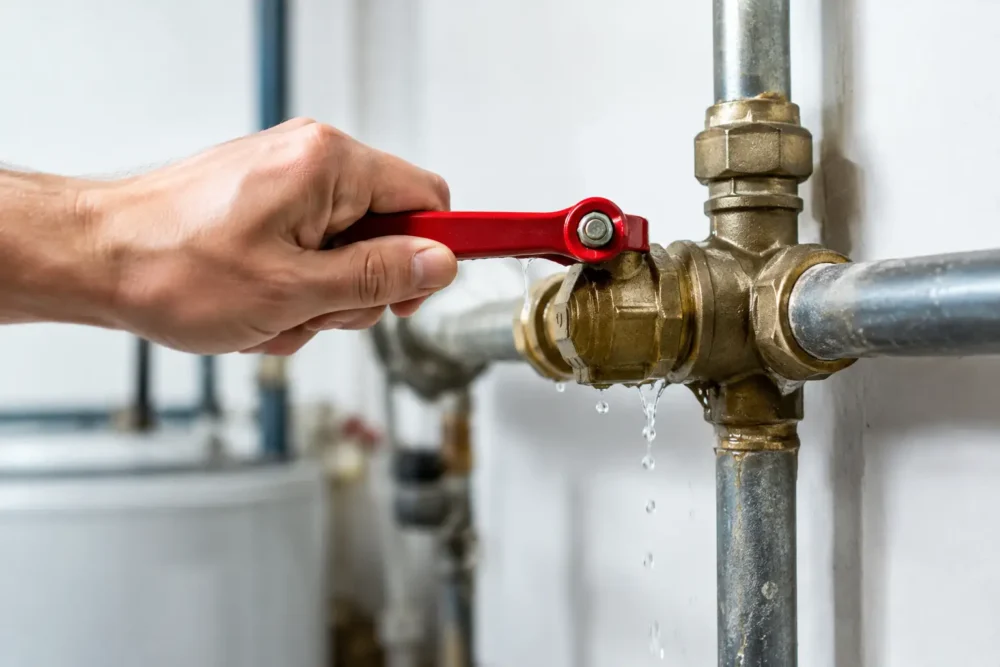
Hand turning a red water shutoff valve on a leaking pipe

Knowing how to shut off burst pipes can limit water damage while you arrange help. First, check whether you can reach the valve safely. Then stop the water supply and keep people away from wet rooms. If the leak creates an electrical or structural risk, stay out and call for help.

Check Safety Before You Stop a Leak

Do not step into water to reach a valve or power panel. Water near outlets, wiring or appliances can cause a severe shock. Also, stay away from sagging ceilings and loose finishes. If there is an immediate threat to life, leave and call 911.

The Electrical Safety Authority’s flood guidance explains when to stay out and ask your electric utility to disconnect power. Never touch a wet panel or use an appliance that has been flooded. A Licensed Electrical Contractor should check water-damaged electrical systems before they return to use.

How to Shut Off Burst Pipes at the Right Valve

For a leak at a sink, toilet or appliance, close its supply valve if you can reach it safely. However, use the main water shutoff if the source is unclear or the local valve does not stop the flow.

In many Toronto homes, the main valve sits near the water meter where the supply enters the basement. It may also be in a utility room or crawlspace. A round, multi-turn handle usually closes clockwise. A lever-style ball valve normally closes with a quarter turn, leaving the handle across the pipe.

Do not force a stuck valve. Stop if it will not move or starts leaking. Instead, call a plumber and your water utility for guidance. In a condo, ask management or security to arrange access to shared valves. Do not operate fire-sprinkler valves or unfamiliar building systems yourself.

After the Water Shutoff

Next, arrange a pipe repair and describe where the water spread. Our emergency plumbing guide explains useful details to share. A plumber or restoration team can then assess the break and nearby damage.

If the area is safe, place a container under any remaining drip and move dry, portable belongings out of the way. Also, keep children and pets clear. Do not touch items soaked by sewage or water of unknown quality. Tell your landlord or condo management promptly, since water may reach neighbouring units.

Check Where the Burst-Pipe Water Travelled

Even after you shut off burst pipes, hidden areas may remain wet. Water can reach wall cavities, cupboards, floor edges and rooms below. Read about signs of water damage on walls, then ask the team which areas need moisture checks.

A dry-looking surface is not proof of dry materials. The team should explain what can be dried and what may need removal. This depends on the water source, time wet and condition of each material. Avoid opening walls or lifting floors before the risks are assessed.

Plan Cleanup and Keep Useful Records

Once access is safe, discuss water removal and a drying plan. Household fans may not reach moisture below floors or inside walls. Never use a normal dry vacuum to collect water. Also, avoid running electrical equipment near water or wet outlets.

Take photos before cleanup changes the scene, if you can do so safely. Record when you found the leak, closed the valve and called for help. Then keep repair invoices, moisture readings and receipts together. Your insurer decides coverage; ask what evidence it needs before discarding damaged items, unless keeping them would create a hazard.

Prepare the Water Shutoff Before the Next Leak

Finally, label the main valve and keep a clear path to it. Show responsible household members or staff where it is. Ask a plumber to explain any well pump, boiler or shared supply that changes your plan.

Knowing how to shut off burst pipes helps you act promptly. However, safe access comes first. For hot-water leaks, hidden breaks or water spreading between rooms, arrange professional help and share the facts you have recorded.

Share this... Spread the word!


Burst Pipe Support

If you cannot safely shut off burst pipes, keep clear and seek help. GTA Restoration can discuss cleanup once access is safe.

Emergency Water Removal

First, explain where water has spread. The team can plan how to remove standing water without putting people or belongings at risk.

Moisture Checks After a Leak

Moisture readings help trace wet areas beyond the visible puddle. Ask which walls, floors and rooms need checks.

Drying After the Water Shutoff

Then agree on a drying plan that suits the wet materials. Progress checks help show whether further work is needed.

Burst Pipe Cleanup

Discuss wet debris, safe routes and protection for dry rooms. Cleanup and pipe repairs may need to happen in stages.

Condo Water Leak Access

Notify management about the leak and nearby units. Also, arrange keys, access times and clear routes for the crews.

Workplace Water Damage

Keep staff and visitors out of unsafe work areas. Share equipment locations and access limits before the team plans cleanup.

Damage Records

Keep photos, repair invoices and drying records together. Your insurer decides coverage, so ask which details it needs for the claim.

Hidden Pipe Leaks

Finally, confirm the source and repair plan before restoring finishes. A hidden leak may need checks beyond the first wet spot.

For burst-pipe cleanup support in Toronto and the GTA, contact GTA Restoration.

Call Us: 416-800-0000


GTA Service Centre


Burst Pipe and Water Shutoff Questions

Where is the main water shutoff?

It is often near the meter where water enters the home. Check the basement or utility room before an emergency.

What if I cannot shut off burst pipes safely?

Stay clear of the hazard. Call a plumber, your water utility or building management for help with the water supply.

Should I touch the power panel after a leak?

Do not touch a wet panel or cross water to reach it. Ask your electric utility for help if water threatens electrical systems.

Can household fans dry the whole area?

Fans cannot confirm that hidden materials are dry. Moisture checks help guide drying, and electrical equipment must stay away from water.

Which records should I keep after a burst pipe?

Take photos only when safe. Keep invoices, readings and a brief timeline. Ask your insurer which other records it needs.


Learn more ↴


Direct Billing & Insurance Claims

Ask your insurer about coverage, deductibles and the records it needs.


Payment options

In-House Financing Available

Financing up to 24 months. No interest. No money down. Ask us about the terms.


Certifications & Insurance

View our firm certification, technician qualifications and insurance documents.

IICRC Certified Firm

GTA Restoration Inc.

Firm number 199912
Valid through

View IICRC certificate (PDF) — opens in a new tab

Business Insurance

GTA Restoration Group Inc.

$5 million general liability per occurrence
$8 million contractors pollution per claim
–

View insurance certificate (PDF) — opens in a new tab

IICRC Technician Qualifications

Tony Sokol T. Lleshi · Registration 214520
Valid through

Water Damage Restoration · Fire & Smoke Damage Restoration · Applied Microbial Remediation · Odor Control · Trauma & Crime Scene

View technician verification (PDF) — opens in a new tab

Insurance is subject to policy terms, conditions and exclusions.


Emergency? 24/7 Restoration Help

416-800-0000

416-800-0000

We cover all GTA 24/7.

Head Office:
250 Consumers Rd,
#10
Toronto, ON
M2J 4V6,
Open 24 hours

Downtown Office:
1 Toronto St,
#10
Toronto, ON
M5W 1A1,
Open 24 hours

For non-emergencies use our contact form

    Not sure what you need?

    Call us today to find the best product for your situation.

    416-800-0000 416-800-0000

    Head Office:
    101 Lebovic Ave,
    Unit #10
    Scarborough,
    ON, M1L 4T7
    Hours
    24-Hours Open

    Downtown Office:
    250 Yonge Street,
    Unit #1A
    Toronto,
    ON, M5B 2L7
    Hours
    24-Hours Open

    How to Shut Off Burst Pipes Before Damage Spreads

    Get a quote today



      Emergency? Click to Call!