
Tags: How to Clean Sewer Backup, Prevent Sewer Backup, Sewage Backup Cleanup, Sewer Backup, Sewer Backup Cleaning, Sewer Backup Cleanup,

For non-emergencies use our contact form


Emergency? 24-Hours
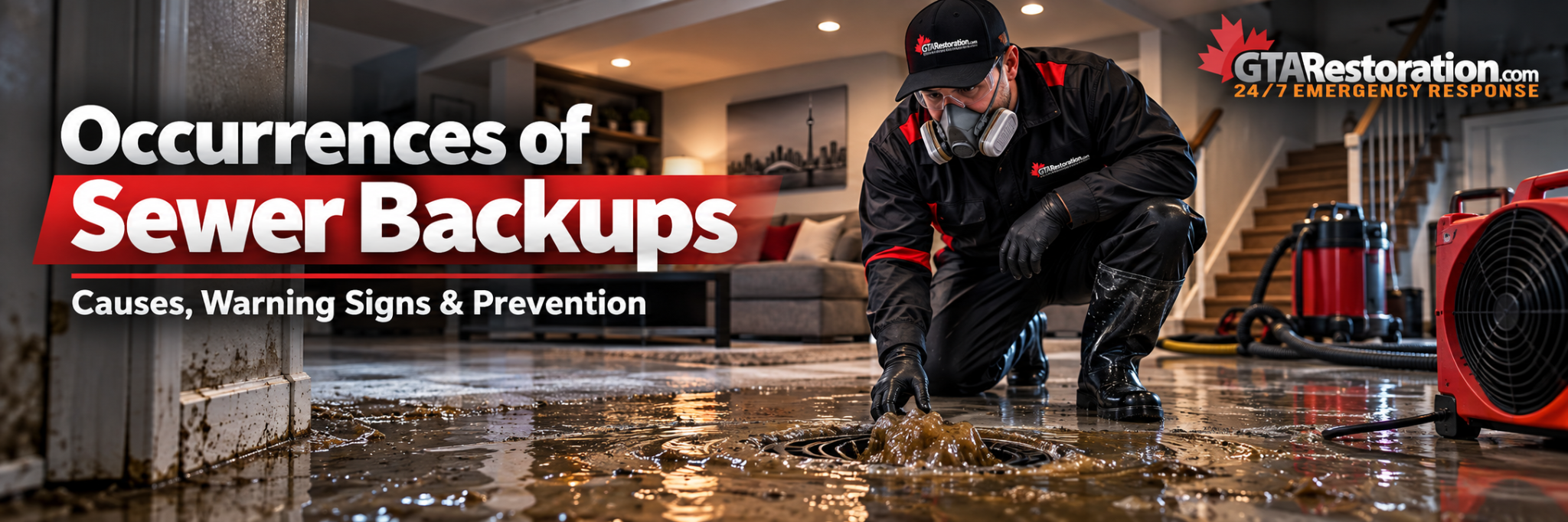
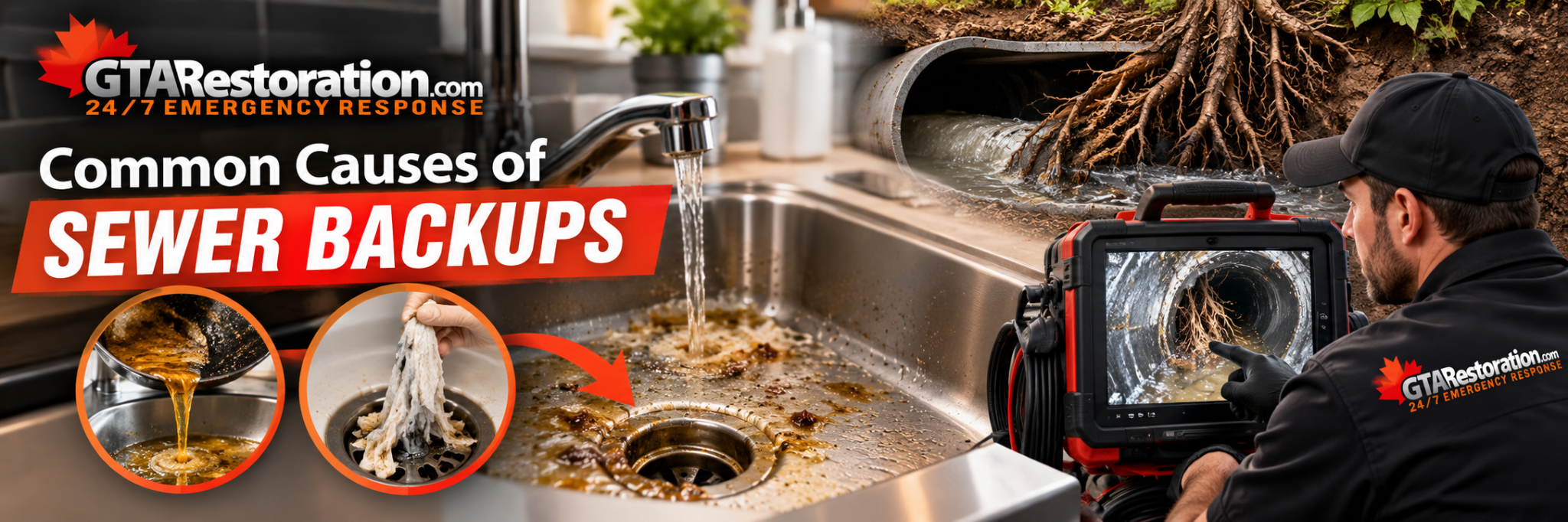
416-800-0000Occurrences of sewer backups often start with blocked drains or damaged pipes. Grease, wipes, and other waste can build up over time. As a result, wastewater may stop flowing and return through lower drains.
Heavy rain can also fill sewer lines. In addition, tree roots may enter cracked pipes and cause deep clogs.
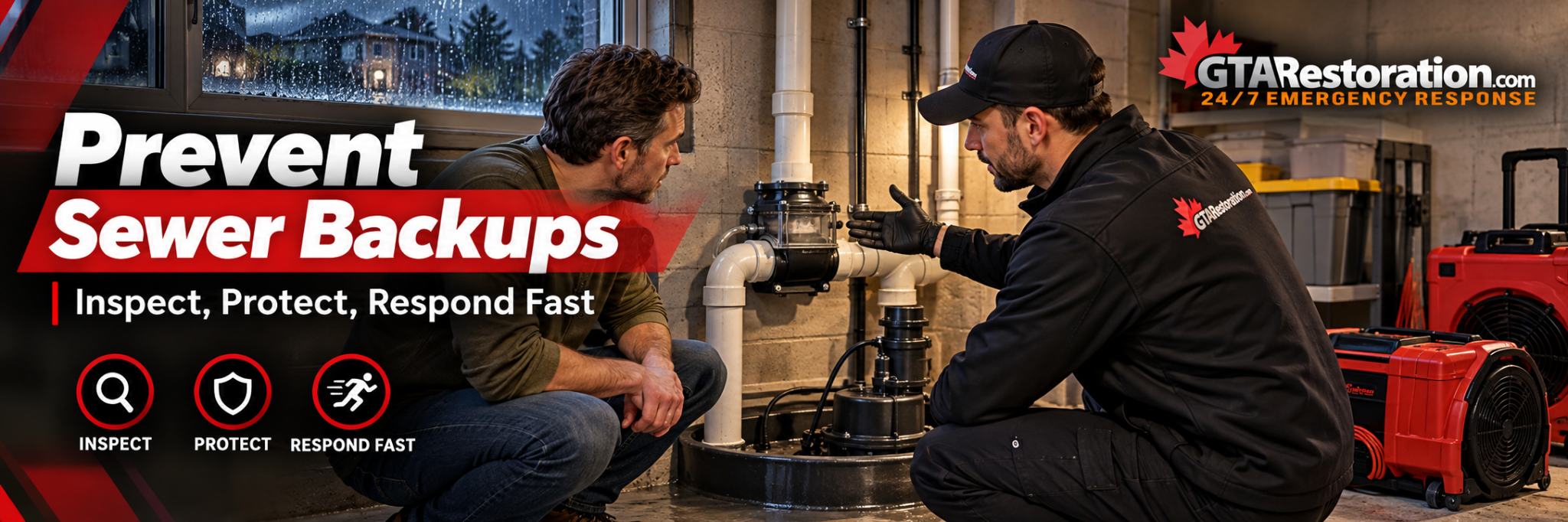
Simple habits can help protect your drains. First, keep cooking grease out of sinks. Also, never flush wipes, paper towels, or other waste.
If drains keep clogging, ask a plumber to check the pipes. Finding a problem early may help you avoid a costly backup.
A backwater valve can help prevent sewage from flowing back into a home. However, it needs proper setup and regular care.
Check your gutters and downspouts as well. Keeping rainwater away from your home may help lower the risk of basement flooding.
Slow drains, odd sounds, and sewage smells may point to a drain problem. If several fixtures back up at once, the main sewer line may have a blockage.
For this reason, do not ignore repeat drain clogs. A plumber can check the cause and suggest repairs.
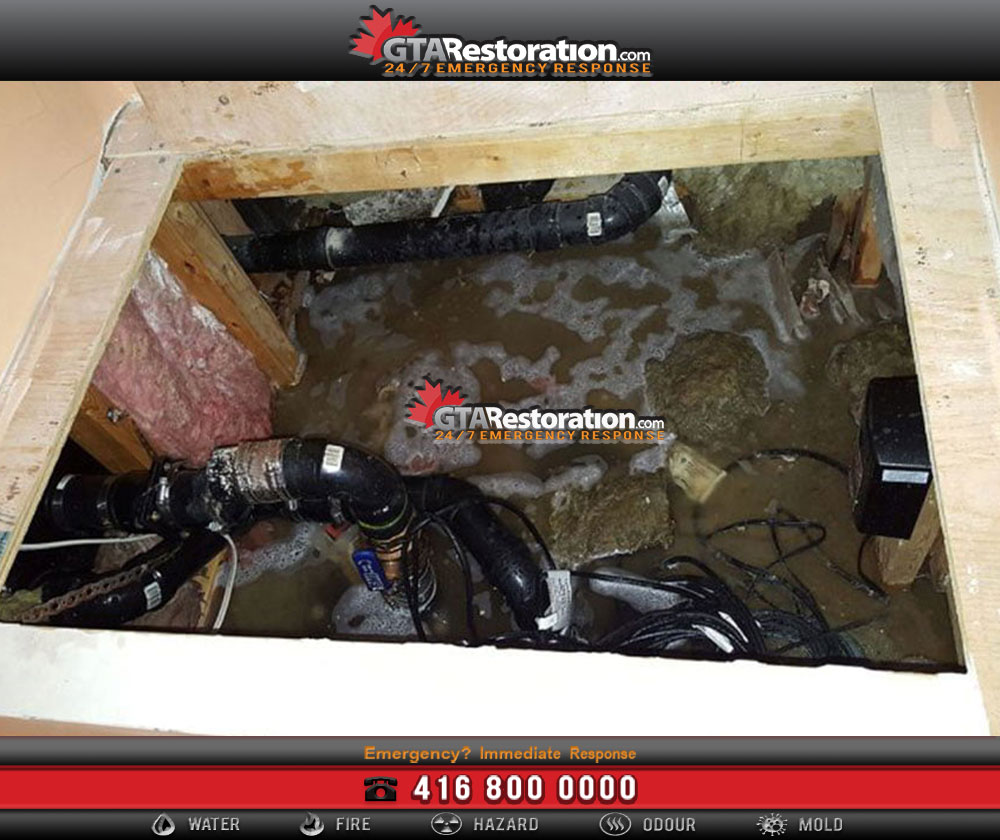
Dirty water can carry germs and waste. Therefore, keep people and pets away from the flooded area.
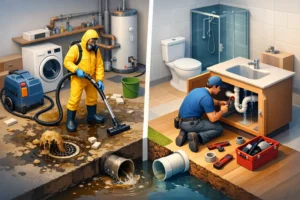
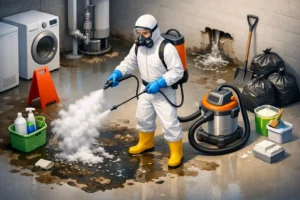
GTA Restoration provides sewage water removal, cleanup, and drying services in Toronto and the GTA. Our team can assess wet materials and help plan the work.
After a backup, find and fix the cause before repairs are complete. This can help reduce future occurrences of sewer backups and protect your home.
Has Sewage Backed Up Into Your Home or Business?
Contact GTA Restoration for sewage cleanup, drying, and property restoration support.
Service Areas Across Canada
GTA Restoration serves communities across Canada, including Toronto and the GTA. U.S. locations are opening. Browse our Canadian service areas below, and contact us to confirm services and availability for your address.
Search
Common causes include grease, wipes, tree roots, and broken pipes. Heavy rain can also overload sewer lines and lead to backups.
Watch for slow drains, odd sounds, and sewage smells. Also, water rising through a basement drain may point to a larger problem.
Yes. Heavy rain may overload some sewer systems. As a result, wastewater may flow back toward nearby homes.
No. A backwater valve can help protect your home in certain cases. However, it needs proper setup and regular care.
Keep people and pets away from the dirty water. Also, stop using affected drains. Contact a plumber and a trained sewage cleanup team.
Coverage depends on your policy. Some plans offer sewer backup coverage as an add-on. Therefore, check your policy or speak with your insurer.
Direct Billing & Insurance Claims
Ask your insurer about coverage, deductibles and the records it needs.

In-House Financing Available
Financing up to 24 months. No interest. No money down. Ask us about the terms.
Learn more ↴ 
RELATED ARTICLES





Call Us 416-800-0000
Emergency? 24/7 Restoration Help
We cover all GTA 24/7.
Head Office:
250 Consumers Rd,
#10
Toronto, ON
M2J 4V6,
Open 24 hours
Downtown Office:
1 Toronto St,
#10
Toronto, ON
M5W 1A1,
Open 24 hours
For non-emergencies use our contact form
Not sure what you need?
Call us today to find the best product for your situation.
Head Office:
101 Lebovic Ave,
Unit #10
Scarborough,
ON, M1L 4T7
Hours
24-Hours Open
Downtown Office:
250 Yonge Street,
Unit #1A
Toronto,
ON, M5B 2L7
Hours
24-Hours Open
Occurrences of Sewer Backups
Get a quote today


