Signs of Water Damage on Walls & How to Address Them
Signs of Water Damage on Walls & How to Address Them
Are you noticing water damage on walls? Peeling paint, stains, damp drywall, musty odours, and unexplained moisture can all indicate a problem. Therefore, identifying the source early can help limit additional damage and make repairs easier to manage.
This guide explains common warning signs, possible causes, repair steps, and ways to reduce the risk of future water damage in your home or building.
Key Takeaways
Water stains, bubbling paint, warped drywall, and persistent musty odours can indicate moisture problems.
Finding the source of the water is essential before repairing damaged walls.
Moisture meters, leak detection, ventilation, and regular maintenance can help reduce future damage.
Identifying Water Damage on Walls
Recognizing the early signs of water damage on walls can help prevent a small problem from becoming more extensive. For example, discoloration, peeling paint, soft drywall, musty smells, and visible mold-like growth may indicate unwanted moisture.
However, visible damage does not always show the full extent of the problem. Water may travel behind drywall, beneath flooring, or through insulation before becoming noticeable.
Water Stains & Discoloration
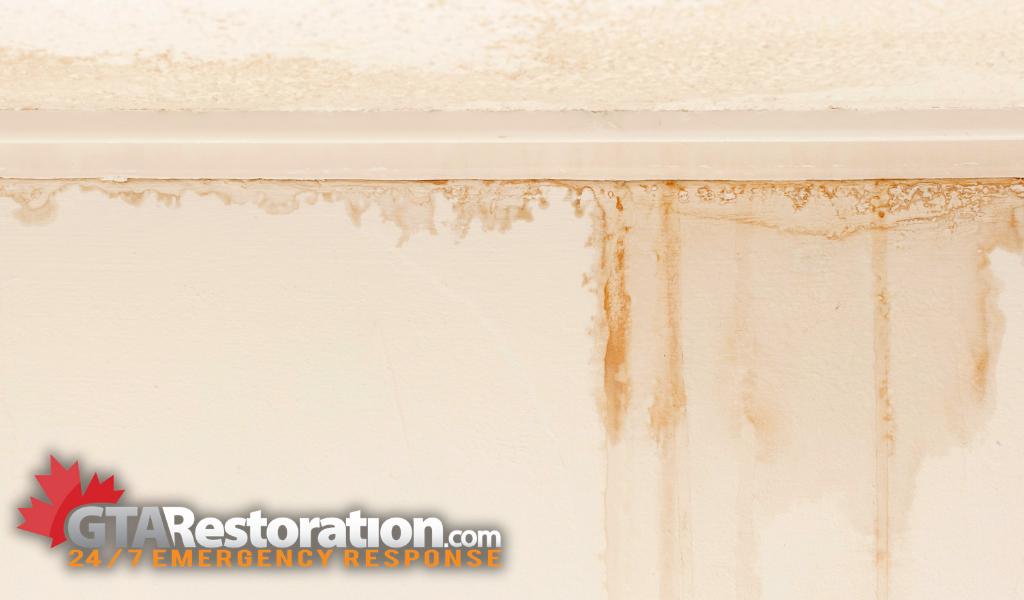
Water stains often appear as yellow, beige, or brown patches on walls and ceilings. In many cases, these marks indicate that moisture has travelled through or behind the surface.
Possible sources include plumbing leaks, roof leaks, overflowing fixtures, or water from an upper floor. Therefore, the source should be identified before repainting or repairing the visible stain.
Peeling & Bubbling Paint
Moisture behind a painted surface can weaken adhesion. As a result, paint may bubble, blister, crack, or peel away from the wall.
Although damaged paint may appear cosmetic, recurring bubbling often indicates an underlying moisture issue. For this reason, simply repainting the area without correcting the source may allow the problem to return.
Musty Odours & Mold-Like Growth
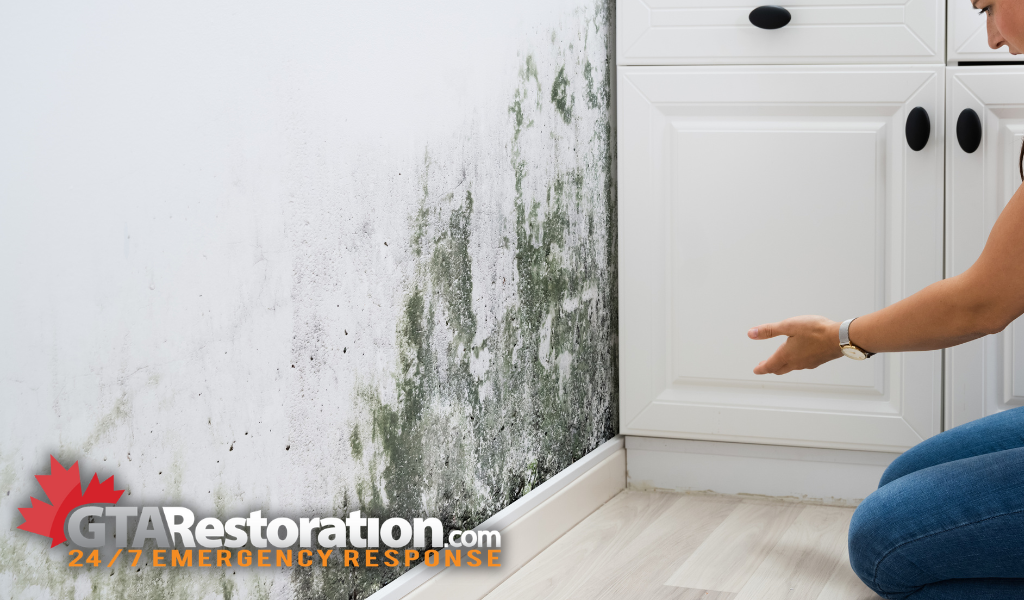
A persistent musty smell can indicate damp building materials or poor ventilation. In addition, visible mold-like growth may develop in areas that remain wet for extended periods.
Signs of water damage and mold-like growth
If mold is present, correcting the moisture source is an important part of the solution. Depending on the conditions, professional mold remediation may also be appropriate.
Assessing the Extent of Water Damage
After identifying visible signs, the next step is to determine how far the moisture has travelled. The severity of water damage on walls depends on the source, duration, materials involved, and whether contamination is present.
Therefore, damaged areas should be evaluated before repairs begin.
Soft or Warped Drywall
Drywall can soften, swell, bow, or sag after absorbing water. In some cases, pressing lightly on the surface may reveal areas that feel unusually soft or unstable.
When drywall has lost its integrity, replacement may be required. However, the surrounding materials should also be checked to confirm that the moisture source has been corrected.
Sagging Walls & Ceilings
A sagging wall or ceiling can indicate that water has accumulated behind the surface. Consequently, these conditions should be treated seriously, especially if the material appears unstable.
If there is a risk of falling material or structural damage, avoid the area and arrange professional assessment.
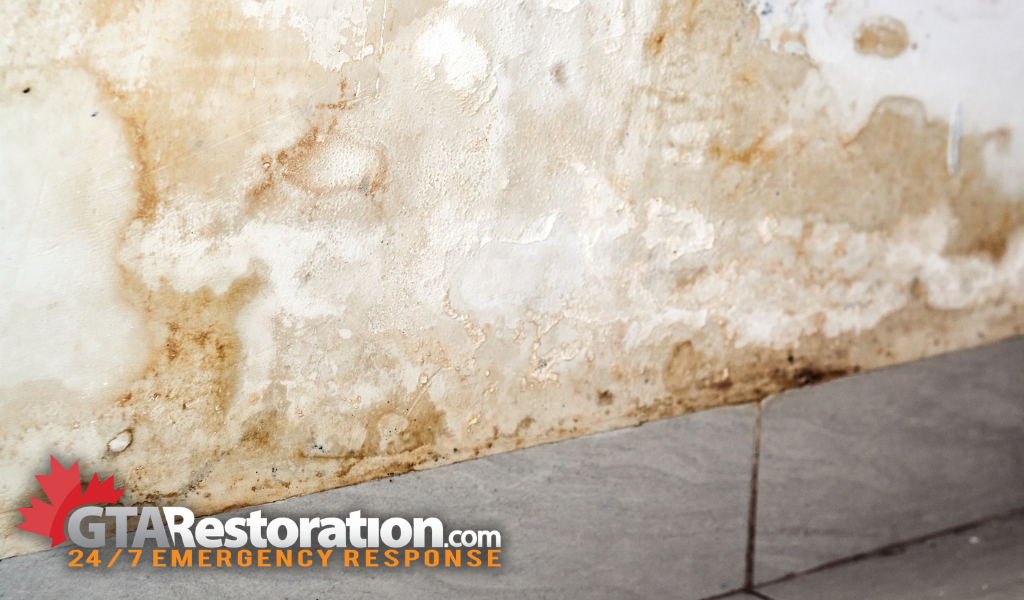
Visible water damage on an interior wall
Higher Water Bills & Unusual Plumbing Sounds
An unexplained increase in water use may indicate a hidden plumbing leak. Likewise, dripping or running-water sounds when fixtures are off can be a warning sign.
For this reason, persistent changes in water use, pressure, or plumbing sounds should be investigated. Professional water leak detection can help narrow down hidden problem areas.
Common Causes of Water Damage on Walls
Water can reach walls from several different sources. Therefore, finding the cause is essential before drying and repairing the affected area.
Leaky Pipes & Plumbing Problems
Slow plumbing leaks can remain hidden inside walls or beneath floors for long periods. For example, corroded pipes, loose fittings, failing supply lines, and damaged connections may allow moisture to spread gradually.
As a result, the visible damage may appear some distance away from the original leak.
Roof Leaks & Exterior Water Intrusion
Damaged roofing, flashing, windows, or exterior building components can allow rainwater to enter a property. In addition, poor drainage or failed exterior seals may contribute to recurring moisture.
Regular roof and exterior inspections can help identify vulnerable areas before interior damage develops.
Faulty Appliances
Washing machines, dishwashers, refrigerators, water heaters, and other appliances can cause leaks when hoses, fittings, or internal components fail.
Therefore, inspect appliance connections periodically and replace damaged supply lines or fittings when necessary.
Steps to Repair Water-Damaged Walls
Repairing water damage on walls should begin only after the water source has been identified and controlled. Then, the affected materials can be dried, evaluated, and repaired as appropriate.
1. Stop the Water Source
First, identify where the water is coming from. If a plumbing leak is active and it is safe to do so, shut off the relevant fixture or main water supply.
Once the source is controlled, additional restoration work can begin.
2. Dry the Affected Area
Drying may involve water extraction, air movement, dehumidification, and moisture monitoring. However, drying time varies depending on the materials, amount of water, humidity, and site conditions.
Therefore, avoid relying on a fixed drying period. Moisture readings provide a more reliable way to determine whether materials have reached appropriate drying goals.
3. Remove Materials That Cannot Be Restored
Some wet building materials may remain in place and dry successfully. In other cases, however, drywall, insulation, baseboards, or other materials may require removal.
After removal, the underlying structure should be inspected and dried before replacement materials are installed.
4. Address Mold & Moisture Conditions
Persistent moisture can create conditions that support mold growth. Therefore, correcting the leak or moisture source is essential before finishing repairs.
If visible mold affects a larger area or porous materials, professional remediation may be appropriate. You can also learn more about the mold remediation process.
When to Call a Professional
Small cosmetic repairs may sometimes be manageable for a homeowner. However, larger water losses, hidden leaks, contaminated water, structural concerns, or persistent mold conditions may require professional assistance.
Structural or Ceiling Damage
If walls, ceilings, framing, or other materials appear unstable, avoid disturbing the area. Instead, arrange an appropriate professional assessment.
Recurring Mold or Moisture
If mold-like growth keeps returning, the moisture source may not have been fully corrected. In addition, hidden dampness can sometimes remain behind walls or flooring.
Professional inspection and moisture testing can help determine whether further remediation or drying is required.
Limited Tools or Experience
Water damage restoration may require extraction equipment, moisture meters, dehumidifiers, air movers, containment, or specialized cleaning methods. Therefore, homeowners who do not have the appropriate equipment or experience should consider professional help.
Preventing Future Water Damage
Preventing future water damage on walls involves regular maintenance, early leak detection, proper ventilation, and prompt repair of known problems.
Regular Maintenance Checks
Inspect exposed plumbing, appliance connections, roofs, windows, drains, and other common leak sources periodically. In addition, investigate unexplained water stains or changes in water use rather than waiting for damage to spread.
Proper Ventilation
Bathrooms, kitchens, basements, and other moisture-prone areas benefit from proper ventilation. As a result, reducing excess humidity can help limit condensation and related moisture problems.
Water Leak Detection Systems
Water leak detection systems can provide early warnings when moisture or unusual water activity is detected.
Moreover, some systems can send alerts to a phone or integrate with automatic shutoff equipment. Features vary, so choose a system that suits the property and plumbing configuration.
Summary
Water damage on walls can appear as stains, bubbling paint, warped drywall, musty odours, or unexplained moisture. Therefore, identifying the water source early is one of the most important steps in preventing additional damage.
Common causes include plumbing leaks, roof problems, appliance failures, and exterior water intrusion. Once the source is corrected, affected materials can be dried, evaluated, and repaired.
Finally, regular maintenance, proper ventilation, and leak detection can help reduce the risk of future water damage.
Frequently Asked Questions
What are the most common signs of water damage on walls?
Common signs include water stains, discoloration, bubbling or peeling paint, warped drywall, damp areas, and musty odours.
How can I assess water damage inside a wall?
Look for soft drywall, staining, warping, unusual moisture, or plumbing sounds. In addition, professionals may use moisture meters or other inspection tools to investigate hidden areas.
What commonly causes water damage on walls?
Common causes include plumbing leaks, roof leaks, appliance failures, failed seals, condensation, and exterior water intrusion.
When should I call a professional?
Professional help may be appropriate when damage is extensive, structural materials are affected, contaminated water is involved, mold is persistent, or the water source cannot be identified.
How can I prevent future water damage?
Inspect plumbing and roofing regularly, maintain ventilation, repair leaks promptly, and consider installing water leak detection equipment.
Water Damage Emergency?
GTA Restoration provides water damage restoration, structural drying, leak investigation, and property restoration throughout Toronto and the GTA.
Signs of Water Damage on Walls: What Property Owners Should Watch For
The signs of water damage on walls can range from obvious stains to subtle changes in texture, smell, or paint condition. Therefore, recognizing these warning signs early can help property owners investigate the source before the damage becomes more extensive.
1. Water Stains & Discoloration
Brown, yellow, or irregular stains may indicate that water has travelled through the wall or ceiling. For this reason, the source should be investigated before cosmetic repairs begin.
2. Peeling or Bubbling Paint
Paint can blister, peel, or crack when moisture becomes trapped behind the surface. As a result, recurring paint damage may indicate an underlying leak or damp wall.
3. Warped or Swollen Walls
Drywall may swell, bow, or soften after prolonged moisture exposure. Therefore, changes in the shape or firmness of a wall should be evaluated.
4. Persistent Musty Odours
A musty smell can indicate damp building materials or poor ventilation. In addition, hidden moisture may remain even when the wall surface appears dry.
5. Mold-Like Growth
Visible mold-like growth can develop where moisture remains present. However, appearance alone does not identify the exact mold species, so recurring growth should be treated primarily as a moisture-control issue.
6. Flaking Drywall or Plaster
Water can weaken surface materials and cause them to flake, crack, or crumble. Consequently, repeated deterioration may require removal and repair after the moisture source is corrected.
Signs of Water Damage on Walls & How to Address Them
7. Soft or Damp Areas
A wall that feels unusually soft, damp, or cool may require closer inspection. For example, a hidden plumbing leak may affect materials behind the visible surface.
8. Changes in Wall Colour
Darkened patches, faded paint, or unusual colour changes near ceilings, floors, and windows may indicate previous or active moisture.
9. Efflorescence on Masonry
White, powdery deposits on concrete or masonry can appear when moisture carries dissolved salts to the surface. Therefore, recurring efflorescence may indicate ongoing moisture movement.
10. Cracking or Separation
Cracks or separation can have many causes and do not automatically mean water damage. However, if they appear together with moisture, staining, sagging, or other warning signs, professional evaluation may be appropriate.
5 Ways to Reduce Water Damage on Walls
Inspect plumbing regularly: Watch for dripping fittings, worn supply lines, and unexplained water use.
Control indoor humidity: Use proper ventilation in bathrooms, kitchens, basements, and other damp areas.
Repair leaks promptly: Address plumbing, roofing, and exterior water intrusion as soon as possible.
Maintain exterior seals: Inspect windows, doors, flashing, and caulking for signs of failure.
Manage drainage: Keep gutters and downspouts working properly and direct water away from the building.
Why Early Detection Matters
Finding signs of water damage on walls early can reduce the amount of building material affected. In addition, controlling the source quickly can help limit moisture migration into surrounding areas.
However, visible staining is only one part of the assessment. Moisture readings and leak investigation may be needed when water has travelled behind walls, ceilings, or floors.
Need Help with Water Damage on Walls?
If you notice staining, bubbling paint, soft drywall, musty odours, or other signs of water damage on walls, GTA Restoration can help assess the affected area and determine the appropriate restoration approach.
Call 416-800-0000 for water damage restoration throughout Toronto and the GTA.
GTA Restoration serves communities across Canada, including Toronto and the GTA. U.S. locations are opening. Browse our Canadian service areas below, and contact us to confirm services and availability for your address.
Signs of Water Damage on Walls & How to Address Them Tips
The Costly Risks of Ignoring Signs of Water Damage on Walls
Delaying repairs or ignoring the signs of water damage on walls can lead to skyrocketing repair costs, structural damage, and health hazards from mold growth. Homeowners who act quickly on the signs of water damage on walls typically save significant money, avoid unnecessary stress, and preserve their home’s value.
DIY Versus Professional Help for Signs of Water Damage on Walls
While you can address some minor signs of water damage on walls with DIY solutions—like using mold-resistant paints or running a dehumidifier—major or recurring issues should always be evaluated by a water damage restoration professional. Experts use advanced tools to locate hidden signs of water damage on walls and provide lasting solutions that prevent future damage.
Protect Your Investment: Watch for Signs of Water Damage on Walls
Your home is your greatest investment, and paying close attention to the signs of water damage on walls is a vital part of maintenance. Regularly inspect for discoloration, stains, mold, and any changes in texture, as these are critical signs of water damage on walls that can escalate rapidly.
FAQs: Signs of Water Damage on Walls
Q: How often should I inspect for signs of water damage on walls? A: At least every six months, especially after heavy rains or plumbing issues, check for all the signs of water damage on walls.
Q: Can I ignore small stains as signs of water damage on walls? A: No. Even small stains are often early signs of water damage on walls and can lead to bigger problems.
Q: Are the signs of water damage on walls always visible? A: Not always. Some signs of water damage on walls—like musty odors or soft spots—can be subtle and require close attention.
Final Thoughts: Stay Ahead of Signs of Water Damage on Walls
The most successful homeowners are those who stay ahead by recognizing the signs of water damage on walls early. By following the steps outlined above, you can dramatically reduce the risks associated with water intrusion. Remember, vigilance is key—never underestimate the importance of acting quickly when you see signs of water damage on walls.
Contact Us for Help with Signs of Water Damage on Walls
If you’ve spotted any signs of water damage on walls, don’t hesitate. Contact our expert restoration team for a comprehensive inspection and fast, effective solutions. We’re here to help you address the signs of water damage on walls before they become major issues.
Direct Billing & Insurance Claims
Ask your insurer about coverage, deductibles and the records it needs.
In-House Financing Available
Financing up to 24 months. No interest. No money down. Ask us about the terms.




 Facebook
  Instagram
  LinkedIn
  X / Twitter
  YouTube