For non-emergencies use our contact form
A smoke smell after a fire is not just an air problem. It is evidence that soot particles and combustion residues have settled into walls, textiles, HVAC components, cabinets, and personal belongings. Choosing the right smoke damage cleaning products matters, but so does recognizing when cleaning products are not enough to restore a safe, usable property.
For a small, contained incident – such as a scorched pan or an isolated fireplace puff-back – targeted cleaning may be appropriate. After a structure fire, electrical fire, kitchen fire, or smoke event affecting multiple rooms, professional assessment should come first. Improper cleaning can spread soot, permanently stain surfaces, drive odors deeper into materials, and create unnecessary exposure to contaminants.
Start With the Type of Smoke Residue
There is no single cleaner that safely removes every kind of smoke damage. The right product depends on what burned, how hot it burned, how long smoke circulated, and which materials were affected.
Dry smoke residue is often created by fast-burning, high-temperature fires. It may look like fine gray or black powder and can be easier to remove from nonporous surfaces when handled correctly. Wet smoke residue is denser, stickier, and commonly associated with slow-burning plastics, rubber, or synthetic materials. It smears easily and usually requires specialized degreasers and controlled cleaning methods.
Protein residue, often caused by burned food, can be nearly invisible at first. It leaves a strong, persistent odor and may discolor painted walls, cabinets, and appliances. Fuel-oil soot is another category that requires caution. It can be oily, corrosive, and difficult to remove without professional-grade products and equipment.
The key point is simple: do not begin by wiping every surface with an all-purpose household cleaner. That approach can turn dry soot into a stubborn smear and increase the scope of damage.
Smoke Damage Cleaning Products by Surface
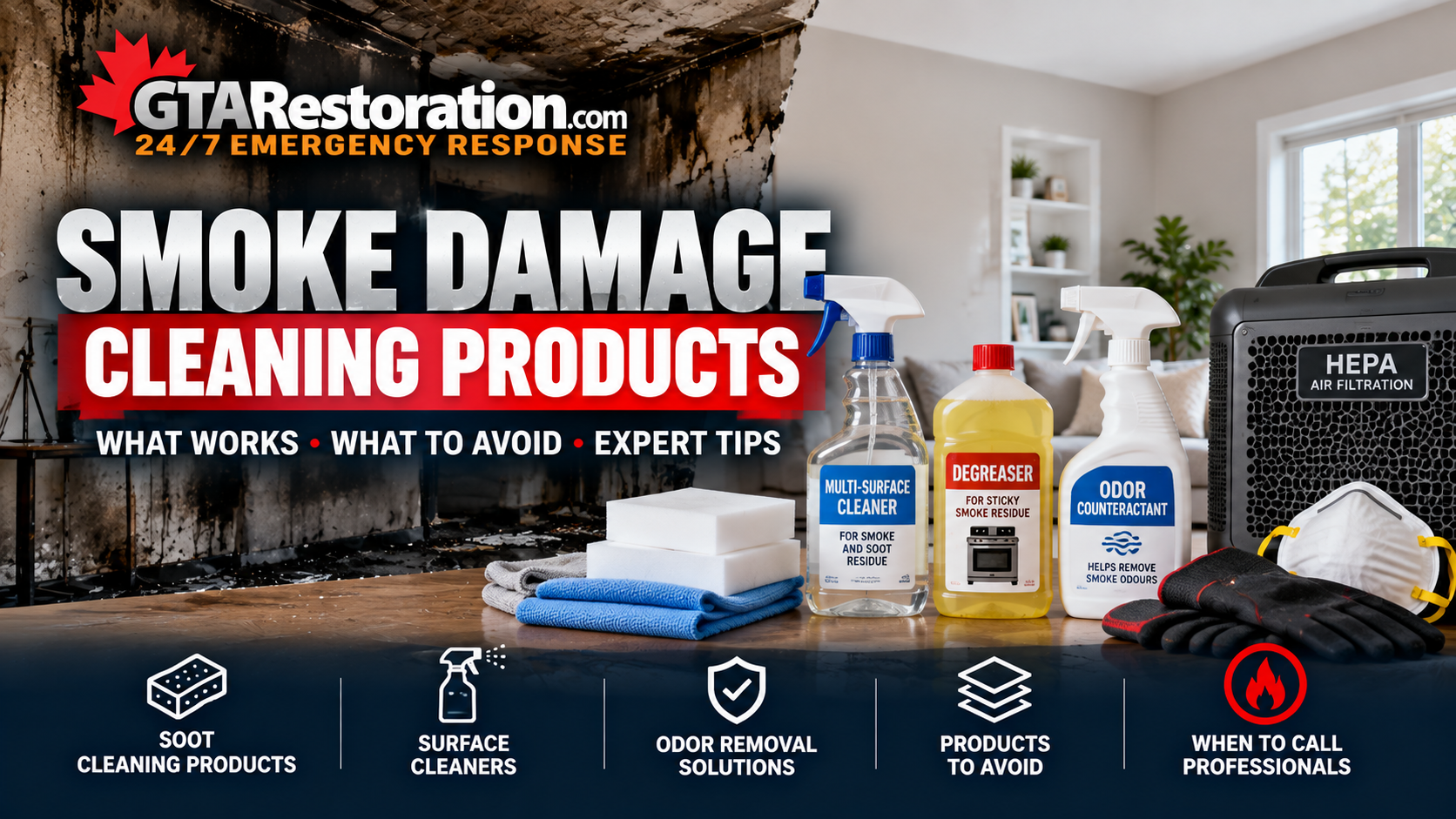
Dry chemical sponges for loose soot
Dry chemical sponges, sometimes called soot sponges, are designed to lift loose soot from painted walls, ceilings, finished wood, and other dry surfaces. They are used dry, with light strokes, and should not be rubbed aggressively. Once a sponge becomes loaded with residue, it must be trimmed or replaced according to the product instructions.
These sponges are useful during early surface cleaning, but they are not a solution for oily residues, deeply contaminated drywall, or smoke odors trapped behind walls.
pH-neutral and low-residue cleaners
For washable painted surfaces, sealed countertops, glass, tile, and some finished furniture, a pH-neutral, low-residue cleaning product may be appropriate after loose soot has been removed. The objective is to clean without leaving a film that attracts more dust or interferes with future sealing and painting.
Always test a small, inconspicuous area first. Flat paint, older finishes, wallpaper, and unsealed materials can react poorly even to mild products. Avoid saturating walls or ceilings. Added moisture can damage finishes and may contribute to mold growth if drying is incomplete.
Degreasers for sticky smoke film
Smoke from synthetic materials, cooking oils, plastics, and some electrical fires can leave a greasy film. A restoration-grade degreaser may be needed for hard, nonporous surfaces such as metal, ceramic tile, sealed cabinetry, and appliances.
Degreasers are effective, but stronger is not always better. Highly alkaline products can dull finishes, damage aluminum, strip coatings, and irritate skin and airways. They should be diluted precisely, used with appropriate personal protective equipment, and rinsed when required by the manufacturer.
Odor counteractants and sealers
Odor counteractants are designed to neutralize or bond with odor-causing molecules. They can help after source removal and detailed cleaning, particularly on washable surfaces and contents. However, sprays and fragrances that merely cover smoke odor do not solve the problem.
When smoke has penetrated drywall, framing, subfloors, or other porous building materials, a professional may recommend an odor-blocking sealer after cleaning and drying. Sealers are not a shortcut. Applying them over active soot or moisture can trap contamination and make later restoration more difficult.
Specialized products for fabrics and contents
Soft goods retain smoke quickly. Clothing, bedding, upholstered furniture, rugs, and drapery may need textile-specific deodorizing and cleaning products. Some items can be professionally laundered or cleaned; others may be permanently damaged by heat, soot, or odor penetration.
Do not put heavily smoke-damaged clothing into a household washing machine before it has been evaluated. The residue can set into fabric, transfer odors to the machine, and spread contamination to other laundry.
What Not to Use After Smoke Damage
Certain common cleaning methods can make a bad situation worse. Avoid dry dusting, sweeping, or using a standard household vacuum on visible soot. These actions can spread fine particles through the room and force them into carpet, furniture, and HVAC returns.
Do not mix cleaning chemicals. Bleach, ammonia, acids, and degreasers can create dangerous fumes when combined. Bleach is also not a universal smoke cleaner. It does not reliably remove soot, and it can discolor materials or react with residues.
Skip heavily scented sprays, candles, and incense. They add fragrance without removing the source of odor, and open flames should never be introduced into a fire-damaged property. Ozone generators also require professional judgment. Ozone can damage certain materials and may irritate lungs; occupied spaces, pets, and plants must never be exposed during treatment.
Safe Cleaning Comes Before Product Selection
Before anyone starts cleanup, confirm that the property is safe to enter. Fire-damaged structures may have compromised ceilings, damaged electrical systems, broken glass, water intrusion from firefighting efforts, and hidden hot spots. If the fire department or utility provider has restricted access, do not re-enter until clearance is given.
Wear gloves, eye protection, and a properly fitted respirator rated for fine particles when handling limited soot contamination. Keep children, older adults, pets, and anyone with respiratory conditions away from the affected area. If soot has entered the HVAC system, turn the system off until it can be inspected. Running it can distribute odor and particulate contamination throughout the building.
For small, isolated residues, the safest process is controlled: ventilate when conditions allow, remove loose soot with a dry chemical sponge, clean compatible hard surfaces with the appropriate product, and dry everything fully. Take photos before disposal or cleaning if an insurance claim may be involved.
When Products Are Not Enough
Smoke damage often extends beyond what is visible. Odors may travel through wall cavities, plumbing penetrations, insulation, ductwork, and shared corridors in apartments or condominiums. Commercial properties may also face business interruption, code requirements, inventory loss, and tenant safety concerns.
Professional fire and smoke restoration typically combines HEPA filtration, detailed soot removal, moisture assessment, contents cleaning, thermal fogging or other controlled deodorization methods, HVAC evaluation, and selective removal of unsalvageable materials. The right approach depends on the fire source and the building assembly. A clean-looking room is not necessarily a restored room.
GTA Restoration responds with trained restoration technicians who can document conditions for insurance, identify hidden smoke migration, and coordinate cleaning, odor removal, repairs, and recovery under one response plan. This is especially valuable after a fire involving multiple rooms, electrical components, a condo unit, or a commercial facility.
A Practical Decision Point for Property Owners
Use consumer smoke damage cleaning products only when the affected area is small, the residue is limited, no structural or electrical damage is present, and there is no persistent odor after cleaning. Even then, test products carefully and avoid over-wetting surfaces.
Call a restoration professional immediately when smoke has affected more than one room, residue is greasy or widespread, occupants are experiencing respiratory irritation, HVAC systems may be involved, or the fire required emergency response. Fast action limits staining, corrosion, odor migration, and insurance complications.
The best cleaning product is the one matched to the residue, surface, and scope of loss. When the damage goes beyond a small surface cleanup, a fast professional assessment protects the property, the people inside it, and the path back to normal operations.