
Tags: Emergency Plumbing, Plumbing Emergency,
For non-emergencies use our contact form


Emergency? 24-Hours
416-800-0000A simple routine helps you avoid plumbing emergencies. GTA Restoration can discuss plumbing concerns and cleanup in Toronto and the GTA.
Check for drips and swelling. Investigate repeated moisture.
Tell your plumber which fixtures keep blocking and when.
Check accessible hoses for wear and follow maintenance guidance.
Keep heat on while away and arrange property checks.
Notify building management early so staff can coordinate access.
Keep valves reachable. Never enter unsafe water to reach one.
Plumbing repairs stop leaks; drying addresses wet building materials.
Keep people away from sewage and stop using affected fixtures.
Follow up on recurring problems. Maintenance cannot prevent every failure.
Call GTA Restoration at 416-800-0000 for Toronto and GTA plumbing or water damage enquiries. Describe the problem so we can discuss availability.
Service Areas Across Canada
GTA Restoration serves communities across Canada, including Toronto and the GTA. U.S. locations are opening. Browse our Canadian service areas below, and contact us to confirm services and availability for your address.
Search
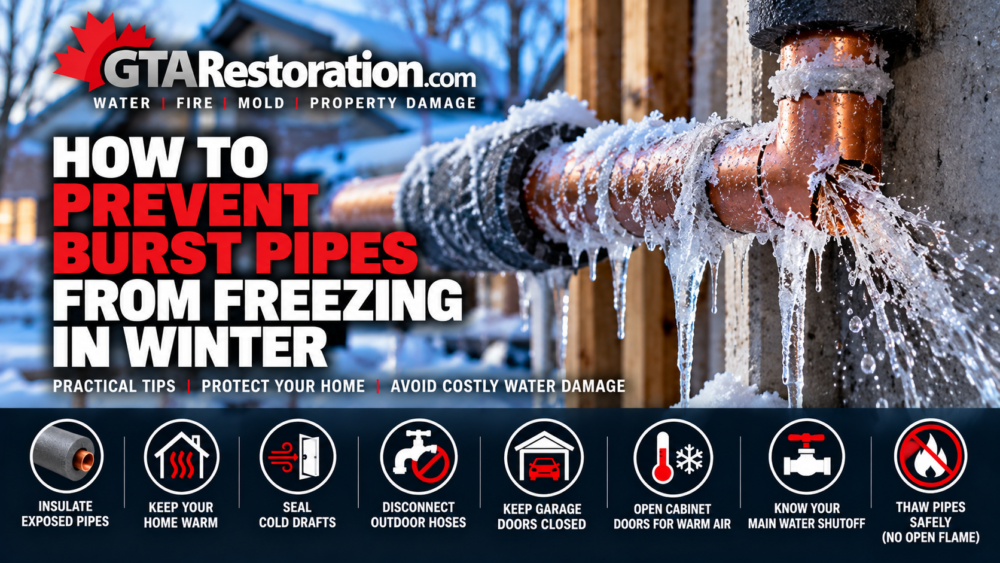
Keep grease and wipes out of drains, check for leaks and protect pipes from cold. Address repeat problems early; maintenance cannot prevent every failure.
Close the appropriate water valve if you can reach it safely. Stay clear of electrical hazards, then call for plumbing help. Notify building management in a condo or rental.
Yes, but it can also reflect increased use or a running toilet. Compare recent use and arrange an assessment if the change remains unexplained.
Buildup or a problem farther along the line may be involved. Note which fixtures are affected and ask a plumber to identify the cause.
Call GTA Restoration at 416-800-0000 for Toronto and GTA enquiries. Describe the leak, property address and any hazards so we can discuss the next step and availability.
Direct Billing & Insurance Claims
Ask your insurer about coverage, deductibles and the records it needs.

In-House Financing Available
Financing up to 24 months. No interest. No money down. Ask us about the terms.
Learn more ↴ 
RELATED ARTICLES





Call Us 416-800-0000
Emergency? 24/7 Restoration Help
We cover all GTA 24/7.
Head Office:
250 Consumers Rd,
#10
Toronto, ON
M2J 4V6,
Open 24 hours
Downtown Office:
1 Toronto St,
#10
Toronto, ON
M5W 1A1,
Open 24 hours
For non-emergencies use our contact form
Not sure what you need?
Call us today to find the best product for your situation.
Head Office:
101 Lebovic Ave,
Unit #10
Scarborough,
ON, M1L 4T7
Hours
24-Hours Open
Downtown Office:
250 Yonge Street,
Unit #1A
Toronto,
ON, M5B 2L7
Hours
24-Hours Open
Tips to Avoid Plumbing Emergencies in Toronto
Get a quote today


