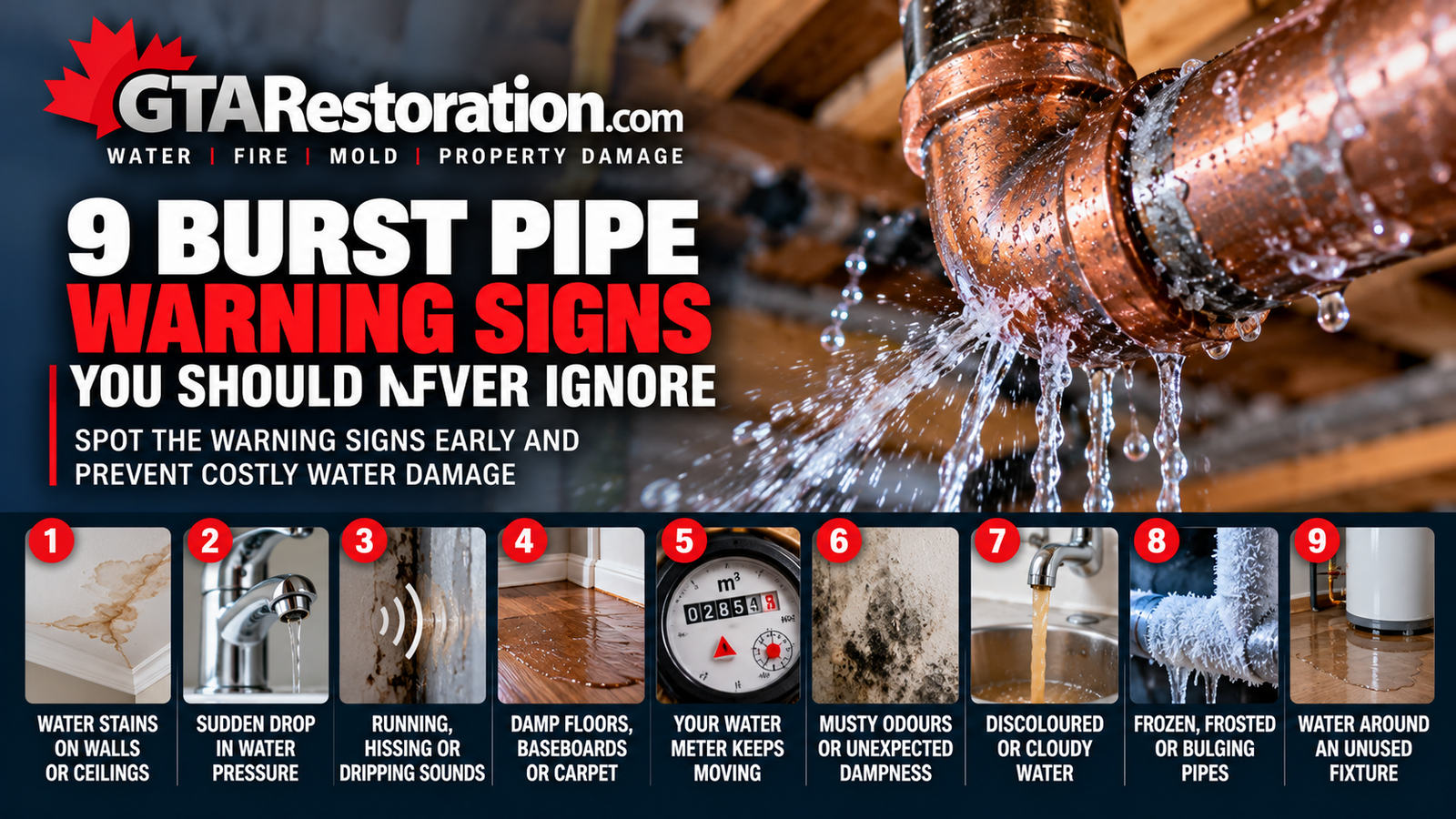
9 Burst Pipe Warning Signs You Should Never Ignore
Burst pipe warning signs are not always as obvious as water pouring through a ceiling. In many cases, a plumbing problem starts with a small stain, lower water pressure, unusual sounds or unexplained moisture before a pipe fully fails.
Knowing the early signs can help homeowners, landlords, property managers and business owners act before water spreads through drywall, flooring, insulation and other building materials. If you suspect an active plumbing leak, find the source when possible and shut off the water safely.
1. Water Stains Can Be a Burst Pipe Warning Sign
A yellow, brown or grey stain on a wall or ceiling can point to water moving behind the surface. Pay close attention when a stain becomes larger, darker or wetter after someone uses a nearby fixture.
However, not every stain comes from a burst pipe. Roof leaks, appliances and condensation can cause similar damage. Therefore, investigate a new or changing stain instead of assuming it is harmless.
2. Low Water Pressure and Broken Pipe Warning Signs
If one faucet has weak flow, the cause may be local. However, a sudden pressure drop at several fixtures can indicate a larger plumbing problem.
The City of Toronto explains that low water pressure can have several causes, including private plumbing problems and frozen pipes. Therefore, check whether the problem affects one fixture or the entire property before deciding what to do.
3. Unusual Sounds From a Hidden Pipe Leak
Listen for water sounds when faucets, toilets and appliances are not running. Continuous hissing, dripping or rushing behind a wall or ceiling may indicate an active hidden leak.
Banging pipes do not always mean a pipe has burst. Still, unusual plumbing sounds deserve attention, especially when they appear together with stains, damp materials or pressure changes.
4. Damp Floors, Baseboards or Carpet
Water can travel away from the actual pipe failure before it becomes visible. As a result, damp flooring, swollen baseboards, lifting vinyl, warped hardwood or wet carpet may appear in another part of the room.
Check areas near sinks, toilets, dishwashers, washing machines, water heaters and plumbing walls. In condos and multi-unit buildings, water may also travel from another unit or shared plumbing system.
5. Water Meter Movement Can Reveal a Hidden Leak
A water meter can help identify an unexpected leak. First, turn off faucets, appliances and other water-using equipment. Then check the meter.
The City of Toronto water-use guidance explains that unexpected meter movement when no water is being used can point to a leak.
If this happens, professional hidden leak investigation may help narrow down the source.
6. Musty Odours and Hidden Pipe Leak Signs
A new musty smell can point to moisture inside a wall, cabinet, basement or flooring system. In addition, unexplained humidity or repeated condensation near plumbing areas can be another warning sign.
Odour alone does not prove that a pipe has burst. However, when it appears with stains, wet materials or water-pressure changes, investigate the area before the damage spreads.
7. Discoloured or Cloudy Water
Brown, yellow, cloudy or metallic-looking water can have several causes, including sediment, corrosion or plumbing work. Therefore, discolouration by itself does not prove a pipe failure.
However, if discoloured water appears together with low pressure, leaks or unusual plumbing sounds, stop using the affected fixture until you understand the cause.
8. Frozen Pipes Are Major Burst Pipe Warning Signs
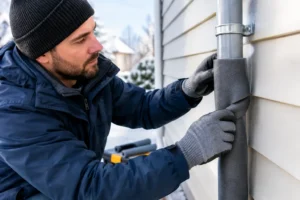
Frozen plumbing is one of the most important winter burst pipe warning signs. A faucet that produces little or no water, visible frost or a swollen section of pipe may indicate freezing.
The City of Toronto frozen pipe guide advises homeowners to know the location of the main water shutoff and never use an open flame to thaw frozen plumbing.
Instead, use safe controlled warming or contact a licensed plumber when you cannot locate or safely thaw the frozen section.
9. Water Around an Unused Fixture
A puddle beneath a sink, toilet, water heater or washing machine should not be ignored when the fixture is not being used. Dry the area and check whether water returns.
A recurring puddle may come from a supply line, valve, fitting, appliance hose or pipe behind the fixture. If water continues spreading, turn off the appropriate supply valve or main water supply when safe.
What to Do When You Notice Burst Pipe Warning Signs
Shut Off the Water After a Suspected Pipe Burst
If water is actively escaping, locate the main shutoff valve and close it when you can do so safely.
The City of Toronto pipe leak and burst guidance recommends shutting off the main water supply while waiting for plumbing repairs after an indoor pipe leak or burst.
Stay Away From Electrical Hazards
Do not enter standing water when electrical outlets, appliances, wiring or panels may be affected. Instead, keep people away from the area and contact the appropriate professional.
Call an Emergency Plumber for a Burst Pipe
The plumbing problem needs to be repaired before it can continue releasing water. GTA Restoration provides 24-hour emergency plumbing in Toronto for burst pipes, frozen pipes and other urgent plumbing problems.
Document Burst Pipe Water Damage
When conditions are safe, take photos and videos of visible water and damaged materials. Also, keep plumbing invoices, restoration reports and other project records if an insurance claim may apply.
Water Damage After Burst Pipe Warning Signs Become a Leak
A Pipe Repair Does Not Dry the Property
Repairing the plumbing stops the source, but water may remain inside drywall, flooring, insulation, cabinets and framing. Therefore, the next step may involve extraction, moisture readings and structural drying.
Professional water removal becomes especially important when water has reached porous materials or travelled into several rooms.
Check for Hidden Moisture After a Burst Pipe
One of the most important reasons to act on burst pipe warning signs early is that hidden water can travel farther than expected. Moisture meters and other inspection tools help determine which areas actually became wet.
If the leak has already caused flooding, see our emergency flood cleanup and water damage information.
Prevent Future Burst Pipe Problems
Regularly inspect visible plumbing, appliance hoses and shutoff valves. In addition, insulate pipes in cold areas and know where the main water shutoff is located.
Water sensors can also provide early warning around mechanical rooms, water heaters, sinks and appliances. See our guide to the best water leak sensors for more prevention options.
Ultimately, recognizing burst pipe warning signs can give you valuable time to control the water before a small plumbing problem becomes a larger restoration project. New stains, low pressure, unusual sounds, frozen pipes and unexplained moisture all deserve attention.
Think You Have a Burst or Leaking Pipe?
GTA Restoration provides emergency plumbing, water extraction, moisture checks and water-damage restoration throughout Toronto and the GTA.
Water actively leaking? Shut off the supply when safe and get help before moisture spreads farther.
Call Us: 416-800-0000
Learn More
Burst Pipe Plumber | Signs of Hidden Mold in Your Home | Emergency Plumber After Burst Pipe | Emergency Pipe Burst Repair in Toronto | Burst Pipe Water Cleanup Done Fast