
For non-emergencies use our contact form
Emergency Sump Pump Guide | Failure, Backup & Flooding
A sump pump often stays out of sight until the night it cannot afford to fail. Heavy rain, rapid snowmelt, a power outage or a plumbing leak can send water toward the lowest point of a building. This emergency sump pump guide focuses on what matters when water is already entering the basement, not just the specifications printed on a pump box. The right system can reduce damage, while a neglected or undersized setup can lead to soaked finishes, damaged electrical equipment, mould growth and an insurance claim.
For homeowners, landlords, condo managers and commercial operators, the goal is not simply to own a sump pump. Instead, the system should activate reliably, remove water at the required rate, continue working during realistic failure conditions and support a clear emergency response plan.
What an Emergency Sump Pump Must Do
A primary sump pump removes groundwater that collects in a sump basin below the basement floor. The system helps control rising groundwater and pressure around the foundation. During a severe storm, however, the primary pump may face much more water than it handles during normal operation.
An emergency sump pump setup should account for four major challenges: water volume, lift height, discharge restrictions and power loss. These conditions affect one another. For example, a pump may have a strong gallons-per-hour rating under ideal conditions but move much less water when it must push water several feet upward and through a long discharge line.
A frozen, clogged, crushed or poorly routed outlet pipe can also prevent the system from keeping up. The practical question is not simply, “Is the pump powerful?” Instead, ask, “Can the entire system remove water faster than it enters the property during a storm?” The answer depends on the pump, pit, check valve, discharge piping, electrical supply and outside drainage conditions.
Primary Pump Capacity and Construction
Choose a primary pump based on the actual water conditions at the property rather than horsepower alone. A deeper basement, high water table, large roof runoff load or frequent stormwater intrusion may require more capacity and a larger sump basin. Commercial and multi-unit properties may also benefit from duplex systems with alternating pumps or a duty-and-standby arrangement.
Cast-iron pumps can handle frequent or prolonged operation well because the housing helps manage heat. Thermoplastic models may suit lighter-duty applications, although actual demand should guide the decision. A vertical float switch may also work better in a narrow basin because it has less room to become obstructed than some tethered float designs.
A pump that cycles every few seconds needs attention. Short cycling can point to an undersized pit, failed check valve, incorrect float adjustment or water returning through the discharge line. Addressing the cause before the next storm can help prevent unnecessary wear on the pump.
Backup Power for High-Risk Basements
A standard electric sump pump stops when utility power fails. Unfortunately, severe wind and rain can cause power outages at the same time groundwater levels rise. For that reason, backup protection plays an important role in an emergency sump pump system.
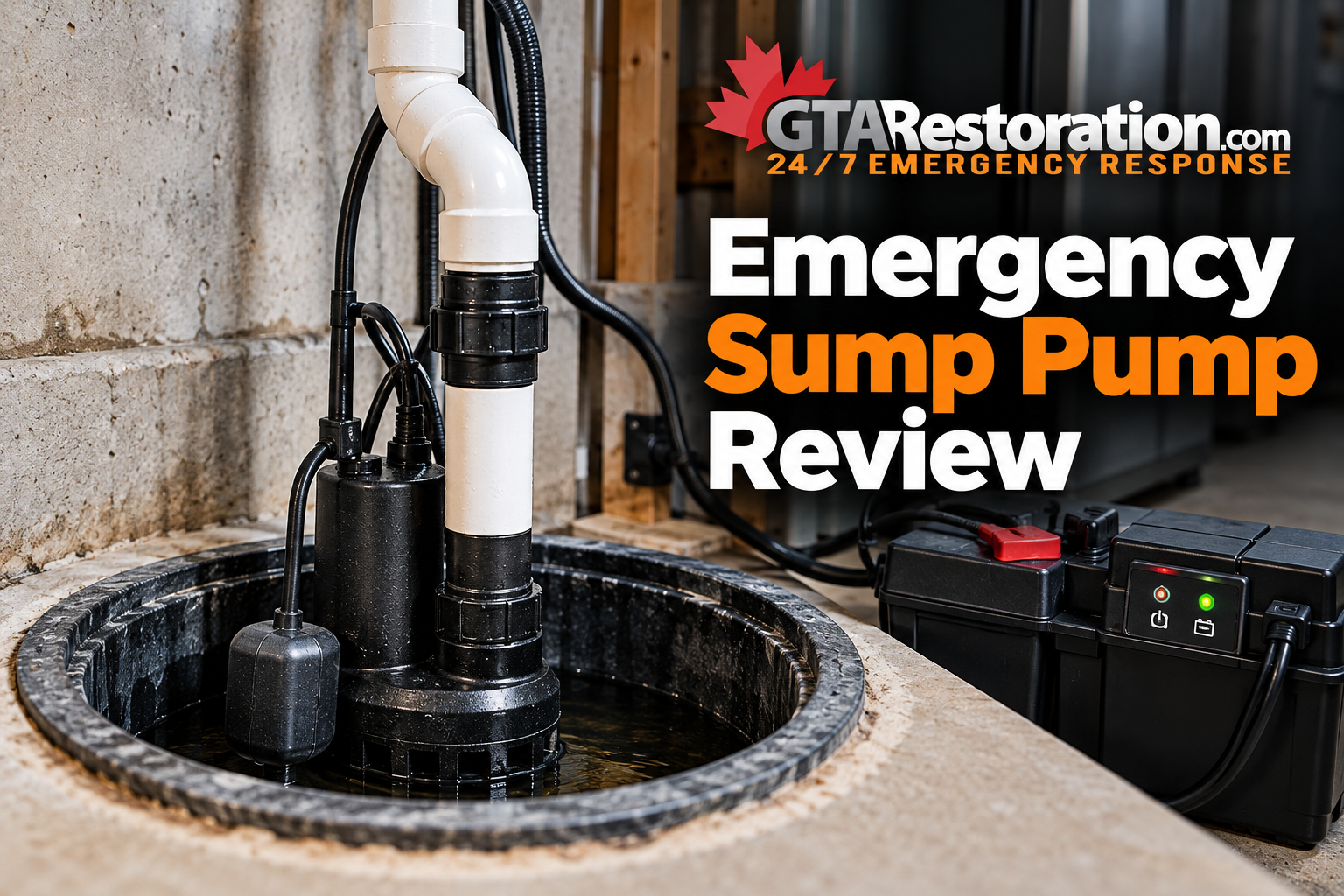
Battery backup pumps can provide temporary protection when the primary pump loses power or cannot keep up. However, performance depends on battery condition, charging capacity, water demand and regular maintenance. Test the battery and backup pump according to the manufacturer’s instructions rather than assuming the system will work when needed.
Water-powered backup pumps can operate without electricity, but they need adequate municipal water pressure and may use a significant amount of water during operation. They do not suit every property. A standby generator can support the main pump and other essential equipment, but a qualified professional should size and install it correctly.
There is no single backup option that fits every property. A home with occasional outages may need a different setup than a commercial building with frequent water intrusion. Therefore, expected water volume, outage risk and building use should guide the decision.
The City of Toronto also recommends regular sump-pump maintenance and suggests considering backup power for homes at risk of basement flooding. For local flood-prevention guidance, see the City of Toronto basement flooding prevention guide.
Emergency Sump Pump Failure Points to Check
Many pump problems start with system issues that owners do not notice until the water rises. Check the following areas before storm season and whenever a high-water alarm activates.
First, inspect the sump pit. Remove silt, gravel, construction debris and loose items that could interfere with the float or intake. The lid should also fit securely, especially in homes with children or pets. If sediment continues to collect inside the basin, the drainage system may need further assessment.
Next, test the float and pump operation. Slowly add water to the pit until the float activates. Confirm that the pump starts, moves water through the discharge line and shuts off after the water level drops. Do not rely only on the sound of the motor. Watch the water level to confirm that it actually falls.
Then inspect the discharge route. The system should move water far enough from the foundation that it cannot flow back toward the basement. Look for blocked outdoor outlets, damaged extensions, frozen sections and poor discharge locations. Also check the valve that prevents water in the vertical pipe from flowing back into the pit after the pump stops.
Finally, check the electrical supply. Use a properly grounded outlet and avoid overloaded extension cords or power strips. If the circuit trips repeatedly, contact a qualified professional because the cause may involve a failing motor, damaged wiring or water exposure. Never handle electrical equipment while standing in floodwater.
High-Water Alarms Provide Time to Act
A high-water alarm can warn occupants before water reaches the basement floor. This feature can be especially useful in rental properties, vacant homes, mechanical rooms and commercial buildings where no one may notice rising water right away.
Choose an alarm that occupants can hear or one that sends a remote alert. Then test it regularly. Property managers should also create a clear response plan with a designated contact, access instructions, shutoff locations and an emergency restoration number.
What to Do During an Emergency Sump Pump Failure
If water rises in the pit or begins spreading across the basement floor, act quickly but keep safety first. Stay away from standing water if it may have reached electrical outlets, appliances, panel boxes or wiring. Do not enter a flooded area to unplug equipment unless a qualified person has safely disconnected the power.
If the pump has power but does not move water, inspect only dry and accessible components. Confirm that the outlet has power, check for a tripped breaker and look to see whether the float appears stuck. Do not dismantle the pump while it sits in a flooded pit.
A blocked or frozen discharge line can also cause the pump to run continuously while the water level continues rising. In that situation, shut down unsafe equipment and arrange professional help rather than allowing the system to run indefinitely.
Move documents, valuables and portable equipment to a dry area only when you can do so safely. Avoid using a standard household vacuum to remove large amounts of water. Different types of floodwater can contain sewage, chemicals or other contaminants, especially when water enters through a drain backup or exterior flooding.
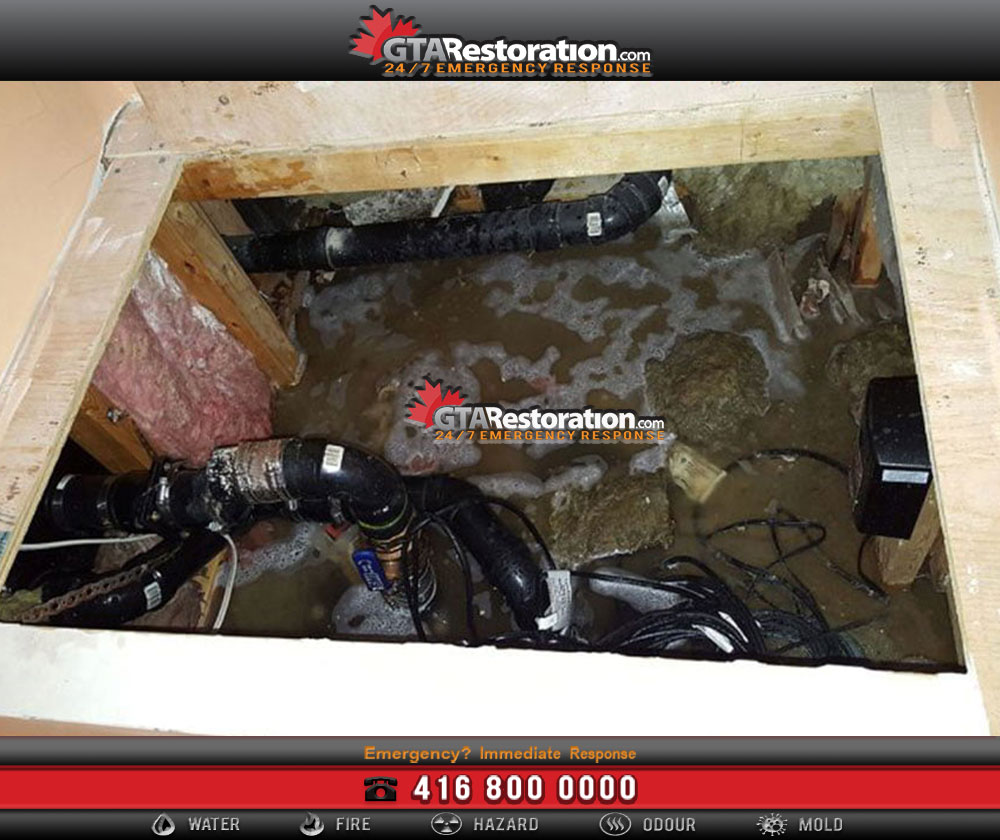
Porous materials such as carpet padding, insulation and drywall can also hold moisture after visible water disappears. Therefore, an emergency sump pump failure may require more than restoring pump operation.
GTA Restoration can assess the water source, provide emergency extraction and structural drying, document affected materials and help identify whether the event involves groundwater, a plumbing leak or sewer backup. That distinction affects the cleanup process, drying plan and documentation needed afterward.
Review the Sump Pump System After Every Water Event
Once the immediate emergency ends, review how the system performed rather than assuming the problem is solved because the floor looks dry. Check whether the pump started early enough, whether the backup system operated and whether the discharge route stayed clear.
Also identify where the water entered. A failed sump pump may not be the only cause. Foundation cracks, window wells, plumbing failures, poor grading and sewer problems can produce similar basement flooding.
Professional moisture detection can help locate water inside wall cavities, subfloors, insulation and framing that may not show obvious signs at the surface. Prompt drying also reduces the amount of time building materials remain wet and helps limit conditions that support mould growth.
If the pump could not keep up, replacing the unit alone may not solve the problem. Improvements may include correcting exterior grading, extending discharge lines, installing a larger sump basin, adding backup power, repairing foundation drainage or improving basement waterproofing.
A sump pump forms one important part of a basement flood-protection system. Test it before severe weather, keep the discharge route clear and treat every high-water alarm as an early warning. When water rises faster than the system can manage, focus first on electrical safety, fast water removal and a clear recovery plan before the damage spreads.
Did Your Sump Pump Fail or Is Water Entering Your Basement?
GTA Restoration provides flooded basement cleanup, water extraction, moisture inspections and structural drying throughout Toronto and the GTA.
Active basement flooding? Get help before water spreads into walls, flooring and stored contents.
Learn More
Flooded Basement Cleanup | Sump Pump Cleanup services in Toronto | Drying Floating Floors | How to Stop Basement Flooding Fast | How to deal with Flood Damage? 

 Facebook
  Instagram
  LinkedIn
  X / Twitter
  YouTube