...
Mold Removal and Mould Remediation Toronto - GTA Restoration

Emergency? 24-Hrs

416.800.0000
  • Home Restore
  • Emergency Services
    • Emergency Plumbers 24/7
    • Water Damage Restoration
    • Flooded Basement Cleanup
    • Mold Remediation Toronto
    • Sewer Backup Remediation
    • Fire & Smoke Restoration
    • Odour Removal Toronto
    • Biohazard & Crime Scene Cleanup
    • Emergency Roofing Repair
    • Water Leak and Detection
    • Condominium Restoration
    • Basement WaterProofing
    • Property Inspection Toronto
    • Sanitizing and Disinfection
    • Insurance Claim Appraisers
    • Equipment for Rent Toronto
    • Privacy Policy & Service Terms
  • Commercial Restoration
  • Blog
    • All Blog Articles
    • Video Library
  • Our Team
  • Contact
12 July 2026 - Categories:

How to Dry Wet Drywall Before Mold Takes Hold


Disaster Restoration Emergency Plumbing Service Blog Icon

A small leak behind a wall can turn into a mold and demolition problem long before the drywall looks seriously damaged. Knowing how to dry wet drywall quickly gives you the best chance of limiting repairs, protecting indoor air quality, and documenting the loss for insurance.

The key is not simply aiming fans at the wall. Drywall absorbs water, insulation can hold it against framing, and moisture may travel farther than the visible stain. Act immediately, but do not dry or remove materials until you know the source of the water and whether the area is safe to enter.

Start by stopping the water and making the area safe

Turn off the water supply if a plumbing leak is active. If the moisture came from a roof leak, broken appliance, overflowing toilet, or flooded basement, stop the source if possible and keep people away from affected electrical outlets, wiring, and appliances.

Do not enter standing water where electricity may be present. Shut off power to the affected area at the breaker only if you can do so safely. If water has reached electrical fixtures, a furnace, or a finished basement with multiple outlets, call qualified help before beginning cleanup.

The type of water matters as much as the amount. Clean water from a supply line or rain intrusion may allow drywall to be dried and saved when addressed promptly. Water from a washing machine, dishwasher, or other used-water source can contain contaminants. Sewage backups, toilet overflows involving waste, and floodwater are unsafe. Porous materials exposed to contaminated water, including drywall and insulation, usually need professional removal rather than drying.

How to dry wet drywall: assess whether it can be saved

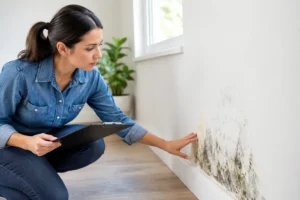
Drywall can sometimes be saved after a clean-water event, but only when it remains structurally sound and drying begins fast. Press gently on the affected area. A wall that feels soft, swollen, crumbly, bowed, or separated at joints has likely lost its integrity. Drywall with bubbling paint, visible mold, or a persistent musty odor also requires closer investigation.

Look beyond the stain. Water follows gravity and can wick upward through drywall. Check baseboards, flooring edges, nearby rooms, the opposite side of the wall, ceilings below the leak, and inside closets. In a condo or multi-unit building, a leak may have moved through shared plumbing walls or affected a neighboring unit.

Professional restoration teams use moisture meters and thermal imaging to identify damp material behind an apparently dry surface. That level of testing is especially valuable after a hidden pipe leak, an overflowing bathtub, or water entering behind cabinets. A wall can feel dry to the touch while insulation and framing remain wet.

As a practical rule, clean-water-damaged drywall that is firm and can be fully dried within 24 to 48 hours may be recoverable. If drying will take longer, or the wall is saturated, opening and removing affected sections is usually the safer and less costly decision than allowing mold growth to develop behind a finished surface.

Begin controlled drying as soon as possible

Once the water source is stopped and the area is safe, remove surface water from hard floors and move furniture away from the wall. Take clear photos and video before discarding damaged materials. Document the source, visible staining, damaged belongings, and the time the loss was discovered. This creates a useful record for an insurance claim.

For a limited clean-water incident, start with these actions:

  1. Remove wet rugs, boxes, and furniture that block airflow near the wall.
  2. Pull off baseboards carefully if the wall is wet at floor level, then inspect for moisture and mold behind them.
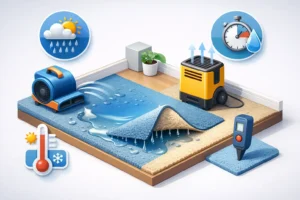
  3. Open windows only when outside air is drier than indoor air. During humid or rainy weather, keep windows closed and use dehumidification instead.
  4. Run fans across the wall surface and use a dehumidifier sized for the affected space.
  5. Keep the room warm, but do not apply intense direct heat that can crack finishes or create uneven drying.

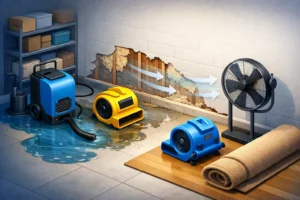
Fans alone are rarely enough for a saturated wall cavity. They move air across the painted surface but may not remove trapped moisture behind the drywall. Restoration-grade air movers, low-grain refrigerant dehumidifiers, and wall-cavity drying systems are designed to create controlled evaporation while removing moisture from the air.

Open the wall when insulation or the cavity is wet

If water entered through the ceiling or pooled along the bottom of a wall, insulation is a major concern. Fiberglass insulation can hold moisture against wood framing, while cellulose insulation can clump, sag, and create extended drying conditions. Wet insulation often needs to be removed so the wall cavity can be inspected and dried.

A controlled opening near the base of the wall can release trapped water and provide airflow. Restoration professionals may make a flood cut, which removes drywall several inches above the highest documented moisture line. The exact height depends on moisture readings, water category, material condition, and how far the water traveled. Cutting too low can leave wet material behind. Cutting too high creates unnecessary repair costs.

Do not open walls that may contain electrical wiring, plumbing, asbestos-containing materials, or other hazards unless you know what is behind the surface. Older buildings deserve particular caution. If you see dark growth, smell mold, or discover extensive contamination, isolate the area and arrange professional remediation.

Monitor drying instead of guessing

Drying is complete only when building materials reach an acceptable moisture level, not when the wall looks normal. Paint can conceal damp drywall, and a dry surface can give false reassurance.

Check the area at least daily for soft spots, new staining, peeling paint, condensation, odor, or mold. A moisture meter provides a more reliable answer, particularly around the bottom plate, studs, corners, and areas behind baseboards. The goal is to return materials to a moisture condition consistent with unaffected sections of the building.

Keep the dehumidifier running continuously, emptying it as needed or using a drain hose. Close doors to the affected area when practical so the equipment can control the space efficiently. If humidity stays elevated, water keeps appearing, or the wall is not drying after a day of active drying, the moisture source may still be active or hidden in the cavity.

When wet drywall needs professional restoration

Call a restoration professional immediately when the water is contaminated, the affected area is large, drywall has collapsed or softened, or the loss involves a ceiling, basement, commercial space, or multiple units. The same applies when water has been present for more than 24 to 48 hours, mold is visible, or the source cannot be confirmed.

Fast response is particularly critical after sewage backup or flooding. These events require containment, personal protective equipment, safe disposal of porous materials, cleaning of structural surfaces, and verification that the area is dry before rebuilding begins. Trying to save contaminated drywall can create health risks and expose occupants to odors and microbial growth.

For property managers and business operators, professional drying also helps reduce downtime. A documented drying plan, moisture readings, equipment logs, photographs, and itemized damage records can support insurance communication and help establish that the property was handled responsibly. GTA Restoration provides 24/7 emergency response, moisture detection, structural drying, cleanup, and recovery coordination when a water loss demands more than household equipment.

Do not repaint or rebuild too early

Replacing baseboards, patching drywall, or applying fresh paint before the wall is confirmed dry can trap moisture where you cannot see it. That is how a quick cosmetic repair becomes a recurring odor, peeling finish, or hidden mold claim months later.

Wait until moisture readings are acceptable, damaged insulation has been addressed, and the original leak has been repaired. Then replace drywall as needed, finish the surface, and restore the room with confidence. The best outcome is not a wall that merely looks dry, but one that is dry all the way through and ready to stay that way.

Share this... Spread the word!


Tags:

☛ ☛ Related Restoration Articles You May Also Like!

Emergency? Immediate response 24/7

416.800.0000 416.800.0000

For non-emergencies use our contact form

We Specialize in FAST Restoration Services!


Need Fast Restoration Service? Let our experienced team help. Your satisfaction is our priority.


We Service the GTA with a Fast 45-Minute Response Time!


“FREE VISUAL Estimate”


Restoration & Remediation

Do you need water removal services for your home or business? Are your floors, walls, furniture, or other areas affected by flooding or water damage? GTA Restoration provides professional water removal, drying, cleanup, and restoration services. Acting quickly can help reduce permanent property damage and lower the risk of mold growth. The longer water remains untreated, the greater the potential for additional damage.


Commercial & Residential Property Inspection

GTA Restoration uses professional moisture-detection technology, restoration equipment, and years of industry experience to identify water damage and locate hidden moisture. Specialized equipment allows our technicians to inspect many affected areas without unnecessary demolition, helping determine the extent of the damage before restoration work begins.


Helping You Every Step of the Way!


We understand that situations involving biohazard contamination in your home or business can be difficult and require professional attention. GTA Restoration provides dependable and experienced biohazard cleanup and remediation services for residential and commercial properties. For information about disaster restoration and recovery, visit the disaster restoration resource. For immediate assistance, contact GTA Restoration at (800) 506-6048.


Nationwide, Local Pricing

GTA Restoration offers local flood & water damage repair, mold removal/remediation, asbestos removal/abatement, fire/smoke damage repair services and much more.

Search

  • Ajax Asbestos Removal
  • Ajax Mold Removal
  • Ajax Water Damage
  • Anjou Mold Removal
  • Aurora Mold Removal
  • Aurora Water Damage
  • Beaconsfield Asbestos Removal
  • Beaconsfield Mold Removal
  • Boucherville Mold Removal
  • Brampton Asbestos Removal
  • Brampton Asbestos Removal
  • Brampton Mold Removal
  • Brampton Water Damage
  • Brossard Mold Removal
  • Burlington Asbestos Removal
  • Burlington Mold Removal
  • Burlington Water Damage
  • Burnaby Mold Removal
  • Burst Frozen Pipe Edmonton
  • Caledon Mold Removal
  • Caledon Water Damage
  • Calgary Asbestos Removal
  • Calgary Mold Removal
  • Calgary Water Damage
  • Cambridge Mold Removal
  • Cambridge Water Damage
  • Chambly Mold Removal
  • Chateauguay Mold Removal
  • Chomedey Mold Removal
  • Clarington Mold Removal
  • Concord Mold Removal
  • Concord Water Damage
  • Mississauga Mold Removal
  • Coquitlam Mold Removal
  • Cumberland Mold Removal
  • Dollard-des-Ormeaux Mold Removal
  • Dorval Mold Removal
  • Edmonton Asbestos Removal
  • Edmonton Mold Removal
  • Edmonton Water Damage
  • Etobicoke Asbestos Removal
  • Etobicoke Mold Removal
  • Etobicoke Water Damage
  • McMurray Fire Damage Services
  • Saskatchewan Asbestos Removal
  • Saskatchewan Mold Removal
  • Frozen Burst Pipe Repair Montreal
  • Frozen Burst Pipe Repair Ottawa
  • Gloucester Asbestos Removal
  • Gloucester Mold Removal
  • Hamilton Asbestos Removal
  • Hamilton Asbestos Testing
  • Hamilton Mold Removal
  • Hamilton Water Damage
  • Hampstead Mold Removal
  • Hampstead Water & Flood Damage
  • L'île-Bizard Mold Removal
  • Kahnawake Mold Removal
  • Kanata Asbestos Removal
  • Kanata Mold Removal
  • Kanata Water Damage
  • Kirkland Mold Removal
  • Kitchener Asbestos Removal
  • Kitchener Mold Removal
  • Kitchener Water Damage
  • Lasalle Mold Removal
  • Laval Asbestos Removal
  • Laval Mold Removal
  • Laval Water Damage
  • London Mold Removal
  • London Water Damage
  • Longueuil Mold Removal
  • Longueuil Water Damage
  • Markham Asbestos Removal
  • Markham Mold Removal
  • Markham Water Damage
  • Mississauga Asbestos Testing
  • Mississauga Mold Removal
  • Mississauga Water Damage
  • Montreal Air Duct Cleaning
  • Montreal Asbestos Removal
  • Montreal Asbestos Testing
  • Montreal East Mold Removal
  • Montreal Mold Removal
  • Montreal Water Damage
  • Mount-Royal Mold Removal
  • Nepean Asbestos Removal
  • Nepean Mold Removal
  • Nepean Water Damage
  • New Market Water Damage
  • New Westminster Mold Removal
  • Newmarket Mold Removal
  • North York Mold Removal
  • Oakville Mold Removal
  • Oakville Water Damage
  • Orleans Asbestos Removal
  • Orleans Mold Removal
  • Orleans Water Damage
  • Osgoode Mold Removal
  • Oshawa Mold Removal
  • Oshawa Water Damage
  • Ottawa Air Duct Cleaning
  • Ottawa Asbestos Removal
  • Ottawa Mold Removal
  • Ottawa Vermiculite Removal
  • Ottawa Water Damage
  • Pickering Mold Removal
  • Pickering Water Damage
  • Red Deer Mold Removal
  • Red Deer Water Damage
  • Richmond Hill Mold Removal
  • Richmond Hill Water Damage
  • Richmond Mold Removal
  • Rideau Lakes Mold Removal
  • Rockcliffe Park Mold Removal
  • Roxboro Mold Removal
  • Saint Laurent Mold Removal
  • Saint-Hubert Mold Removal
  • Scarborough Asbestos Removal
  • Scarborough Mold removal
  • Scarborough Water Damage
  • Sewer Backup Edmonton
  • Sewer Backup Montreal
  • Sewer Backup Ottawa
  • Sherwood Park Asbestos Removal
  • Sherwood Park Mold Removal
  • Spruce Grove Asbestos Removal
  • Spruce Grove Mold Removal
  • St. Albert Asbestos Removal
  • St. Albert Mold Removal
  • Ste.Dorothee Mold Removal
  • Surrey Mold Removal
  • Thornhill Mold Removal
  • Toronto & GTA Asbestos Removal
  • Toronto & GTA Mold Removal
  • Toronto Air Duct Cleaning
  • Toronto Water Damage
  • Unionville Mold Removal
  • Unionville Water Damage
  • Vancouver Asbestos Removal
  • Vancouver Mold Removal
  • Vancouver Water Damage
  • Vanier Mold Removal
  • Vaughan Mold Removal
  • Vaughan Water Damage
  • Westmount Mold Removal
  • Whitby Water Damage
  • Woodbridge Asbestos Removal
  • Woodbridge Mold Removal
  • Woodbridge Water Damage
  • Waterproofing
  • Kitchen & Bath Pro
  • Condo Restoration

Main Head Office


For Tips on Water Damage and Emergency Plumbing


We Work Direct with All Insurance Companies

Wᴇ ᴀʀᴇ ᴄᴏᴍᴍɪᴛᴛᴇᴅ ᴏɴ ᴡᴏʀᴋɪɴɢ ᴡɪᴛʜ ᴇᴠᴇʀʏ ɪɴsᴜʀᴀɴᴄᴇ ᴄᴏᴍᴘᴀɴʏ ᴀᴄʀᴏss Cᴀɴᴀᴅᴀ & USA.


In House Financing Available

In House Financing Available

FREE Financing Up To 24 Months NO INTEREST NO MONEY DOWN


Contact Us

Learn more ↴ GTA Restoration Tips

RELATED ARTICLES

  • How To Avoid Sprinkler Water Damage?
  • How To Deal With Floods & Water Damage?
  • Signs of Mould Growth In Your Property?
  • Avoid Mould Damage from Melting Snow
  • How to Prevent Water Damage In Summer
  • Avoid Mold Growth With Proper Air Flow
  • Prevent House Floods from Spring Rains
  • Prevent Frozen Burst Pipes in Winter
  • What To Do on Your Flooded Basement?


follow us on  LinkedIn Instagram Twitter Facebook YouTube


Our Clients

Our Vendor Clients


Affiliates

fully certified


GTA Restoration Toronto

Copyright © 2009 - 2026 All Rights Reserved. Sitemap/Links

LinkedInInstagram Twitter Facebook YouTube

Call Us 416-800-0000

Emergency? Immediate response 24/7

416.800.0000

416.800.0000

We cover all GTA 24/7.

Head Office:
250 Consumers Rd,
#10
Toronto, ON
M2J 4V6,
Open 24 hours

Downtown Office:
1 Toronto St,
#10
Toronto, ON
M5W 1A1,
Open 24 hours

For non-emergencies use our contact form


    Not sure what you need?

    Call us today to find the best product for your situation.

    416-800-0000 416-800-0000

    Head Office:
    101 Lebovic Ave,
    Unit #10
    Scarborough,
    ON, M1L 4T7
    Hours
    24-Hours Open

    Downtown Office:
    250 Yonge Street,
    Unit #1A
    Toronto,
    ON, M5B 2L7
    Hours
    24-Hours Open

    How to Dry Wet Drywall Before Mold Takes Hold

    Get a quote today



      GTA Restoration Assistant 24/7 Emergency Restoration Help
      Hi! I'm GTA Restoration's virtual assistant. How can I help with your property damage today?
      Emergency? Call 416-800-0000