
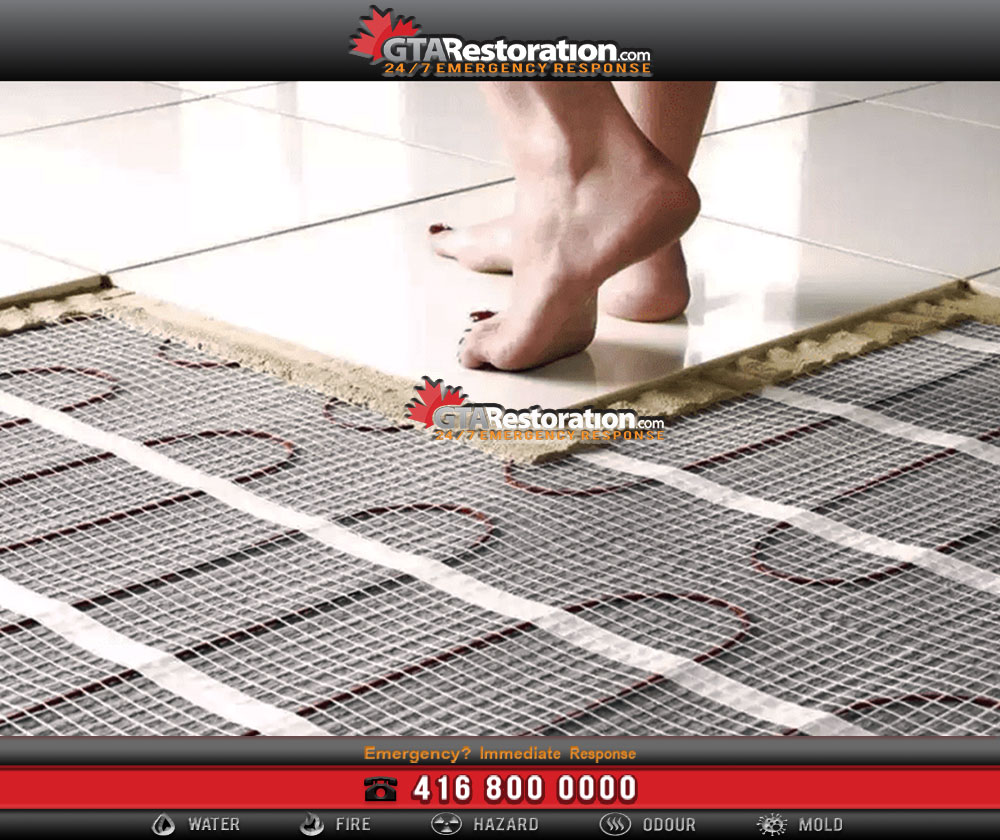
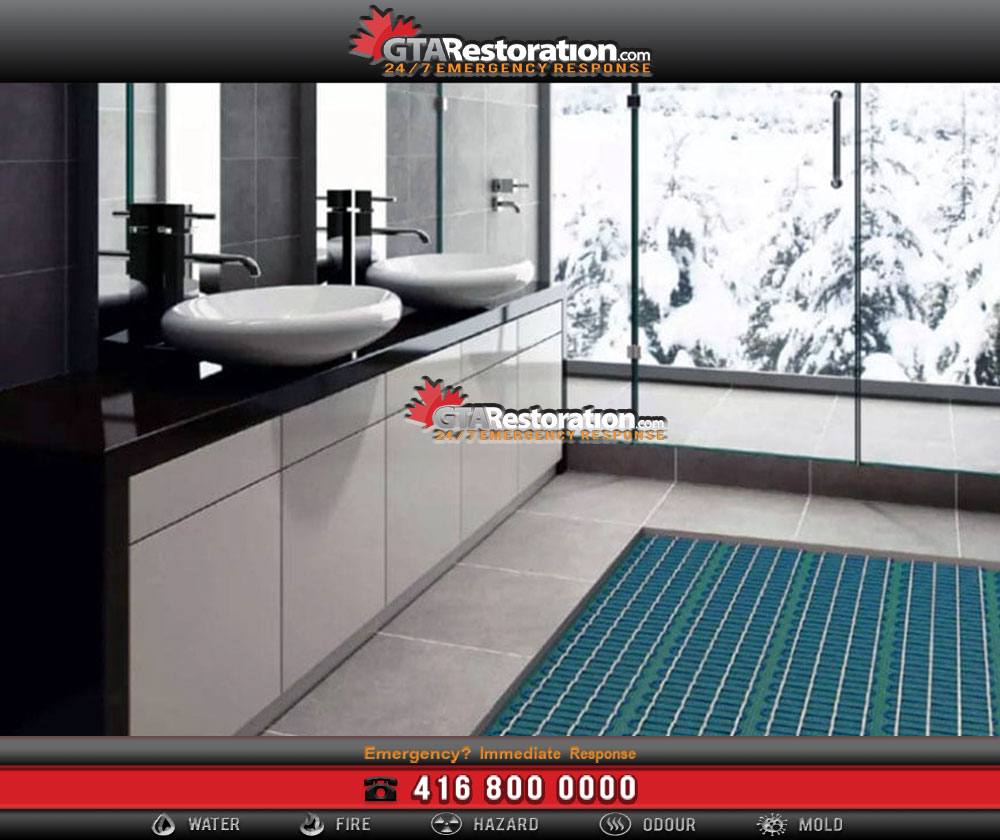
Tags: Bathroom Mold, Drying Floating Floors, Heated Flooring, Mold Prevention, Prevent Mold, Radiant Heat Floors,

For non-emergencies use our contact form


Emergency? 24-Hours
416-800-0000Before adding radiant floor heating, review how your bathroom handles water. These checks help you plan the work in order.
First, look for wet patches and stains. Note where they appear and whether they return after each shower.
Next, fix leaking pipes, fixtures and failed seals. Then, check nearby materials for moisture below the surface before covering them.
Make sure the fan draws air outdoors. Also, have weak airflow or damaged ducts checked before work begins.
Use a humidity meter between showers. If the room stays damp, review airflow and moisture sources with a qualified professional.
Ask how waterproofing and heated bathroom floors will work together. Confirm that the full assembly suits the space.
Then, use qualified trades for each part of the job. Also, keep installation records and product instructions for future repairs.
Arrange suitable cleanup before new finishes go in. Otherwise, hidden growth and damp materials may remain beneath the floor.
Wipe up splashes and dry wet mats. Then, check for recurring dampness so you can catch problems early.
Bathroom mold keeps coming back?
Call GTA Restoration to discuss moisture checks and cleanup.
Service Areas Across Canada
GTA Restoration serves communities across Canada, including Toronto and the GTA. U.S. locations are opening. Browse our Canadian service areas below, and contact us to confirm services and availability for your address.
Search
No. They may help surface drying. However, leaks and trapped moisture can still allow mold to grow.
Yes. Floor heat does not remove water from the room. So, use a fan that vents outdoors.
No. Normal floor heat is not a mold treatment. Instead, address the growth and its moisture source.
Heating mats alone do not waterproof a bathroom. The floor needs properly designed moisture protection.
Aim for 30% to 50% indoor humidity. Also, check that shower moisture clears rather than lingering.
Seek advice for widespread mold, recurring growth or hidden dampness. Then, plan repairs before adding new finishes.
Direct Billing & Insurance Claims
Ask your insurer about coverage, deductibles and the records it needs.

In-House Financing Available
Financing up to 24 months. No interest. No money down. Ask us about the terms.
Learn more ↴ 
RELATED ARTICLES





Call Us 416-800-0000
Emergency? 24/7 Restoration Help
We cover all GTA 24/7.
Head Office:
250 Consumers Rd,
#10
Toronto, ON
M2J 4V6,
Open 24 hours
Downtown Office:
1 Toronto St,
#10
Toronto, ON
M5W 1A1,
Open 24 hours
For non-emergencies use our contact form
Not sure what you need?
Call us today to find the best product for your situation.
Head Office:
101 Lebovic Ave,
Unit #10
Scarborough,
ON, M1L 4T7
Hours
24-Hours Open
Downtown Office:
250 Yonge Street,
Unit #1A
Toronto,
ON, M5B 2L7
Hours
24-Hours Open
Radiant floor heating systems can prevent bathroom mold
Get a quote today


