How To Respond To A Kitchen Leak Before Damage Spreads
How to Respond to a Kitchen Leak Before Damage Spreads
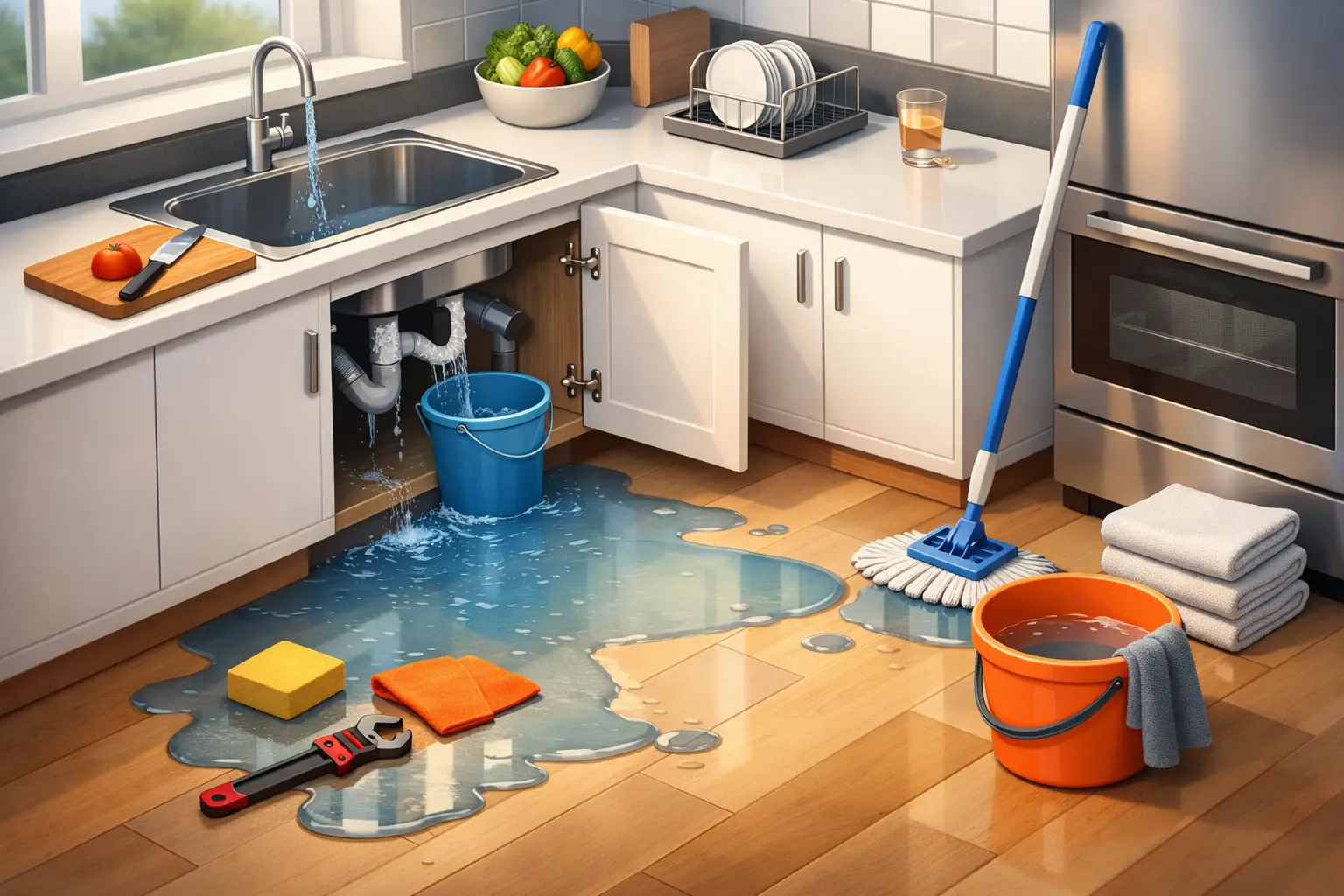
A kitchen leak can quickly damage cabinets, flooring, drywall and nearby rooms. Knowing how to respond to a kitchen leak during the first few minutes can help protect your home, condo, rental property or commercial kitchen. Fast action also makes kitchen leak cleanup easier and can reduce the amount of water that reaches hidden building materials.
Start with four basic steps: stop the water, make the area safe, document the damage and begin controlled drying. However, never assume a small puddle means a small problem. Water can travel beneath cabinets, behind appliances, under flooring and into the ceiling below before you notice additional signs.
Stop the Water Source First
First, check whether water continues to flow. If a supply line, faucet connection, dishwasher hose, refrigerator line or pipe under the sink caused the leak, close the nearest water valve when you can reach it safely.
If you cannot find the source, the valve will not close or water continues to spread, shut off the property’s main water supply. Condo residents, tenants and commercial occupants should also contact building management because a kitchen water leak may affect nearby units or shared plumbing.
Protect People Before Property
Next, keep children, pets and other occupants away from wet flooring. Avoid standing water near outlets, extension cords, appliances or electrical panels.
If water reaches electrical equipment, do not enter the wet area to unplug it. Instead, contact a qualified professional if you cannot safely control the power from a dry location.
Move Dry Items Away From the Leak
Once the immediate area is safe, move dry portable items away from the water. For example, remove rugs, food, small appliances, boxes and nearby furniture.
Towels or absorbent materials can slow a minor surface spill. However, they cannot remove moisture that has entered flooring, cabinet bases, walls or other building materials.
Find the Likely Source
Knowing how to respond to a kitchen leak also means finding where the water started. Common sources include sinks, faucets, dishwashers, refrigerators, garbage disposals and drain connections.
A puddle beneath the sink may come from a loose supply line, damaged valve, drain fitting or P-trap. Likewise, a refrigerator may leak from its water dispenser or ice maker line. Dishwashers can leak from the supply hose, drain connection, inlet or appliance body.
Look for the highest wet point instead of assuming the puddle marks the exact source. Water often follows plumbing, cabinet panels and flooring before it reaches an open area.
If water comes from a sewer line, sink backup, dishwasher drain or another dirty source, limit contact. Wastewater may contain contaminants and can require professional cleaning.
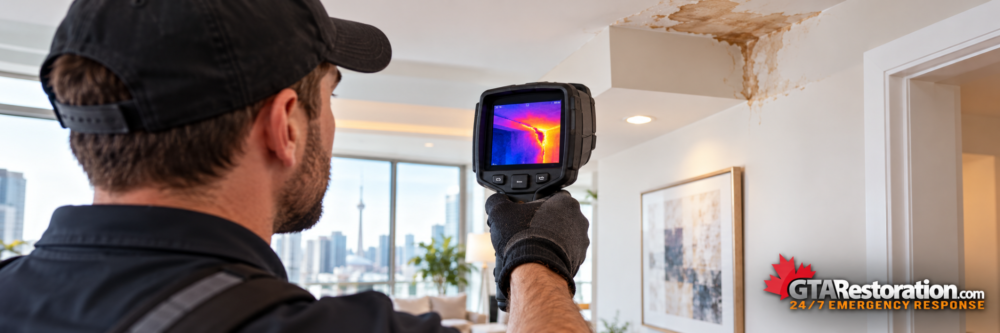
Also, avoid pulling out built-in appliances, opening walls or removing cabinets simply to search for the source. A plumber or restoration technician can use moisture meters, thermal imaging and leak detection tools to investigate with less disruption.
Protect Your Kitchen From Hidden Water Damage
Check Cabinets for Moisture
Kitchen cabinets can trap water inside toe-kick areas, base panels and spaces next to the wall. As a result, the front of the cabinet may look dry while moisture remains underneath.
Particleboard and similar materials can swell after they absorb water. Therefore, open cabinet doors and remove stored items when conditions allow. This gives you a better view of the affected area and improves access for drying.
Inspect Kitchen Flooring
A kitchen water leak can also travel beneath hardwood, laminate, vinyl and tile systems. Remove visible standing water promptly with towels, a mop or equipment designed for water pickup.
Never use a regular household vacuum to collect water. More importantly, do not assume dry-looking flooring means the layers below have dried.
Check the Ceiling Below
If your kitchen sits above another room or condo unit, inspect the ceiling below. Water stains, damp drywall, bubbling paint or active dripping can show that kitchen water damage has moved through the floor assembly.
Keep people away from a ceiling that sags or bulges. Trapped water can add substantial weight to wet drywall and create a safety concern.
Start Drying After You Control the Leak
After you stop the active leak, begin drying as soon as conditions allow. The U.S. Environmental Protection Agency recommends controlling moisture and drying wet materials quickly to help limit mold growth. You can review the EPA’s guide to mold and moisture control for additional information.
Fans may help with minor clean-water surface moisture. However, they cannot confirm whether water remains under flooring, behind cabinets or inside walls. Larger losses may require extraction equipment, dehumidifiers and controlled air movement.
Document the Kitchen Water Damage
Take clear photos and videos of the leak source, water, appliances, cabinets, flooring and any damage in nearby rooms. In addition, record when you found the leak and when you stopped the water.
Keep invoices, receipts and notes from plumbing and restoration work. If you plan to make an insurance claim, contact your insurer or broker because coverage depends on your policy and the cause of loss.
Watch for Signs of Hidden Moisture
Even after kitchen leak cleanup, hidden moisture may remain. Watch for swollen cabinet panels, lifting flooring, stains, soft drywall or musty odours.
If these signs appear, professional water leak detection and moisture testing can help identify affected areas before the damage becomes larger.
When a Kitchen Leak Requires Professional Help
Water Has Reached Building Materials
A minor faucet drip may only need a plumbing repair. However, call for professional help when an emergency kitchen leak reaches cabinets, flooring, drywall, ceilings or nearby rooms.
Professional water extraction can remove excess water before structural drying begins. Technicians can then use moisture readings to determine how far the water travelled.
The Leak Keeps Returning
A recurring kitchen plumbing leak may come from a damaged fitting, supply hose, valve, drain or concealed pipe. Therefore, avoid repeatedly drying the same area without repairing the source.
If you cannot identify the leak, a qualified plumber can inspect the plumbing while a restoration technician checks nearby building materials for moisture.
Dishwasher or Drain Water Is Involved
Clean supply water differs from water that has passed through a dishwasher, sink drain or garbage disposal. Because wastewater may contain food waste and other contaminants, keep children and pets away from the affected area.
Also, avoid using fans directly over dirty water until a professional assesses the area. Air movement can carry unwanted particles beyond the original leak area.
Avoid Common Kitchen Leak Mistakes
Do not ignore a slow leak because it appears contained. Repeated moisture can damage cabinet bases, subfloors and hidden materials over time. Likewise, leaving wet cabinets closed can slow drying and keep moisture trapped.
Avoid using tape, caulk or temporary clamps as a permanent plumbing repair. They may slow a drip for a short time, but they do not repair a failed fitting, damaged valve or worn hose.
Do not use bleach as a general solution for kitchen water damage. Cleaning products cannot remove trapped moisture, and you should never mix bleach with other cleaners.
If a dishwasher or refrigerator caused the leak, wait before restarting it. Have the appliance and its plumbing connections checked first so another leak does not interrupt the cleanup.
Professional Kitchen Leak Cleanup
GTA Restoration provides 24/7 plumbing and water damage response throughout Toronto and the GTA. Our team can help stop the source, remove water, locate hidden moisture, dry affected materials and document the restoration work.
Ultimately, knowing how to respond to a kitchen leak means acting quickly without creating more risk. Control the water when possible, protect occupants, document the loss and confirm that hidden areas have dried. A fast response can help limit kitchen water damage and reduce the chance of a larger restoration project.
Did a Kitchen Leak Cause Water Damage?
GTA Restoration provides emergency plumbing, water leak detection, moisture inspections, water extraction and structural drying throughout Toronto and the GTA.
Active kitchen leak or water damage? Shut off the water when safe and get help before moisture spreads farther.
A kitchen leak can spread beyond the visible puddle. Water may travel beneath cabinets, flooring and walls before signs appear elsewhere. Therefore, quick source control and moisture checks can help reduce further damage.
Shut Off the Water
If the source is easy to identify, use the closest fixture or appliance shutoff valve. However, if water continues to flow, the main water supply may need to be closed until the plumbing problem is repaired.
Protect Electrical Areas
Keep away from standing water near outlets, appliances and electrical equipment. If you cannot safely reach an electrical control without crossing wet flooring, wait for qualified help.
Check Under the Sink
Supply hoses, drain fittings, shutoff valves and the P-trap are common leak locations. In addition, water may run along a pipe before dripping into the cabinet, so inspect the highest visible wet area first.
Check Kitchen Appliances
Dishwashers and refrigerators with water connections can leak behind or beneath the appliance. Therefore, do not restart an appliance that has leaked until its water connection and the appliance have been checked.
Inspect Cabinets and Flooring
Kitchen cabinets can trap water inside the toe-kick, base and back panel. Flooring may also hold moisture below the finished surface. As a result, visible dryness does not always mean the area has fully dried.
Look for Ceiling Damage Below
Water can pass through the floor assembly into the room or unit below. Stains, bubbling paint, damp drywall or dripping can signal that moisture has travelled farther than expected.
Find Hidden Moisture
Moisture meters and other inspection tools can help identify wet areas behind finished surfaces. This information helps determine whether materials can dry in place or require additional access.
Professional Water Extraction
When water affects more than a small surface area, professional extraction can remove bulk water before structural drying begins. Dehumidification and air movement can then help suitable materials dry more effectively.
Document the Damage
Take photos of the source and affected materials before major cleanup when it is safe. Also, keep records of emergency work, repairs and restoration services if an insurance claim may be needed.
Kitchen Water Damage Restoration
GTA Restoration provides emergency plumbing support, water extraction, moisture assessment and structural drying throughout Toronto and the GTA. The required response depends on the source, amount of water and materials affected.
Concerned About a Kitchen Leak or Hidden Moisture?
Get professional help locating the leak and checking cabinets, floors, walls and nearby areas before hidden water damage becomes larger.
GTA Restoration offers local flood & water damage repair, mold removal/remediation, asbestos removal/abatement, fire/smoke damage repair services and much more.
How to Respond to a Kitchen Leak – Frequently Asked Questions
What should I do first when my kitchen is leaking?
Find the source and shut off the nearest water valve when it is safe. If the leak continues, shut off the main water supply and arrange professional help.
Where do most kitchen leaks come from?
Common sources include sink supply lines, drain fittings, faucets, dishwashers, refrigerators, garbage disposals and hidden plumbing connections.
Can water stay trapped under kitchen cabinets?
Yes. Moisture can remain beneath cabinet bases, toe-kicks and flooring even after the visible surface appears dry.
Should I use a fan after a kitchen leak?
Only after the source is stopped and the water is not contaminated. Larger losses may require professional extraction, dehumidification and controlled structural drying.
When should I call a restoration company?
Call when water has reached cabinets, floors, walls, ceilings or nearby rooms, or when you cannot locate hidden moisture or fully dry the affected area.












You must be logged in to post a comment.