


For non-emergencies use our contact form
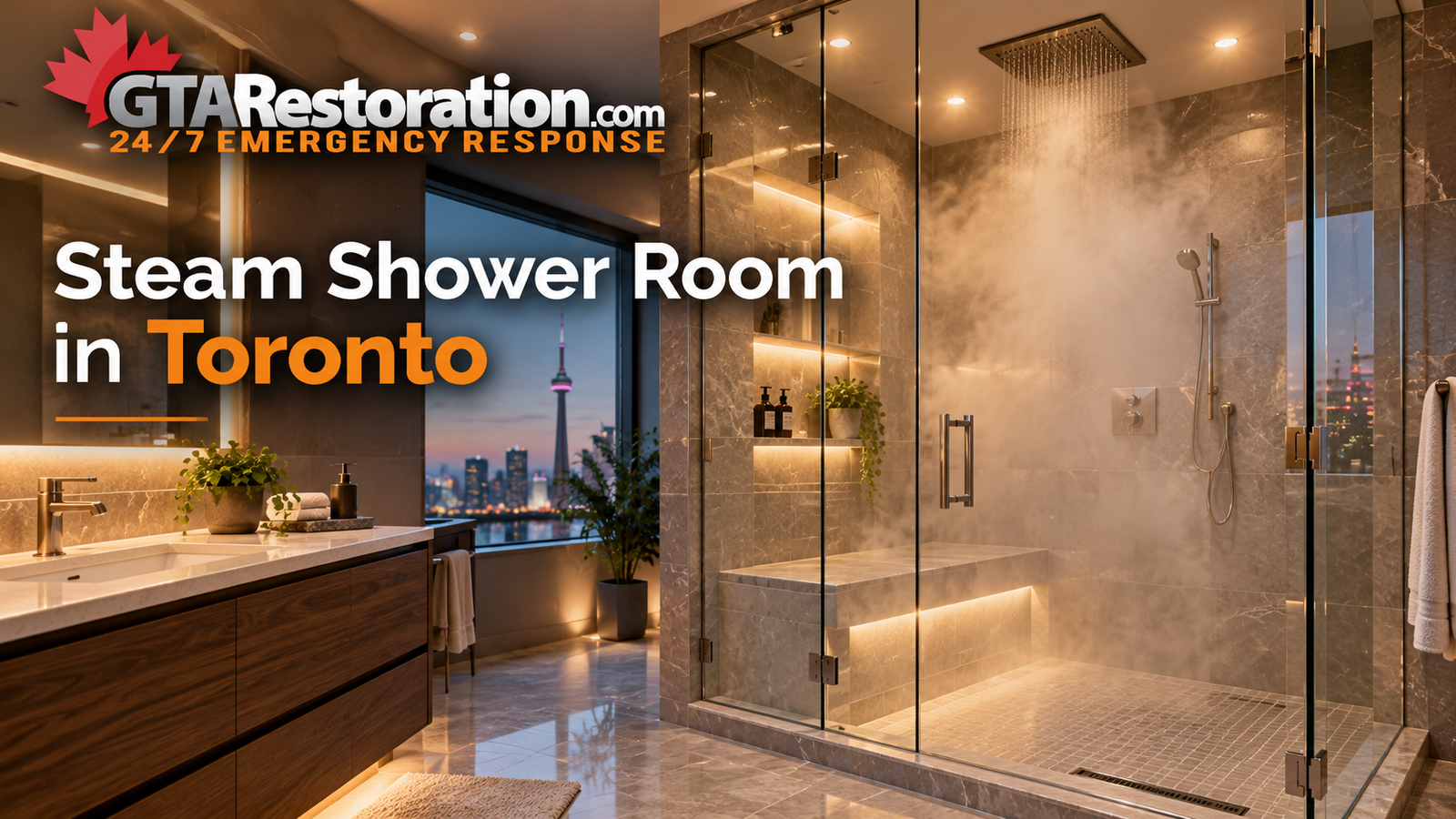
Steam Shower Room in Toronto: What to Plan First
A steam shower room in Toronto can add a spa-like feature to a home, but it needs more planning than a regular shower. Steam creates a lot of warm moisture, so waterproofing, airflow, drainage and plumbing all matter. A nice tile finish alone will not protect nearby walls, floors or ceilings if water or steam escapes from the shower area.
For this reason, homeowners should plan the full wet area before choosing tile, glass or fixtures. The shower walls, ceiling, plumbing, drain and fan should all work together to keep water inside the shower and move extra moisture out of the bathroom.
How a Home Steam Shower Works
A steam shower uses a small generator to heat water and make steam inside a closed shower area. Unlike an open shower, the glass and walls keep much more warm moisture inside. As a result, the surfaces around the shower deal with more heat and moisture than a normal bathroom.
Modern systems may also include digital controls, lights, seating and rainfall showerheads. However, these features should come after proper waterproofing, drainage and airflow.
Keep the Steam Inside the Shower
A steam shower should keep most of the steam inside the shower area instead of letting it spread through the bathroom. Therefore, installers should pay close attention to gaps around glass, doors, pipes and ceiling joints.
The ceiling also matters because steam rises. When warm steam touches a cooler surface, it can turn back into water. Good design helps keep that water inside the shower instead of allowing it to reach nearby walls and ceilings.
Waterproof the Steam Shower Properly
Tile does not create the full water barrier by itself. The system behind the tile must stop water from reaching the wall and floor materials. Corners, drains, joints and pipe openings need extra care because leaks often start in these areas.
Before work begins, ask the contractor what waterproof system they plan to use and make sure it is made for steam showers. Also, follow the maker’s instructions for the membrane, tile products and steam unit.
Choose Materials That Handle Moisture
Steam shower materials should handle regular heat and moisture. The right tile, grout, sealant, wall board and waterproof layer can help protect the area when workers install them as one complete system.
At the same time, avoid leaving materials that soak up water exposed inside the steam area. If water reaches wood, drywall or insulation behind the finish, damage may stay hidden until stains, swelling or smells appear.
Airflow and Moisture Control Around a Steam Shower
Bathroom Ventilation Still Matters
Even a well-built steam shower room in Toronto releases moisture when someone opens the door. Therefore, the bathroom still needs a good exhaust fan.
The City of Toronto mould prevention guidance recommends using bathroom fans while bathing or showering, reducing indoor humidity and fixing plumbing leaks. These steps can help reduce extra moisture inside the home.
Watch for Too Much Condensation
Water on the shower glass is normal during steam use. However, repeated wetness on drywall, ceilings, trim or other areas outside the shower may point to a moisture problem.
Look for peeling paint, stained grout, swollen trim, soft flooring or damp areas that do not dry. These signs should be checked before a small problem turns into a larger repair.
Check Plumbing for Leaks
A steam shower has several places where a leak can start, including supply lines, valves, showerheads, drains and the steam unit connection. Even a slow leak behind a wall can damage nearby materials over time.
If you notice stains, damp flooring or moisture with no clear source, professional water leak detection can help find the problem. Moisture meters and thermal cameras can also help show where water may have travelled.
Good Drainage Is Important
Water should flow toward the drain instead of sitting in corners or low spots. Proper floor slope, drain placement and sealing around the drain help the shower handle regular use.
If water keeps collecting outside the shower or along the bathroom floor, do not treat it as normal. Find the cause before the water reaches nearby materials.
Prevent Water and Mould Damage Around Steam Showers
Signs of a Hidden Moisture Problem
A well-built steam shower room in Toronto should control moisture without damaging nearby areas. However, small leaks or sealing problems may become more noticeable over time.
Watch for these warning signs:
- Water stains on walls or ceilings
- Loose or cracked grout
- Failed sealant around glass or tile
- Soft or swollen flooring
- Peeling paint near the shower
- Musty smells
- Mould that keeps coming back
- Damp areas in nearby rooms
- Water showing below the bathroom
What to Do if Water Gets Behind the Shower
First, stop using the shower if an active leak continues. Next, repair the pipe, drain or shower part that caused the problem. Then check the nearby walls, floor and ceiling for moisture before closing the area again.
If water has already reached drywall, flooring, insulation or wood framing, our water damage restoration service can help check the wet areas and plan the drying work.
Mould Around a Steam Shower
A steam shower does not always cause mould. However, materials that stay wet for too long can create good conditions for mould growth. Good airflow, fast leak repairs and proper drying help control the moisture source.
If mould keeps coming back or appears after a hidden leak, our mould removal and remediation service can help check the affected area.
Planning a Steam Shower Renovation
Before starting a renovation, plan the shower walls, waterproofing, plumbing, drain, fan and electrical work together. This helps prevent one part of the job from causing problems for another.
You can also read our bathroom renovation and shower system guide for more ideas about shower design.
In the end, a steam shower room in Toronto should provide comfort without creating hidden water problems. Good design, regular checks and fast leak repairs can help protect both the bathroom and nearby rooms.
Concerned About Moisture Around Your Steam Shower?
GTA Restoration provides water leak detection, moisture checks, drying and mould remediation throughout Toronto and the GTA.
Leak, water stain or damp area? Find the source before moisture spreads farther.
Learn More
Office Disinfecting & Sanitizing Fogging Service | Black Mold in Shower Grout | Bathroom Renovation Tips: Things to Consider | Sewer Backup vs Drain Clog: Know the Difference 

 Facebook
  Instagram
  LinkedIn
  X / Twitter
  YouTube