...
19 February 2025 - Categories:

Black Mold in Shower Grout


Disaster Restoration Emergency Plumbing Service Blog Icon

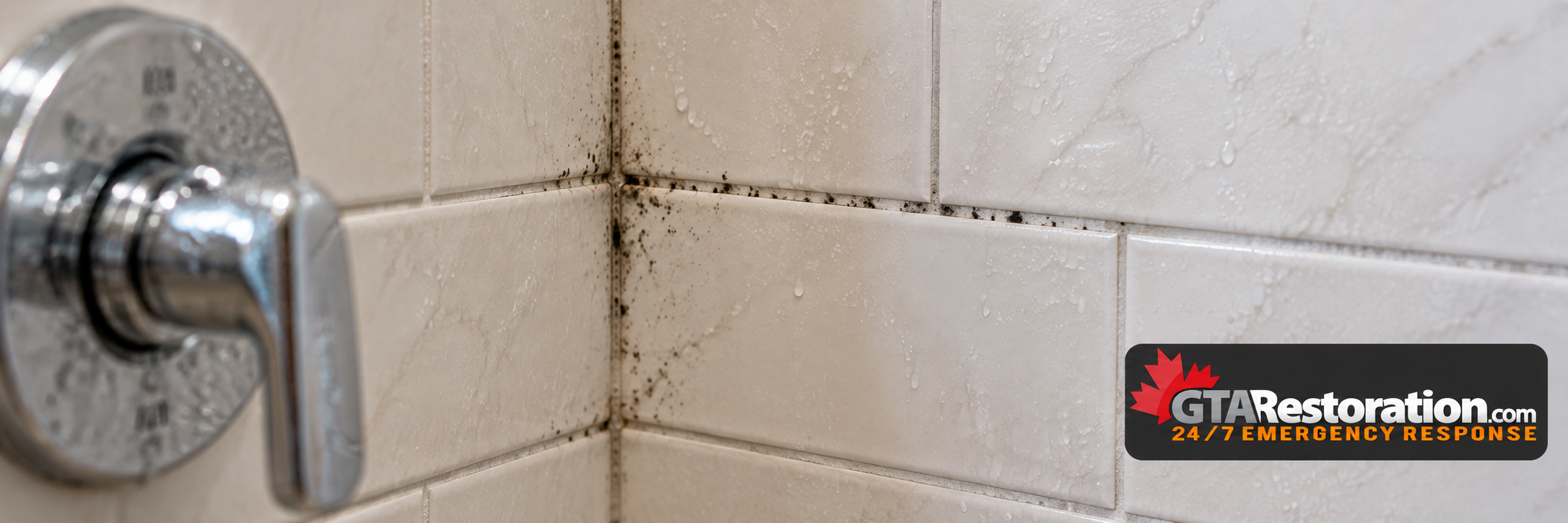
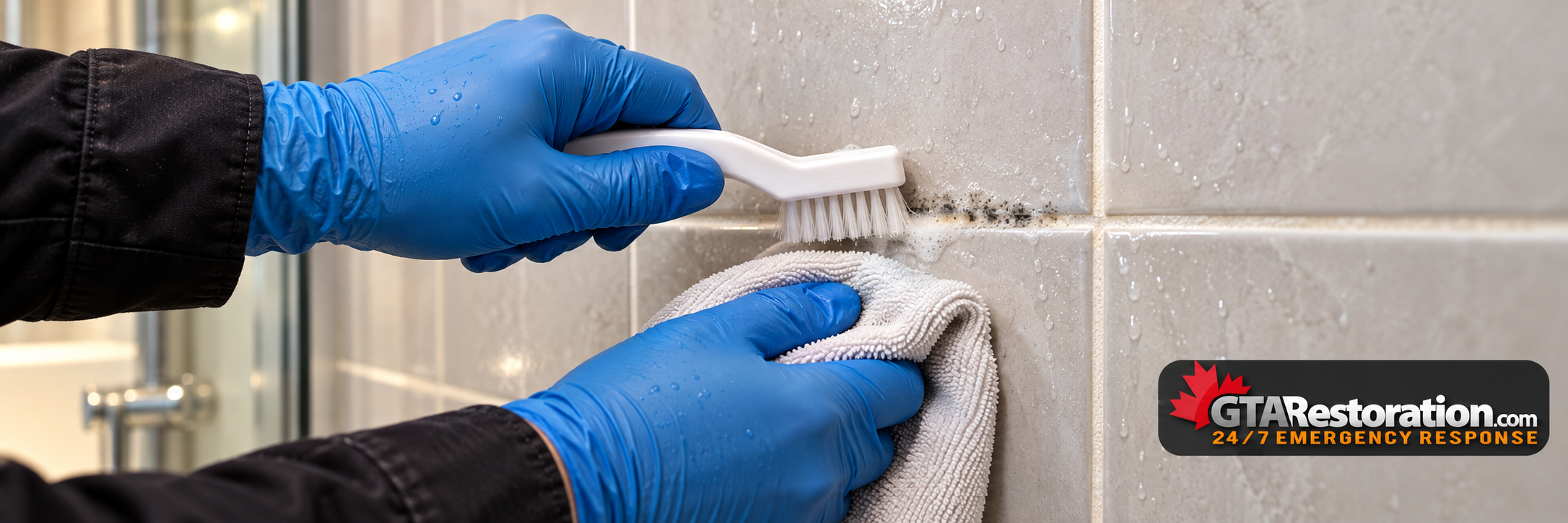
Black mold in shower grout along a tiled corner beside a chrome shower control.


Black Mold in Shower Grout: Cleaning and Prevention

Black mold in shower grout often appears where moisture lingers between uses. Cleaning visible growth helps, but lasting control also needs good airflow and prompt leak repairs.

This guide explains how to approach a small surface patch, protect your grout and spot signs of a deeper problem. If growth keeps returning, GTA Restoration can help assess the moisture source and discuss cleanup options.

Call 416-800-0000

Why Shower Grout Develops Mould

Shower spray, steam and slow leaks can leave joints damp. Meanwhile, soap residue and poor airflow make routine cleaning harder. Corners and lower grout lines often need extra attention because water collects there.

However, dark marks alone do not confirm mould or identify its type. Grout can also show lasting stains. If you cannot tell what causes the marks, seek an assessment instead of judging the problem by colour.

Check the Shower Before Cleaning

First, look for cracked joints, loose tiles, peeling caulk and water outside the shower. Note any musty smell or damp patches in nearby rooms. These signs may point to more than a surface cleaning issue.

Take photos before you start. Then check your tile and grout care instructions. Different materials need different products, especially natural stone and coloured grout.

If you suspect moisture behind the wall, avoid removing tiles yourself. Our guide to when mould removal is necessary explains common reasons to call a professional.

How to Clean a Small Patch of Shower Mould

Blue-gloved hands cleaning a shower grout joint with a small brush and cloth.

Only consider home cleanup for a small surface patch on sound, washable materials. Arrange professional help for widespread growth, damaged grout or suspected hidden contamination. People with asthma, mould allergies or weakened immune systems should avoid the cleanup.

  1. Prepare the area. Keep children and pets away. Wear gloves, protective goggles and a well-fitting N95 respirator.
  2. Choose a suitable cleaner. Use unscented detergent and water where the surface manufacturer permits it. Follow the product directions.
  3. Clean gently. Use a damp cloth or an approved soft nylon brush. Avoid dry brushing, sanding or scraping the joints.
  4. Remove residue. Wipe away the cleaning solution and rinse as the product directs. Avoid soaking cracked joints.
  5. Dry and inspect. Dry the surface fully. If growth returns or the area stays damp, stop repeated cleaning and investigate the cause.

For more detail, read Health Canada’s guidance on moisture and mould. It recommends cleaning suitable surfaces with unscented soap and water rather than bleach.

Avoid Harsh Cleaner Combinations

Never mix bleach with vinegar, ammonia or other cleaning products. Mixing cleaners can release dangerous gases. Adding more products does not resolve a moisture problem.

Vinegar is also unsuitable for some finishes. According to MAPEI’s tile and grout care guidance, acid can etch certain natural stones, while frequent vinegar use can weaken cement-based grout.

When Mouldy Grout Needs Professional Help

Cleaning may not reach growth within damaged or porous materials. Likewise, new caulk or sealer will not fix a leak behind the tiles. Avoid covering visible mould with fresh finishes.

Seek help when patches spread, odours persist or the same joints darken again after cleanup. A professional can assess moisture, check affected materials and explain whether cleaning, drying or repairs make sense.

Before arranging work, review our homeowner guide to mould remediation. It explains what an assessment and cleanup plan should cover.

Prevent Black Mold in Shower Grout

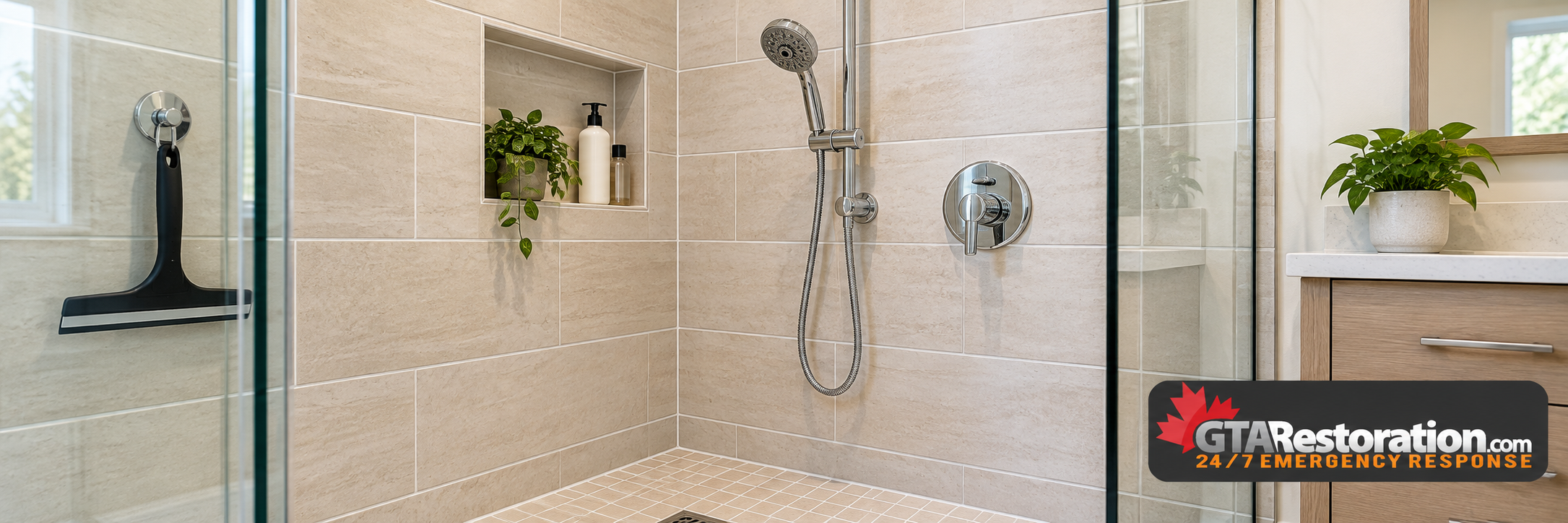
Clean tiled shower with glass doors, chrome fixtures and a hanging squeegee.

Run an exhaust fan that vents outdoors during showers and for at least 30 minutes afterward. In addition, use a squeegee to remove water from shower walls and repair leaks promptly.

Clean residue regularly using products suited to your surfaces. Check corners and joints between cleanings. If black mold in shower grout returns despite these steps, investigate ongoing dampness before replacing the finish.


Need Help With Recurring Shower Mould?

Contact GTA Restoration to discuss damp grout, musty odours and possible hidden water damage.

Call Us: 416-800-0000

Learn More

Mold Removal Dorval | Plumbing Emergencies in Toronto | Commercial Mold Inspection for Active Buildings | Steam Shower Room in Toronto
Share this... Spread the word!


Shower Grout Care After Mould Cleanup

A useful care plan should fit your shower’s materials and daily use. After cleanup, keep track of changes so you can spot new moisture problems early.

Keep Your Grout Care Instructions

Save the grout name, tile details and product labels. These records help you choose suitable cleaners and explain the installation to a repair professional.

Choose Gentle Grout Cleaning Tools

Follow the surface maker’s advice when choosing brushes and cloths. In particular, avoid rough tools that could scratch tile or wear down joints.

Check Corners and Shower Edges

Include corners, ledges and the shower base in your routine checks. Note where water collects and whether those spots dry between uses.

Track Recurring Shower Mould

Take dated photos of any returning patches. Also, note whether they appear after heavy shower use or during periods of little use.

Keep Product Use Simple

Follow one suitable cleaner’s directions. Never combine products or add homemade mixtures to a commercial cleaner.

Review Bathroom Ventilation

If steam lingers despite regular fan use, arrange a ventilation check. A running fan does not always mean the system removes moisture effectively.

Plan Grout and Caulk Repairs

Ask a repair professional to assess cracked grout or failed caulk. Before covering the area, address any dampness and complete the necessary cleanup.

Report Mould in Rental Bathrooms

Tell your landlord or property manager about recurring growth and leaks. Include photos, dates and details of any cleaning you have already tried.

Keep a Bathroom Repair Record

Save inspection notes, repair invoices and maintenance advice together. These details can help explain what changed if the problem returns.

Get Help With Persistent Bathroom Mould

GTA Restoration can discuss moisture concerns and restoration options. Describe the affected area, nearby damage and how often the growth returns when you call.


Does your shower grout keep turning dark?
Speak with GTA Restoration about recurring mould and the moisture behind it.

Call 416-800-0000


GTA Service Centre


Black Mold in Shower Grout FAQs

Why does mould keep returning to shower grout?

Ongoing dampness, weak ventilation or a leak may support new growth. Therefore, repeated cleaning alone may not solve the problem.

Does dark grout always mean mould?

No. Grout can also show dirt or lasting stains. Colour alone cannot confirm mould, so seek advice when the cause remains unclear.

Should I use bleach on mouldy grout?

Health Canada recommends unscented soap and water for suitable surfaces. Follow your grout care instructions, and never mix bleach with other cleaners.

Will vinegar damage shower grout?

Frequent vinegar use can weaken cement-based grout and damage some natural stone. Instead, choose a cleaner that your surface manufacturer recommends.

Should I replace grout if mould comes back?

First, find the moisture source. Damaged or deeply affected joints may need replacement, but fresh grout will not fix an ongoing leak.


Learn more ↴


Direct Billing & Insurance Claims

Ask your insurer about coverage, deductibles and the records it needs.


Payment options

In-House Financing Available

Financing up to 24 months. No interest. No money down. Ask us about the terms.


Certifications & Insurance

View our firm certification, technician qualifications and insurance documents.

IICRC Certified Firm

GTA Restoration Inc.

Firm number 199912
Valid through

View IICRC certificate (PDF) — opens in a new tab

Business Insurance

GTA Restoration Group Inc.

$5 million general liability per occurrence
$8 million contractors pollution per claim
–

View insurance certificate (PDF) — opens in a new tab

IICRC Technician Qualifications

Tony Sokol T. Lleshi · Registration 214520
Valid through

Water Damage Restoration · Fire & Smoke Damage Restoration · Applied Microbial Remediation · Odor Control · Trauma & Crime Scene

View technician verification (PDF) — opens in a new tab

Insurance is subject to policy terms, conditions and exclusions.


Emergency? Click to Call!