...
Mold Removal and Mould Remediation Toronto - GTA Restoration

Emergency? 24-Hrs

416.800.0000
  • Home Restore
  • Emergency Services
    • Emergency Plumbers 24/7
    • Water Damage Restoration
    • Flooded Basement
    • Mold Remediation Toronto
    • Sewer Backup Remediation
    • Fire & Smoke Restoration
    • Odour Removal Toronto
    • Biohazard Cleanup
    • Emergency Roofing Repair
    • Water Leak and Detection
    • Condominium Restoration
    • Basement WaterProofing
    • Property Inspection Toronto
    • Sanitizing and Disinfection
    • Insurance Claim Appraisers
    • Equipment for Rent Toronto
    • Privacy Policy & Service Terms
  • Commercial Restoration
  • Blog
  • Our Team
  • Contact
20 September 2026 - Categories:

7 Best Water Leak Sensors for Early Warning


Disaster Restoration Emergency Plumbing Service Blog Icon

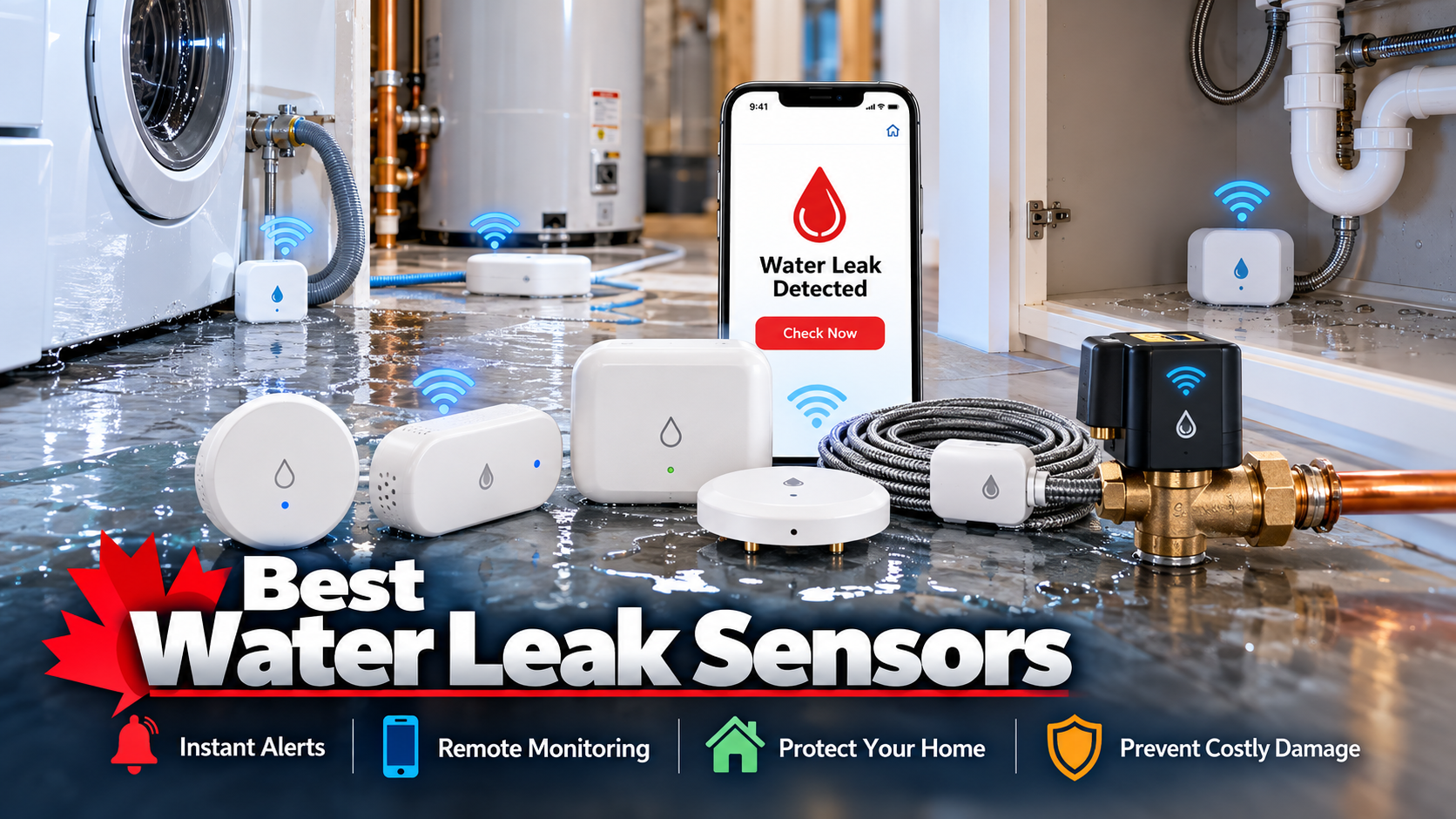
A burst supply line can release gallons of water before anyone notices it. A slow leak beneath a dishwasher, behind a toilet, or inside a mechanical room can be just as destructive when it goes undetected for days. The best water leak sensors provide early warning at the point where water first appears, giving property owners time to shut off the source, protect contents, and call for help before moisture reaches flooring, walls, and neighboring units.

For homeowners, condo owners, landlords, and facility managers, a leak sensor is a practical layer of protection, not a replacement for maintenance or emergency response. The right unit depends on the property, the risk area, the building’s connectivity, and whether the goal is notification only or automatic water shutoff.

What Makes a Water Leak Sensor Worth Installing?

A useful leak sensor must do more than sound an alarm in an empty building. At minimum, it should detect water reliably and send an immediate alert to the person responsible for the property. For vacant homes, rental units, basements, and commercial spaces, remote notifications are usually more valuable than an audible alarm alone.

Placement matters as much as product choice. Sensors belong near water heaters, washing machines, dishwashers, refrigerators with ice makers, sump pumps, toilets, sinks, boilers, utility rooms, and plumbing manifolds. In a condo, consider the areas where a minor fixture leak could migrate into the unit below. In a commercial property, protect mechanical rooms, washrooms, kitchens, janitor closets, and any area with exposed supply lines.

The strongest systems combine localized sensors with a monitored shutoff valve. A sensor can tell you water is present. An automatic shutoff system can stop the flow when a leak is detected or when abnormal water use suggests a hidden pipe failure.

The 7 Best Water Leak Sensors by Property Need

There is no single best choice for every building. The following options represent the most useful sensor categories and well-known systems to evaluate based on how your property is used.

1. Wi-Fi Spot Sensors for Homes and Condos

Standalone Wi-Fi sensors are a sensible starting point for owners who need protection in one or several high-risk locations. These compact units sit on the floor or use an attached sensing cable to reach tight spaces behind appliances and under cabinets. When their contacts detect moisture, they trigger an app notification and, in many models, a local alarm.

They are best for occupied homes and condos with dependable Wi-Fi. Their limitations are straightforward: if the internet is down, app notifications may not arrive, and a sensor cannot stop a leak on its own. Check battery life, notification settings, and whether the device can alert more than one household member or property manager.

2. Sensors With Extended Detection Cables

A point sensor only detects water where it sits. A cable-style sensor covers a larger perimeter, making it a better choice around water heaters, laundry appliances, sump pits, and long plumbing runs. The cable detects moisture anywhere along its length, which can improve coverage where water may not collect in one predictable spot.

This category is especially useful in finished basements. Water can travel beneath flooring or around stored items before reaching a small sensor placed several feet away. Run the cable along the likely path of water, but keep it accessible for inspection and cleaning.

3. Smart-Home Ecosystem Sensors

Some leak sensors are designed to work with established smart-home platforms. They may integrate with compatible alarms, hubs, voice assistants, and automation routines. For example, a detected leak might turn on lights, activate a siren, or send notifications to multiple devices.

Integration is convenient, but it should not be the main reason to choose a sensor. During a water emergency, reliability, signal strength, battery status, and notification speed matter more than extra automation. Choose this option when the property already has a stable, actively monitored smart-home setup.

4. Cellular-Connected Sensors for Vacant Properties

Vacant homes, seasonal properties, construction sites, and remote equipment rooms face a different problem: Wi-Fi may be unreliable or unavailable. Cellular-connected leak monitoring can provide an independent communication path, often with a monthly service cost.

The added cost can be justified where a delayed alert could lead to extensive restoration work. Before installing, confirm cellular signal strength inside the building and understand what happens if the device loses power. Battery backup and low-battery notifications are critical for properties that are not checked daily.

5. Flow-Based Whole-Home Monitors

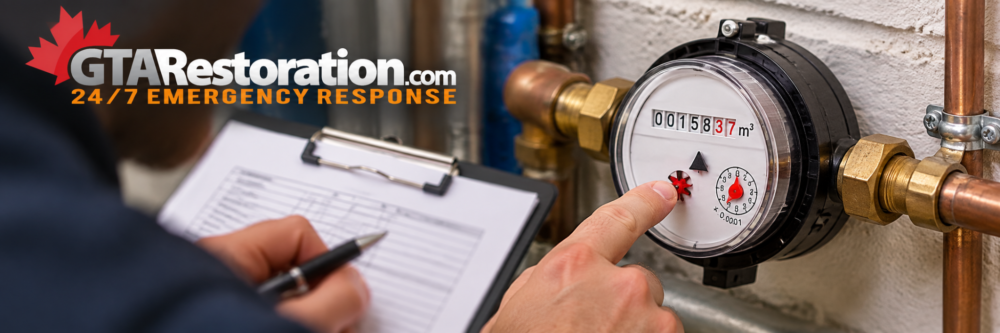
Flow monitors install on or near a main water line and analyze water movement throughout the property. Instead of waiting for water to reach a floor sensor, they look for patterns that may indicate continuous flow, such as a running toilet, a leaking supply line, or a burst pipe.

These systems are valuable for larger homes and properties with numerous plumbing fixtures. However, they need correct installation and calibration. Normal water use varies between households and businesses, so false alerts can occur if the system does not learn usage patterns or if settings are too sensitive. They are strongest when paired with spot sensors in appliance areas.

6. Automatic Water Shutoff Systems

For the highest level of protection, consider a system that closes the main water supply when a leak is detected. Some use floor sensors, while others use flow monitoring or both. This approach can prevent an active leak from continuing while the owner is asleep, away, or unable to reach the property quickly.

Automatic shutoff is particularly worth considering for second homes, rental properties, condos with expensive finishes, and businesses that close overnight. The trade-off is installation complexity. A qualified plumbing professional should assess the main shutoff location, pipe size, valve compatibility, access requirements, and any fire suppression or commercial-system considerations before installation.

7. Commercial Leak Detection Systems

Commercial buildings and multi-unit properties often need more than consumer-grade devices. A larger system may include multiple hardwired or wireless sensors, a central monitoring panel, zoning by room or floor, remote alarm notifications, and integration with building management procedures.

For a condominium or commercial operator, the key question is not simply whether a sensor detects water. It is whether the alert reaches the right person after hours, identifies the affected location, and triggers a documented response. Mechanical rooms, pump rooms, common-area washrooms, and suites with prior plumbing issues should receive priority coverage.

Features That Matter Before You Buy

Start with connectivity. Wi-Fi works well when the signal is stable at the installation location, but concrete walls, basements, and mechanical rooms can weaken it. Hub-based systems may offer better reach, while cellular systems reduce dependence on local internet service.

Next, look at power and alerting. A sensor should provide low-battery warnings well before it stops functioning. It should also support alerts to more than one contact. For rental and commercial properties, notifications may need to reach an owner, building manager, maintenance lead, and emergency contact.

Temperature monitoring is another useful feature, particularly in cold climates. A sensor that warns of low temperatures can provide notice before a frozen pipe becomes a burst pipe. Humidity readings can be helpful in enclosed spaces, but they are not a substitute for a proper moisture inspection when a leak or mold concern exists.

Finally, avoid treating a leak sensor as a set-it-and-forget-it device. Test each unit after installation and at scheduled intervals. Replace batteries promptly, keep sensing contacts clean, verify app permissions after phone updates, and review alerts whenever internet equipment or property occupancy changes.

Where Leak Sensors Cannot Replace Professional Help

A sensor limits damage only when someone can act on the alert. If water is actively flowing, shut off the local fixture valve or main supply when it is safe to do so. Avoid entering areas with standing water near electrical equipment, and do not delay if water has reached drywall, insulation, hardwood, or another unit.

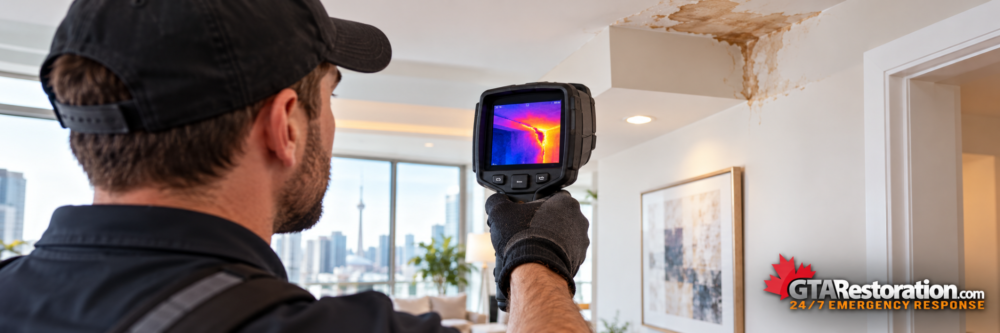
Hidden moisture can remain after the visible water is removed. Materials may appear dry on the surface while moisture is trapped below flooring, behind baseboards, or inside wall cavities. That is when professional moisture detection, extraction, structural drying, and documentation become necessary to prevent secondary damage and mold growth.

GTA Restoration responds 24/7 to water emergencies with leak detection, emergency plumbing coordination, water extraction, drying equipment, and insurance claim documentation support. A fast response is especially important in condos and commercial buildings, where water can affect multiple suites or interrupt operations.

A leak sensor is a small investment in early warning. Install it where water is most likely to escape, test it before an emergency occurs, and have a clear plan for who will respond when the alert arrives.

Share this... Spread the word!


Tags:

☛ ☛ Related Restoration Articles You May Also Like!

Emergency? Immediate response 24/7

416.800.0000 416.800.0000

For non-emergencies use our contact form

We Specialize in FAST Restoration Services!


Need Fast Restoration Service? Let our experienced team help. Your satisfaction is our priority.


We Service the GTA with a Fast 45-Minute Response Time!


“FREE VISUAL Estimate”


Restoration & Remediation

Do you need water removal services for your home or business? Are your floors, walls, furniture, or other areas affected by flooding or water damage? GTA Restoration provides professional water removal, drying, cleanup, and restoration services. Acting quickly can help reduce permanent property damage and lower the risk of mold growth. The longer water remains untreated, the greater the potential for additional damage.


Commercial & Residential Property Inspection

GTA Restoration uses professional moisture-detection technology, restoration equipment, and years of industry experience to identify water damage and locate hidden moisture. Specialized equipment allows our technicians to inspect many affected areas without unnecessary demolition, helping determine the extent of the damage before restoration work begins.


Helping You Every Step of the Way!


We understand that situations involving biohazard contamination in your home or business can be difficult and require professional attention. GTA Restoration provides dependable and experienced biohazard cleanup and remediation services for residential and commercial properties. For information about disaster restoration and recovery, visit the disaster restoration resource. For immediate assistance, contact GTA Restoration at (800) 506-6048.


Nationwide, Local Pricing

GTA Restoration offers local flood & water damage repair, mold removal/remediation, asbestos removal/abatement, fire/smoke damage repair services and much more.

Search

  • Ajax Asbestos Removal
  • Ajax Mold Removal
  • Ajax Water Damage
  • Anjou Mold Removal
  • Aurora Mold Removal
  • Aurora Water Damage
  • Beaconsfield Asbestos Removal
  • Beaconsfield Mold Removal
  • Boucherville Mold Removal
  • Brampton Asbestos Removal
  • Brampton Asbestos Removal
  • Brampton Mold Removal
  • Brampton Water Damage
  • Brossard Mold Removal
  • Burlington Asbestos Removal
  • Burlington Mold Removal
  • Burlington Water Damage
  • Burnaby Mold Removal
  • Burst Frozen Pipe Edmonton
  • Caledon Mold Removal
  • Caledon Water Damage
  • Calgary Asbestos Removal
  • Calgary Mold Removal
  • Calgary Water Damage
  • Cambridge Mold Removal
  • Cambridge Water Damage
  • Chambly Mold Removal
  • Chateauguay Mold Removal
  • Chomedey Mold Removal
  • Clarington Mold Removal
  • Concord Mold Removal
  • Concord Water Damage
  • Mississauga Mold Removal
  • Coquitlam Mold Removal
  • Cumberland Mold Removal
  • Dollard-des-Ormeaux Mold Removal
  • Dorval Mold Removal
  • Edmonton Asbestos Removal
  • Edmonton Mold Removal
  • Edmonton Water Damage
  • Etobicoke Asbestos Removal
  • Etobicoke Mold Removal
  • Etobicoke Water Damage
  • McMurray Fire Damage Services
  • Saskatchewan Asbestos Removal
  • Saskatchewan Mold Removal
  • Frozen Burst Pipe Repair Montreal
  • Frozen Burst Pipe Repair Ottawa
  • Gloucester Asbestos Removal
  • Gloucester Mold Removal
  • Hamilton Asbestos Removal
  • Hamilton Asbestos Testing
  • Hamilton Mold Removal
  • Hamilton Water Damage
  • Hampstead Mold Removal
  • Hampstead Water & Flood Damage
  • L'île-Bizard Mold Removal
  • Kahnawake Mold Removal
  • Kanata Asbestos Removal
  • Kanata Mold Removal
  • Kanata Water Damage
  • Kirkland Mold Removal
  • Kitchener Asbestos Removal
  • Kitchener Mold Removal
  • Kitchener Water Damage
  • Lasalle Mold Removal
  • Laval Asbestos Removal
  • Laval Mold Removal
  • Laval Water Damage
  • London Mold Removal
  • London Water Damage
  • Longueuil Mold Removal
  • Longueuil Water Damage
  • Markham Asbestos Removal
  • Markham Mold Removal
  • Markham Water Damage
  • Mississauga Asbestos Testing
  • Mississauga Mold Removal
  • Mississauga Water Damage
  • Montreal Air Duct Cleaning
  • Montreal Asbestos Removal
  • Montreal Asbestos Testing
  • Montreal East Mold Removal
  • Montreal Mold Removal
  • Montreal Water Damage
  • Mount-Royal Mold Removal
  • Nepean Asbestos Removal
  • Nepean Mold Removal
  • Nepean Water Damage
  • New Market Water Damage
  • New Westminster Mold Removal
  • Newmarket Mold Removal
  • North York Mold Removal
  • Oakville Mold Removal
  • Oakville Water Damage
  • Orleans Asbestos Removal
  • Orleans Mold Removal
  • Orleans Water Damage
  • Osgoode Mold Removal
  • Oshawa Mold Removal
  • Oshawa Water Damage
  • Ottawa Air Duct Cleaning
  • Ottawa Asbestos Removal
  • Ottawa Mold Removal
  • Ottawa Vermiculite Removal
  • Ottawa Water Damage
  • Pickering Mold Removal
  • Pickering Water Damage
  • Red Deer Mold Removal
  • Red Deer Water Damage
  • Richmond Hill Mold Removal
  • Richmond Hill Water Damage
  • Richmond Mold Removal
  • Rideau Lakes Mold Removal
  • Rockcliffe Park Mold Removal
  • Roxboro Mold Removal
  • Saint Laurent Mold Removal
  • Saint-Hubert Mold Removal
  • Scarborough Asbestos Removal
  • Scarborough Mold removal
  • Scarborough Water Damage
  • Sewer Backup Edmonton
  • Sewer Backup Montreal
  • Sewer Backup Ottawa
  • Sherwood Park Asbestos Removal
  • Sherwood Park Mold Removal
  • Spruce Grove Asbestos Removal
  • Spruce Grove Mold Removal
  • St. Albert Asbestos Removal
  • St. Albert Mold Removal
  • Ste.Dorothee Mold Removal
  • Surrey Mold Removal
  • Thornhill Mold Removal
  • Toronto & GTA Asbestos Removal
  • Toronto & GTA Mold Removal
  • Toronto Air Duct Cleaning
  • Toronto Water Damage
  • Unionville Mold Removal
  • Unionville Water Damage
  • Vancouver Asbestos Removal
  • Vancouver Mold Removal
  • Vancouver Water Damage
  • Vanier Mold Removal
  • Vaughan Mold Removal
  • Vaughan Water Damage
  • Westmount Mold Removal
  • Whitby Water Damage
  • Woodbridge Asbestos Removal
  • Woodbridge Mold Removal
  • Woodbridge Water Damage
  • Waterproofing
  • Kitchen & Bath Pro
  • Condo Restoration

Main Head Office


For Tips on Water Damage and Emergency Plumbing


We Work Direct with All Insurance Companies

Wᴇ ᴀʀᴇ ᴄᴏᴍᴍɪᴛᴛᴇᴅ ᴏɴ ᴡᴏʀᴋɪɴɢ ᴡɪᴛʜ ᴇᴠᴇʀʏ ɪɴsᴜʀᴀɴᴄᴇ ᴄᴏᴍᴘᴀɴʏ ᴀᴄʀᴏss Cᴀɴᴀᴅᴀ & USA.


In House Financing Available

In House Financing Available

FREE Financing Up To 24 Months NO INTEREST NO MONEY DOWN


Contact Us

Learn more ↴ GTA Restoration Tips

RELATED ARTICLES

  • How To Avoid Sprinkler Water Damage?
  • How To Deal With Floods & Water Damage?
  • Signs of Mould Growth In Your Property?
  • Avoid Mould Damage from Melting Snow
  • How to Prevent Water Damage In Summer
  • Avoid Mold Growth With Proper Air Flow
  • Prevent House Floods from Spring Rains
  • Prevent Frozen Burst Pipes in Winter
  • What To Do on Your Flooded Basement?


follow us on  LinkedIn Instagram Twitter Facebook YouTube


Our Clients

Our Vendor Clients


Affiliates

fully certified


GTA Restoration Toronto

Copyright © 2009 - 2026 All Rights Reserved. Sitemap/Links

LinkedInInstagram Twitter Facebook YouTube

Call Us 416-800-0000

Emergency? Immediate response 24/7

416.800.0000

416.800.0000

We cover all GTA 24/7.

Head Office:
250 Consumers Rd,
#10
Toronto, ON
M2J 4V6,
Open 24 hours

Downtown Office:
1 Toronto St,
#10
Toronto, ON
M5W 1A1,
Open 24 hours

For non-emergencies use our contact form


    Not sure what you need?

    Call us today to find the best product for your situation.

    416-800-0000 416-800-0000

    Head Office:
    101 Lebovic Ave,
    Unit #10
    Scarborough,
    ON, M1L 4T7
    Hours
    24-Hours Open

    Downtown Office:
    250 Yonge Street,
    Unit #1A
    Toronto,
    ON, M5B 2L7
    Hours
    24-Hours Open

    7 Best Water Leak Sensors for Early Warning

    Get a quote today


      GTA Restoration Assistant 24/7 Emergency Restoration Help
      Hi! I'm GTA Restoration's virtual assistant. How can I help with your property damage today?
      Emergency? Call 416-800-0000