
For non-emergencies use our contact form
A biohazard event in an apartment can affect far more than one room. Bodily fluids, sewage, animal waste, hazardous sharps, and decomposition odors can migrate through flooring, walls, HVAC pathways, shared hallways, and neighboring units. A professional biohazard apartment cleanup process is designed to control that risk quickly, protect occupants and staff, and return the unit to a safe, habitable condition.
For landlords, property managers, condo boards, and residents, the priority is not simply removing visible debris. The work requires trained technicians, protective equipment, containment procedures, proper disposal, documentation, and restoration planning. Delays or incomplete cleaning can leave behind contamination, persistent odors, property damage, and serious liability concerns.
When an Apartment Requires Biohazard Cleanup
Biohazard cleanup may be needed after an unattended death, suicide, violent incident, medical emergency, sewage backup, rodent infestation, hoarding situation, or discovery of blood and other potentially infectious materials. Each event has a different contamination profile, so the response must be based on the actual conditions inside the apartment.
For example, a small, contained blood spill may require focused removal and disinfection. An unattended death can involve extensive contamination below flooring, behind baseboards, inside furniture, and within porous building materials. A sewage release can introduce bacteria and other harmful contaminants across multiple surfaces. The right response depends on the source, how long the issue has been present, the materials affected, and whether other units or common areas may be involved.
Do not ask tenants, maintenance personnel, or untrained cleaners to handle potentially infectious materials. They may unintentionally spread contamination, damage evidence when law enforcement is involved, or expose themselves to health risks. Secure the area and arrange a qualified response as soon as possible.
The Biohazard Apartment Cleanup Process Step by Step
1. Secure the area and assess immediate risks
The first step is scene control. Access is restricted so residents, visitors, building staff, and pets do not enter an unsafe space. If emergency services or law enforcement are present, cleanup does not begin until the scene has been released.
A qualified restoration team then evaluates the apartment for visible contamination, odor conditions, affected materials, moisture, structural damage, pest activity, and potential migration to adjacent spaces. In multi-unit properties, technicians may also assess hallways, elevators, neighboring apartments, utility penetrations, and areas below the affected unit.
This assessment establishes the scope of work and helps property decision-makers understand what must be removed, what can be cleaned, and whether temporary relocation is necessary. In some cases, only one room is affected. In others, flooring, drywall, insulation, cabinetry, or subflooring must be addressed before the apartment can be safely reoccupied.
2. Establish containment and technician protection
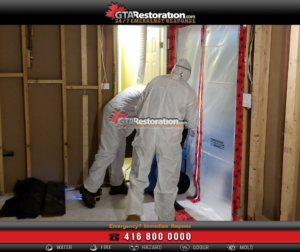
Containment prevents contaminants and odors from moving into clean areas. Depending on the incident, technicians may use sealed work zones, protective barriers, negative air equipment, and controlled entry points. These measures are especially important in apartment buildings, where shared ventilation and close unit layouts can complicate cleanup.
Technicians wear appropriate personal protective equipment, which may include gloves, protective suits, respirators, eye protection, and shoe covers. The level of protection should match the hazard. This is not a cosmetic cleaning service. It is controlled remediation work performed under established safety procedures.
Building managers should also communicate carefully with occupants. Residents do not need private details about an incident, but they may need practical instructions about restricted access, temporary odor concerns, elevator use, water shutoffs, or scheduled restoration work.
3. Remove contaminated materials safely
Porous materials that cannot be reliably disinfected must often be removed. That can include carpeting, underpad, mattresses, upholstered furniture, drywall, insulation, paper goods, clothing, and damaged personal belongings. Technicians identify the contamination boundary before demolition begins so they do not remove too little or create unnecessary repair costs.
All regulated waste is packaged, labeled, transported, and disposed of according to applicable requirements. Sharps, such as needles or broken contaminated glass, require particular care. They should never be placed in regular trash bags or handled by hand.
Personal property creates difficult decisions. Some items may be recoverable through specialized cleaning, while others are too porous, heavily affected, or damaged to retain safely. A professional team can document items for the property owner, family, insurer, or estate representative before disposal. This documentation is often critical when a claim is involved.
4. Clean, disinfect, and treat affected surfaces
Once contaminated materials are removed, technicians clean remaining surfaces using methods and EPA-registered disinfectants appropriate to the situation. Hard, nonporous materials may be cleaned and disinfected. Wood, concrete, subfloors, and structural cavities may require more extensive treatment if contamination has penetrated below the surface.
The goal is not to mask the issue with fragrance or surface spray. It is to remove organic material, disinfect affected areas, and address the source of odor. If fluids have traveled under flooring or into wall cavities, those concealed areas must be opened and treated as needed.
Sewage-related events may also require drying and moisture control. Wet materials can create a second problem: mold growth. A coordinated restoration response is valuable because biohazard remediation, water extraction, drying, plumbing repairs, odor control, and reconstruction can be managed without forcing the owner to coordinate multiple contractors during an emergency.
5. Address odor at its source
Persistent odor is often a sign that affected material remains. Odor treatment should begin only after source removal and detailed cleaning. Depending on the conditions, professionals may use air filtration, hydroxyl treatment, ozone in unoccupied controlled settings, thermal fogging, or sealing of properly cleaned structural surfaces.
No single odor method fits every apartment. Ozone, for example, requires strict safety controls and should not be used while people, pets, or plants are present. Fragrances and consumer odor sprays may temporarily cover smells, but they do not solve contamination beneath flooring, behind walls, or inside contents.
6. Verify conditions and document the work
Before the apartment is returned to service, the restoration team conducts a final inspection. The verification approach depends on the incident, the surfaces involved, and the property’s requirements. The team confirms that contaminated materials have been removed, affected areas have been cleaned and treated, and the unit is ready for the next stage of restoration or reoccupation.
Clear documentation matters. Property managers and owners may need photographs, scope notes, disposal records, equipment logs, moisture readings, and invoices for insurance claims, internal reporting, legal matters, or communication with condo boards. Good documentation also provides a defensible record that the hazard was addressed professionally.
Apartment-Specific Challenges That Change the Response
Apartment cleanup is rarely isolated. A unit may share walls, plumbing stacks, ventilation routes, laundry areas, garbage chutes, and entry corridors with other residents. A sewage backup from an upper floor, for instance, can impact multiple units and common areas. A decomposition event may create odors that travel through gaps around pipes or into neighboring spaces.
Access can also be challenging. Technicians may need to protect elevators, coordinate loading access, work within building hours, and manage discreet removal of materials. In occupied buildings, the response must balance speed with privacy, resident safety, and minimal disruption.
Landlords should avoid rushing to repaint or replace flooring before proper remediation is complete. New finishes installed over unresolved contamination can trap odors, complicate future repairs, and increase costs. The correct sequence is assessment, containment, removal, cleaning, verification, then reconstruction.
What Property Owners and Managers Should Do First
If you discover a possible biohazard, keep people out of the affected area and contact emergency services if there is an immediate medical or safety concern. Do not touch blood, bodily fluids, sharps, or unknown substances. Avoid turning on fans or attempting to vacuum, scrub, or bleach contaminated areas, as these actions can spread material or create additional exposure.
Notify the appropriate building contact, preserve the scene if authorities are involved, and call a qualified biohazard restoration provider. For a condo or rental property, early action can protect neighboring occupants, reduce downtime, and help prevent a limited incident from becoming a larger building-wide problem.
A clean-looking apartment is not automatically a safe one. When the situation involves biological contamination, the most helpful next step is a fast professional assessment that gives everyone a clear path from emergency conditions to a safe, usable home.


 Facebook
  Instagram
  LinkedIn
  X / Twitter
  YouTube