...
Mold Removal and Mould Remediation Toronto - GTA Restoration

Emergency? 24-Hours

416-800-0000
  • Home
  • Services
    • Emergency Plumbers 24/7
    • Water Damage Restoration
    • Flooded Basement
    • Mold Remediation Toronto
    • Sewer Backup Remediation
    • Fire & Smoke Restoration
    • Odour Removal Toronto
    • Biohazard Scene Cleanup
    • Emergency Roofing Repair
    • Water Leak and Detection
    • Condominium Restoration
    • Basement WaterProofing
    • Property Inspection Toronto
    • Sanitizing and Disinfection
    • Insurance Claim Appraisers
    • Equipment for Rent Toronto
  • Commercial Restoration
  • Blog
  • Our Team
  • Contact
6 September 2026 - Categories: Mold Testing

Mold Inspection vs Mold Testing Explained


Disaster Restoration Emergency Plumbing Service Blog Icon

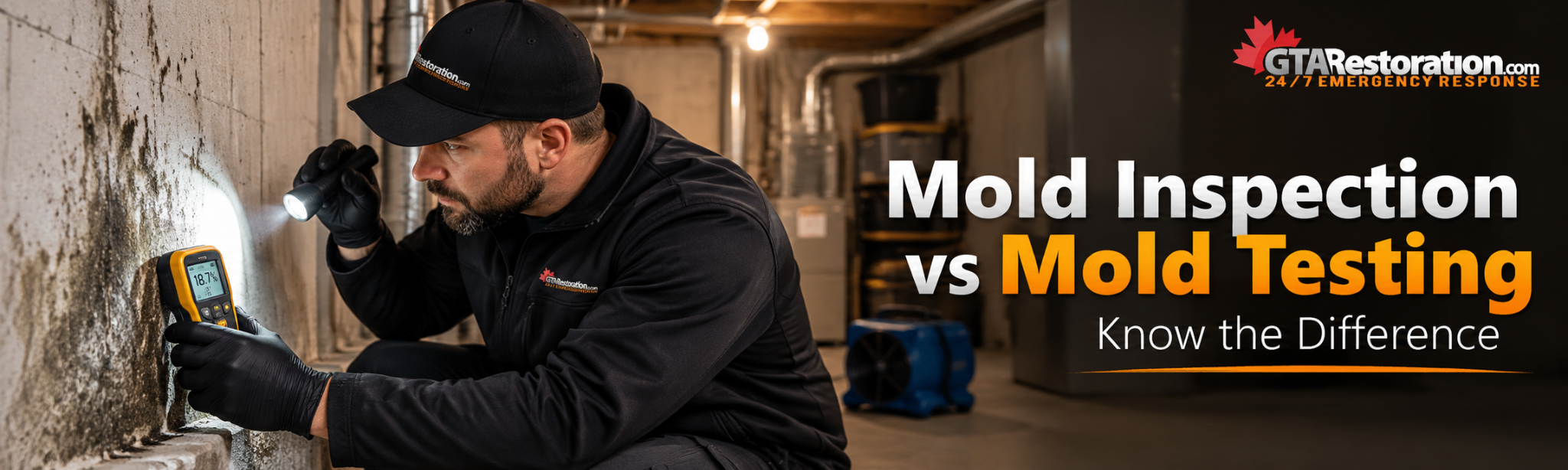
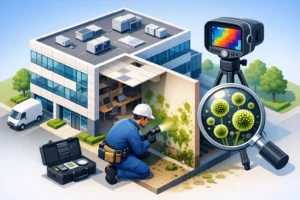
Mold Inspection vs Mold Testing Explained with mold inspection, air sampling, and professional testing equipment

Mold Inspection vs Testing Explained

Mold Inspection vs Testing can cause confusion because each service answers different questions. A mold inspection looks for visible growth, moisture, water damage, musty odours, and conditions that support mold. Mold testing collects air, surface, or material samples when an inspector needs more specific information.

For homeowners, landlords, condo managers, and business owners, finding the moisture source should usually come first. Plumbing leaks, roof problems, flooding, condensation, and damp building materials can all create conditions where mold can grow.

What a Mold Inspection Does

A professional mold inspection reviews the property for visible mold, water stains, musty smells, damp materials, and signs of past leaks or flooding.

An inspector may check basements, bathrooms, kitchens, attics, utility rooms, windows, walls, flooring, and other areas with a history of moisture. In addition, moisture meters and thermal imaging can help locate damp areas that need a closer look.

Finding the Moisture Source

The inspection helps determine why the problem developed. For example, mold below a sink may point to a plumbing leak. Moisture inside a wall may indicate a hidden pipe problem or exterior water entry.

Once the inspector finds the source, the next step may include drying, cleaning, material removal, or repair. Learn more about our mold remediation process.

When a Mold Inspection May Be Enough

Visible mold and a clear water source may provide enough information to begin corrective work. For example, wet drywall with visible growth after a known plumbing leak still requires moisture control and an assessment of the damaged materials.

Property owners should not delay urgent extraction or drying simply to wait for sampling. After a flood, sewer backup, or plumbing leak, controlling moisture remains the priority.

What Mold Testing Does

Mold testing collects samples for laboratory review. Depending on the situation, an inspector may collect air, surface, or material samples.

Air Sampling

Air sampling measures mold spores in the sampled air. An inspector may compare indoor results with an outdoor sample to provide more context.

Surface and Material Sampling

Surface sampling can provide information about growth on a specific area. Material sampling may also help identify mold within drywall, insulation, or another building material.

Laboratory results work best when an inspector compares them with moisture readings and property conditions. Mold spores naturally exist in the environment, so numbers alone cannot explain where moisture comes from or locate every hidden problem.

Mold Inspection vs Testing: Which Do You Need?

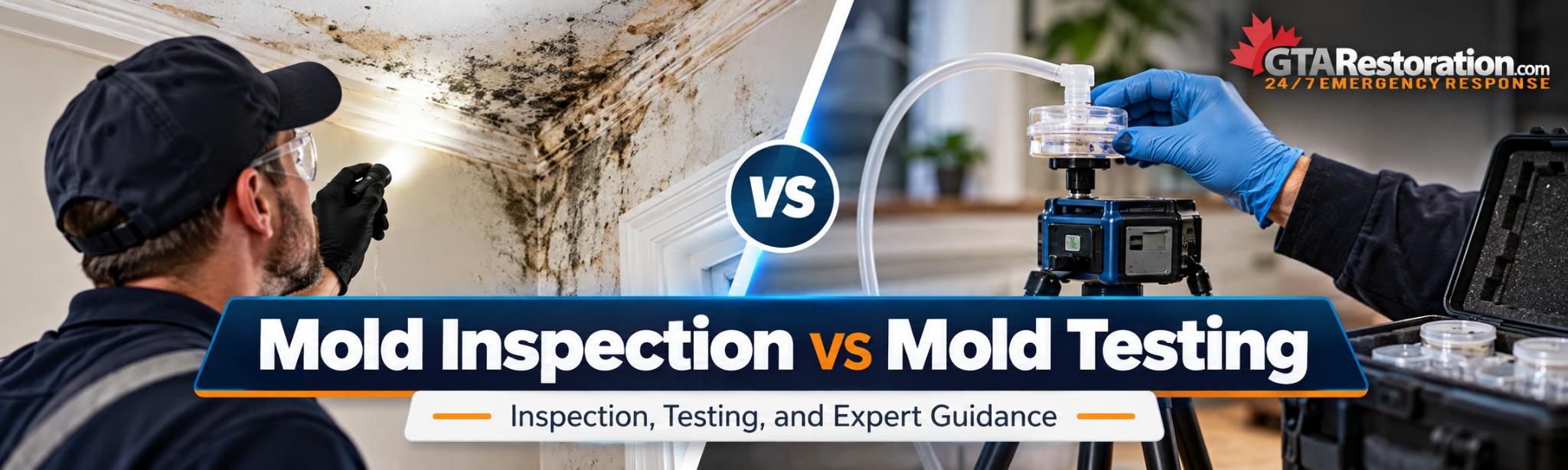
Mold Inspection vs Mold Testing with professional moisture inspection and mold assessment

In most cases, an inspection provides the best starting point because it helps define the problem. Testing becomes more useful when the inspection leaves an important question unanswered.

Choose a Mold Inspection When:

  • You can see possible mold growth
  • You already know about a leak
  • You notice a musty odour
  • Water damage recently occurred
  • You need to locate hidden moisture
  • You need to understand the cleanup scope

Consider Mold Testing When:

  • A musty odour exists without visible growth
  • You suspect hidden mold
  • You need more documentation
  • Several areas may have problems
  • An inspector recommends targeted sampling
  • You need more information before or after remediation

For professional mold remediation guidance, visit the IICRC S520 Standard for Professional Mold Remediation.

Why Moisture Matters More Than a Mold Test

Mold problems can continue while excess moisture remains. Therefore, property owners should repair leaks, dry wet materials, control humidity, and improve airflow where necessary.

For example, painting over a stain will not repair a plumbing leak inside a wall. Likewise, surface cleaning cannot dry wet insulation hidden behind drywall.

A complete response may include moisture checks, structural drying, containment, cleaning, removal, and repairs. For related information, review our guide to water damage on walls.

Common Mold Inspection and Testing Mistakes

Waiting Too Long

A small leak can spread into flooring, drywall, baseboards, cabinets, and nearby rooms. Early investigation can help limit the amount of damage.

Assuming Every Dark Stain Is Mold

Not every dark mark indicates mold. At the same time, hidden mold may exist without obvious surface staining. A professional inspection helps reduce guesswork.

Using Testing Instead of Fixing the Problem

A laboratory report cannot stop a leak, dry wet drywall, or remove damaged materials. Testing provides information, while repair and remediation address the physical problem.

Opening Walls Without a Work Plan

Removing damaged materials can release dust and particles into nearby areas. Larger projects may require containment and controlled removal before crews open walls or ceilings.

What to Do If You Suspect Mold

If you find an active leak, address the water source when you can do so safely. Avoid disturbing visible growth and keep people away from areas affected by sewage or other contaminated water.

For hidden problems, record when you first noticed the smell, stain, leak, or damp area. Also note whether the issue changes after rainfall, plumbing use, or changes in indoor humidity.

GTA Restoration can inspect water and mold damage, locate moisture, explain affected areas, and help develop a suitable remediation plan. The best starting point is not automatically testing or removal. Instead, begin with a clear assessment of the property and the moisture conditions causing the problem.


Need Mold Inspection or Testing?

GTA Restoration provides mold inspection, testing support, moisture assessment, remediation, and mold cleanup for residential and commercial properties.

Start by finding the moisture source and understanding the affected area.

Learn More

Plumber vs Restoration Company: Who to Call | Sewer Backup Cleanup vs Plumbing | How to Choose a Mold Inspector With Confidence | Water Extraction vs Drying: What Comes First? | Water Mitigation vs Restoration Explained | Mold Inspection vs Removal: What Comes First?

Share this... Spread the word!


Tags: Mold Inspection, Mold Testing,

☛ ☛ Related Restoration Articles You May Also Like!

Commercial Mold Inspection for Active Buildings
Mold Air Test Review for Homes and Buildings
Mold Removal & Remediation In Rockcliffe Park
Why Pay for Mold Test When Mold Inspection is Free
How to Choose a Mold Inspector With Confidence

Emergency? 24/7 Restoration Help

416-800-0000 416-800-0000

For non-emergencies use our contact form

Mold Inspection vs Testing for Property Owners

Mold Inspection vs Testing often causes confusion because each service serves a different purpose. A mold inspection looks for moisture, visible growth, water damage, musty odours, and building conditions that may support mold. Testing provides sample results when an inspector needs more specific information about an area.

In most cases, the inspection provides the best starting point. Once the inspector understands the moisture source and affected materials, property owners can make better decisions about testing, drying, cleanup, or mold remediation.

What Happens During a Mold Inspection?

A professional inspection reviews areas where moisture or mold may exist. Common locations include basements, bathrooms, kitchens, attics, utility rooms, windows, flooring, ceilings, and spaces affected by previous leaks or flooding.

Inspectors may also use moisture meters and thermal imaging to locate damp materials. These tools can help identify areas that need a closer look without opening every wall or ceiling.

Finding the Source of Moisture

Finding the source is one of the most important parts of a mold assessment. A plumbing leak, roof problem, condensation, flooding, or high humidity can keep building materials damp and allow mold to return.

For example, cleaning a mold stain below a leaking pipe will not solve the problem if the pipe continues to drip. Therefore, the moisture issue should be corrected as part of the overall plan.

When Mold Testing May Help

Testing can add useful information when the inspection does not fully explain the conditions. A property may have a musty smell without visible mold, or an inspector may need more information about a specific area.

Depending on the situation, technicians may collect air, surface, or material samples. A laboratory can then examine those samples and provide additional information.

Mold Testing Does Not Replace an Inspection

A test result cannot show every hidden moisture problem inside a building. It also cannot stop a leak, dry wet drywall, or remove damaged materials.

For this reason, sampling works best when inspectors combine the results with moisture readings, visual findings, building history, and the location of previous water damage.

Mold Inspection Before Remediation

An inspection can help determine which areas require drying, cleaning, controlled removal, or repair. It may also help define the size of the affected area before work begins.

For larger projects, the work plan may include containment, HEPA air cleaning, material removal, detailed cleaning, and moisture control. Professional guidance such as the IICRC S520 mold remediation standard can provide additional industry information.

Hidden Mold After Water Damage

Leaks and floods can leave moisture behind drywall, under floors, around plumbing, and inside insulation. As a result, hidden mold may develop even when nearby surfaces appear dry.

Early moisture checks can help property owners find these areas before the damage becomes more extensive.

Residential and Commercial Mold Assessments

GTA Restoration assists homeowners, landlords, condo managers, property managers, and businesses with mold inspection, testing support, moisture checks, and remediation planning.

Each building has different conditions. Therefore, the recommended approach should reflect the water source, materials involved, size of the affected area, and reason for the assessment.

Choosing Mold Inspection vs Testing

If visible mold, a known leak, or recent water damage exists, an inspection may provide enough information to plan the next step. However, testing may help when hidden mold is suspected or when additional documentation is needed.

The goal is to understand the property conditions first and use testing only when it adds useful information.


Unsure Whether You Need Mold Inspection or Testing?

Contact GTA Restoration for mold inspection, moisture assessment, testing support, and professional mold remediation guidance.

Call Us: 416-800-0000


Service Areas Across Canada

GTA Restoration serves communities across Canada, including Toronto and the GTA. U.S. locations are opening. Browse our Canadian service areas below, and contact us to confirm services and availability for your address.

Search

  • Air Duct Cleaning Montreal
  • Ajax Asbestos Removal
  • Ajax Mold Removal
  • Ajax Water Damage
  • Asbestos Removal Calgary
  • Asbestos Removal Edmonton
  • Asbestos Removal Fort Saskatchewan
  • Asbestos Removal Gloucester
  • Asbestos Removal Grimsby
  • Asbestos Removal Hamilton
  • Asbestos Removal Kanata
  • Asbestos Removal Kitchener
  • Asbestos Removal Laval
  • Asbestos Removal Lincoln
  • Asbestos Removal Montreal
  • Asbestos Removal Nepean
  • Asbestos Removal Niagara Falls
  • Asbestos Removal Orleans
  • Asbestos Removal Ottawa
  • Asbestos Removal Sherwood Park
  • Asbestos Removal Spruce Grove
  • Asbestos Removal St Catharines
  • Asbestos Removal St-Albert
  • Asbestos Removal Thorold
  • Asbestos Testing Hamilton
  • Asbestos Testing Montreal
  • Asbestos Testing Petersburg
  • Aurora Mold Removal
  • Aurora Water Damage
  • Beaconsfield Asbestos Removal
  • Brampton Asbestos Removal
  • Brampton Mold Removal
  • Brampton Water Damage
  • Burlington Asbestos Removal
  • Burlington Mold Removal
  • Burlington Water Damage
  • Burst Pipe Montreal Frozen Pipe
  • Burst Pipe Repair Edmonton
  • Burst Pipe Repair Ottawa
  • Caledon Mold Removal
  • Caledon Water Damage
  • Calgary Mold Removal
  • Calgary Water Damage
  • Cambridge Mold Removal
  • Cambridge Water Damage
  • Clarington Mold Removal
  • Concord Mold Removal
  • Concord Water Damage
  • Cooksville Mold Removal
  • Edmonton Water Damage
  • Emergency Roofing Vancouver
  • Etobicoke Asbestos Removal
  • Etobicoke Mold Removal
  • Etobicoke Water Damage
  • Fire Damage Grimsby
  • Fire Damage Lincoln
  • Fire Damage Niagara Falls
  • Fire Restoration Fort McMurray
  • Fire Damage Restoration Thorold
  • Fire Damage St Catharines
  • Flood Cleanup Grimsby
  • Flood Cleanup Lincoln
  • Flood Cleanup Niagara Falls
  • Flood Cleanup St Catharines
  • Flood Cleanup Thorold
  • London Mold Removal
  • London Water Damage
  • Markham Asbestos Removal
  • Markham Mold Removal
  • Markham Water Damage
  • Mississauga Asbestos Testing
  • Mississauga Mold Removal
  • Mississauga Water Damage
  • Mold Inspection Removal Kitchener
  • Mold Remediation Montreal
  • Mold Removal & Inspection LaSalle
  • Mold Removal Anjou
  • Mold Removal Boucherville
  • Mold Removal Brossard
  • Mold Removal Burnaby
  • Mold Removal Chambly
  • Mold Removal Chateauguay
  • Mold Removal Chomedey
  • Mold Removal Coquitlam
  • Mold Removal Dollard Des Ormeaux
  • Mold Removal Dorval
  • Mold Removal Edmonton
  • Mold Removal Fort Saskatchewan
  • Mold Removal Gloucester
  • Mold Removal Grimsby
  • Mold Removal Hamilton Inspection
  • Mold Removal Ile Bizard
  • Mold Removal in Osgoode
  • Mold Removal Beaconsfield
  • Mold Removal Kahnawake
  • Mold Removal Kanata
  • Mold Removal Kirkland
  • Mold Removal Laval
  • Mold Removal Lincoln
  • Mold Removal Longueuil
  • Mold Removal Montreal East
  • Mold Removal Mount Royal
  • Mold Removal Nepean
  • Mold Removal New Westminster
  • Mold Removal Niagara Falls
  • Mold Removal Orleans
  • Mold Removal Ottawa
  • Mold Removal Cumberland
  • Mold Remediation Hampstead
  • Mold Removal Remediation Roxboro
  • Mold Removal Richmond BC
  • Mold Removal Rideau Lakes
  • Mold Removal Rockcliffe Park
  • Mold Removal Saint Hubert
  • Mold Removal Saint Laurent
  • Mold Removal Sherwood Park
  • Mold Removal Spruce Grove
  • Mold Removal St Catharines
  • Mold Removal Ste Dorothee
  • Mold Removal St۔ Albert
  • Mold Removal Surrey
  • Mold Removal Thorold
  • Mold Removal Vancouver
  • Mold Removal Vanier
  • Mold Removal Westmount
  • Montreal Biohazard Cleanup
  • Montreal Emergency Plumber
  • Montreal Fire Restoration
  • Montreal Flood Cleanup
  • Montreal Odor Removal
  • Montreal Roofing Emergency
  • Montreal Sewer Backup Cleanup
  • Montreal Water Leak Detection
  • Montréal Asbestos Removal
  • Montréal Emergency Plumbing
  • Montréal Mold Removal
  • Montréal Pipe Burst Emergency
  • Montréal Water Damage
  • Newmarket Mold Removal
  • Newmarket Water Damage
  • North York Mold Removal
  • Oakville Mold Removal
  • Oakville Water Damage
  • Oshawa Mold Removal
  • Oshawa Water Damage
  • Ottawa Air Duct Cleaning
  • Pickering Mold Removal
  • Pickering Water Damage
  • Red Deer Water Damage
  • RedDeer Mold Removal
  • Richmond Hill Mold Removal
  • Richmond Hill Water Damage
  • Roof Repair Lincoln
  • Roof Repair Niagara Falls
  • Roof Repair St Catharines
  • Scarborough Asbestos Removal
  • Scarborough Mold Removal
  • Scarborough Water Damage
  • Sewage Cleanup Edmonton
  • Sewer Backup Lincoln
  • Sewer Backup Niagara Falls
  • Sewer Backup Ottawa
  • Sewer Backup St Catharines
  • Thornhill Mold Removal
  • Toronto & GTA Asbestos Removal
  • Toronto & GTA Mold Removal
  • Toronto Air Duct Cleaning
  • Toronto Water Damage
  • Unionville Mold Removal
  • Unionville Water Damage
  • Vancouver Asbestos Removal
  • Vancouver Biohazard Cleanup
  • Vancouver Emergency Plumber
  • Vancouver Emergency Plumbing
  • Vancouver Fire Restoration
  • Vancouver Flood Cleanup
  • Vancouver Mold Removal
  • Vancouver Odor Removal
  • Vancouver Pipe Burst Emergency
  • Vancouver Sewer Backup Cleanup
  • Vancouver Water Damage
  • Vancouver Water Leak Detection
  • Vaughan Mold Removal
  • Vaughan Water Damage
  • Vermiculite Removal Ottawa
  • Water Damage Grimsby
  • Water Damage Kanata
  • Water Damage Kitchener
  • Water Damage Lincoln
  • Water Damage Longueuil
  • Water Damage Nepean
  • Water Damage Niagara Falls
  • Water Damage Orleans
  • Water Damage Ottawa
  • Water Damage Repair Montreal
  • Water Damage Laval Montreal
  • Water Damage Restoration Thorold
  • Sewage Backup Cleanup Montreal
  • Water Damage St Catharines
  • Water Damage Vancouver
  • Water Flood Damage Repair Hamilton
  • Flood Damage Repair Hampstead
  • Whitby Water Damage
  • Woodbridge Asbestos Removal
  • Woodbridge Mold Removal
  • Woodbridge Water Damage
  • Restoration Equipment Rental

GTA Service Centre


Mold Inspection vs Testing FAQ

Quick answers about mold inspections, sampling, moisture problems, testing, and remediation.

What is the difference between mold inspection and mold testing?

A mold inspection checks for moisture, visible growth, water damage, and conditions that support mold. Testing collects air, surface, or material samples for laboratory review.

Should I get a mold inspection before testing?

Usually, yes. An inspection can help find the moisture source and show whether testing would add useful information.

Do I always need testing when I can see mold?

No. Visible growth and a known water source may already provide enough information to plan the next steps. Testing can still help when a specific question remains.

Can mold testing locate hidden mold?

Testing may provide clues, but it does not always identify the exact location. Moisture checks, visual inspection, and building history can help narrow down the source.

Can a mold test tell me if my property is safe?

A laboratory result alone cannot provide a simple pass-or-fail answer for the entire property. An inspector should consider the results along with moisture conditions, visible damage, and other findings.

What should I do if I suspect mold?

Start by checking for leaks, damp materials, water damage, and musty odours. A professional inspection can then help determine whether you need testing, drying, cleanup, or remediation.


Direct Billing & Insurance Claims

Ask your insurer about coverage, deductibles and the records it needs.


Payment options

In-House Financing Available

Financing up to 24 months. No interest. No money down. Ask us about the terms.


Contact Us

Learn more ↴ GTA Restoration Tips

RELATED ARTICLES

  • How To Avoid Sprinkler Water Damage?
  • How To Deal With Floods & Water Damage?
  • Signs of Mould Growth In Your Property?
  • Avoid Mould Damage from Melting Snow
  • How to Prevent Water Damage In Summer
  • Avoid Mold Growth With Proper Air Flow
  • Prevent House Floods from Spring Rains
  • Prevent Frozen Burst Pipes in Winter
  • What To Do on Your Flooded Basement?

Connect with GTA Restoration

Follow our company profiles for news, photos and videos.

Facebook Company news and community updates Visit profile ↗ Instagram Photos and updates from our team Visit profile ↗ LinkedIn Business and company updates Visit profile ↗ X / Twitter Short updates from GTA Restoration Visit profile ↗ YouTube Videos on our company channel Visit profile ↗


Our Clients

Our Vendor Clients


Affiliates

Affiliates and industry logos


GTA Restoration Toronto

Copyright © 2009 - 2026 All Rights Reserved. Sitemap/Links

LinkedInInstagram Twitter Facebook YouTube

Call Us 416-800-0000

Emergency? 24/7 Restoration Help

416-800-0000

416-800-0000

We cover all GTA 24/7.

Head Office:
250 Consumers Rd,
#10
Toronto, ON
M2J 4V6,
Open 24 hours

Downtown Office:
1 Toronto St,
#10
Toronto, ON
M5W 1A1,
Open 24 hours

For non-emergencies use our contact form

    Not sure what you need?

    Call us today to find the best product for your situation.

    416-800-0000 416-800-0000

    Head Office:
    101 Lebovic Ave,
    Unit #10
    Scarborough,
    ON, M1L 4T7
    Hours
    24-Hours Open

    Downtown Office:
    250 Yonge Street,
    Unit #1A
    Toronto,
    ON, M5B 2L7
    Hours
    24-Hours Open

    Mold Inspection vs Mold Testing Explained

    Get a quote today



      GTA Restoration Assistant 24/7 Emergency Restoration Help
      Hi! I'm GTA Restoration's virtual assistant. How can I help with your property damage today?
      Emergency? Call 416-800-0000