
Tags: Flood Cleanup Toronto, How to Dry Wet Basement Walls, Mold Removal & Remediation, Toronto Flood Cleanup, Water Damage Restoration GTA,
For non-emergencies use our contact form


Emergency? 24-Hours
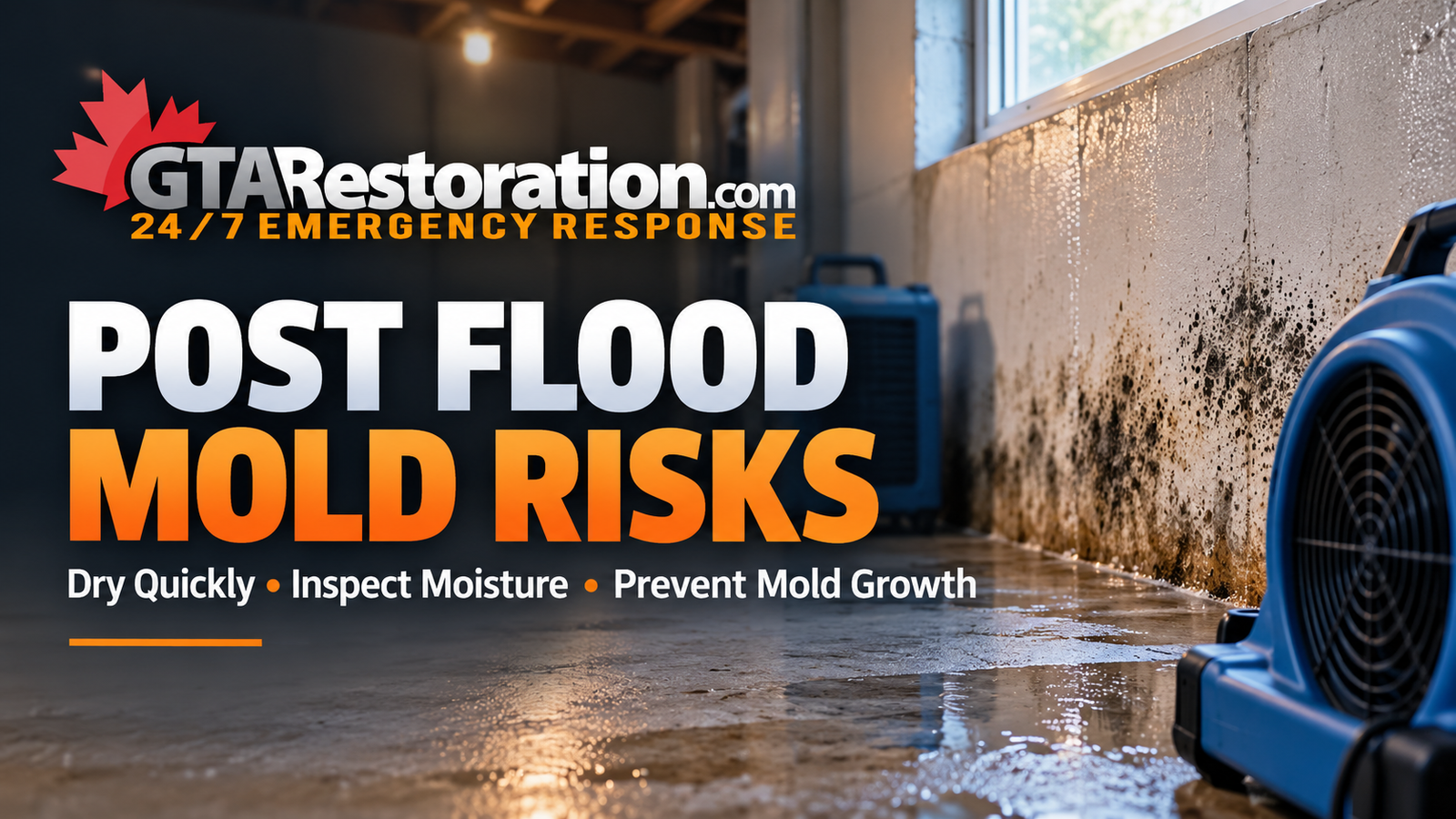
416-800-0000Post flood mold risks can increase when water remains inside drywall, flooring, insulation, framing, cabinets, or other building materials. Removing visible water is only the first step. Property owners also need to consider hidden moisture and whether affected materials have dried properly.
After a flood, quick action can help limit additional damage. The response should address the water source, standing water, wet materials, structural drying, moisture monitoring, and any contamination associated with the loss.
Water can travel behind walls, beneath flooring, above ceilings, and into adjoining rooms. Therefore, an area that looks dry may still contain moisture. Moisture meters, thermal imaging, and physical inspection can help identify areas that require further investigation.
Drying should begin as soon as conditions allow. Depending on the loss, restoration crews may use water extraction equipment, air movers, dehumidifiers, and moisture monitoring to remove excess moisture from the building.
Porous building materials can absorb and retain water. For example, drywall, insulation, carpet padding, engineered flooring, and particleboard may require closer evaluation after flooding. The appropriate response depends on the water source, exposure time, contamination, and material condition.
Musty odours, staining, bubbling paint, warped materials, recurring dampness, or visible growth may indicate an unresolved moisture problem. However, mold can also develop in concealed areas where there are few visible warning signs.
Sewer backups and other contaminated water losses require additional precautions. Therefore, avoid unnecessary contact with affected water and materials. Cleanup may require removal of contaminated porous materials, cleaning, disinfection, drying, and controlled disposal.
When mold remediation is necessary, containment and controlled work practices can help prevent contaminated dust from spreading into unaffected areas. In addition, HEPA air filtration and detailed cleaning may form part of the remediation process depending on site conditions.
Photos, moisture readings, equipment records, site notes, and other documentation can help show how conditions changed during the restoration process. As a result, property owners have a clearer record of the drying and cleanup work completed after the flood.
Preventing another moisture problem starts with correcting the original source. For this reason, repair plumbing leaks, roof problems, drainage issues, foundation water entry, or other conditions that contributed to the loss. Regular inspections can also help identify recurring moisture before it causes further damage.
Finally, GTA Restoration provides water damage cleanup, structural drying, mold inspection, and mold remediation services throughout Toronto and the GTA. Our team can assess affected areas and determine the appropriate drying or remediation process based on the conditions found at the property.
If your property recently experienced flooding or water damage, addressing remaining moisture promptly can help reduce the risk of a larger mold problem.
Service Areas Across Canada
GTA Restoration serves communities across Canada, including Toronto and the GTA. U.S. locations are opening. Browse our Canadian service areas below, and contact us to confirm services and availability for your address.
Search
Mold can develop when building materials remain wet after flooding. Therefore, water removal and structural drying should begin as soon as conditions safely allow.
Yes. Water can remain beneath flooring, behind drywall, inside insulation, and in other concealed spaces. As a result, a room may appear dry while hidden materials still contain moisture.
Musty odours, visible spotting, bubbling paint, warped baseboards, soft drywall, and recurring dampness can indicate a moisture or mold problem. However, concealed mold may develop without obvious surface signs.
Not always. The decision depends on the water source, contamination, exposure time, material condition, and whether the drywall can be dried properly. However, contaminated or significantly damaged porous materials may require removal.
A dehumidifier can support structural drying, but it may not address moisture trapped inside walls, floors, or insulation by itself. Therefore, moisture readings and proper air movement are also important after significant water damage.
Professional assessment is appropriate when flooding affects multiple materials, sewage is involved, moisture remains hidden, musty odours continue, or visible mold develops. GTA Restoration provides water damage and mold services throughout Toronto and the GTA.
Yes. Moisture can become trapped beneath laminate, engineered wood, vinyl, carpet, and underlayment. For this reason, checking moisture below the visible flooring can be important after significant water damage.
An inspection may be helpful when materials remained wet, hidden areas were affected, musty odours continue, or there are concerns about incomplete drying. In addition, moisture readings can help identify areas that may require further drying or mold remediation.
Direct Billing & Insurance Claims
Ask your insurer about coverage, deductibles and the records it needs.

In-House Financing Available
Financing up to 24 months. No interest. No money down. Ask us about the terms.
Learn more ↴ 
RELATED ARTICLES





Call Us 416-800-0000
Emergency? 24/7 Restoration Help
We cover all GTA 24/7.
Head Office:
250 Consumers Rd,
#10
Toronto, ON
M2J 4V6,
Open 24 hours
Downtown Office:
1 Toronto St,
#10
Toronto, ON
M5W 1A1,
Open 24 hours
For non-emergencies use our contact form
Not sure what you need?
Call us today to find the best product for your situation.
Head Office:
101 Lebovic Ave,
Unit #10
Scarborough,
ON, M1L 4T7
Hours
24-Hours Open
Downtown Office:
250 Yonge Street,
Unit #1A
Toronto,
ON, M5B 2L7
Hours
24-Hours Open
Post Flood Mold Risks: What to Do After Water Damage
Get a quote today