
Tags: Drying, Specialty Drying,


For non-emergencies use our contact form

Emergency? 24-Hours
416-800-0000Water can remain inside basement walls after the surface appears dry. Therefore, proper drying should account for drywall, insulation, framing, flooring edges, and other materials that may hold moisture.
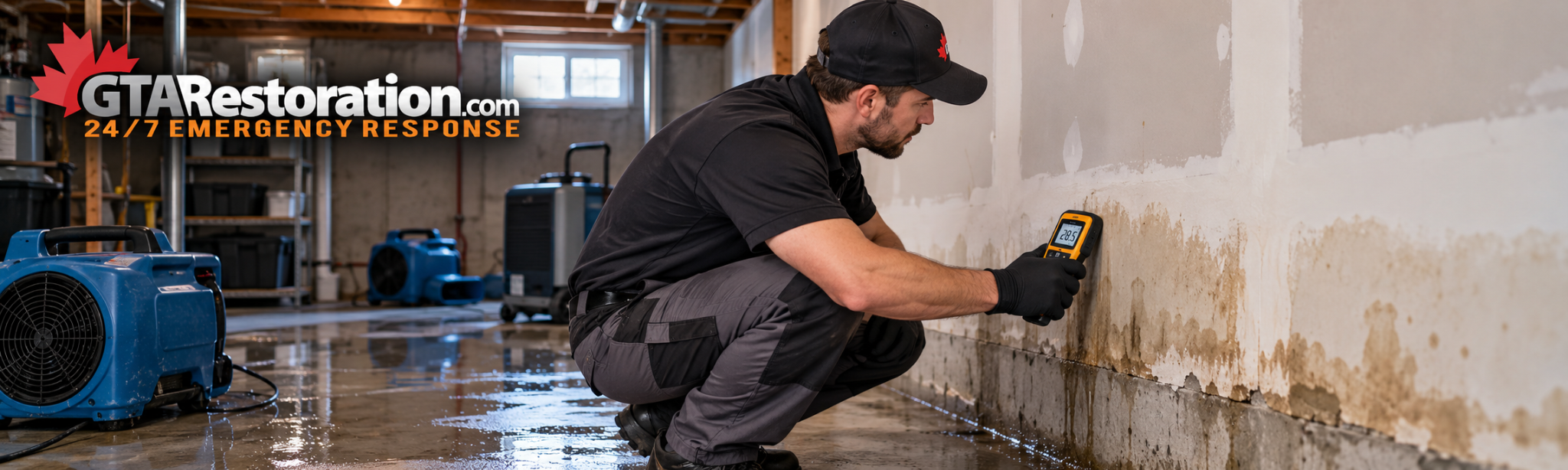
Water can move behind baseboards and higher inside drywall than the visible stain. Moisture meters help technicians identify affected materials and track drying progress.
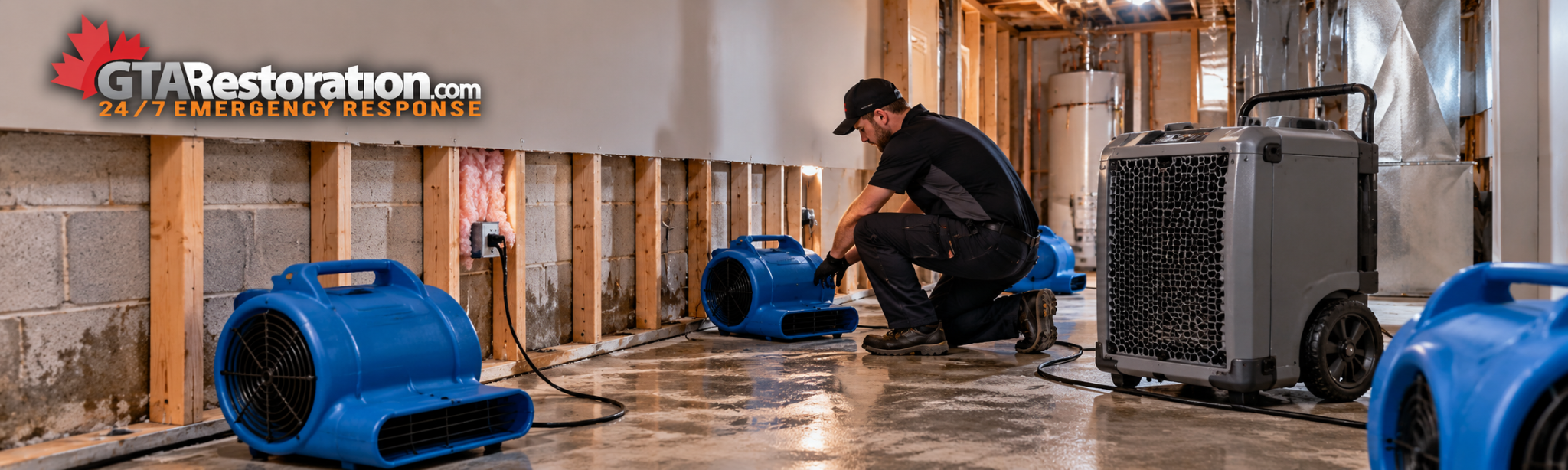
Not every wet wall requires full removal. However, saturated, damaged, or contaminated materials may need removal so the wall cavity can dry properly.
Air movers increase evaporation while dehumidifiers remove moisture from the air. Together, they create controlled drying conditions inside the basement.
Do not rely on touch alone. Instead, use moisture readings to confirm that affected materials are ready for repair or reconstruction.
A basement flood may also affect flooring, contents, trim, and wall cavities. As a result, cleanup may require extraction before structural drying begins.
Clean supply-line water differs from sewage or outdoor floodwater. Contaminated water may require removal of porous materials and additional cleaning steps.
Fix the moisture source and dry materials promptly. Persistent odours, stains, or dampness may indicate that the property needs further inspection.
High humidity can slow the drying process and allow moisture to remain in building materials. Therefore, dehumidification and proper airflow help maintain better drying conditions.
Before installing new drywall, insulation, or trim, confirm that framing and wall cavities have dried. This helps avoid trapping hidden moisture behind new finishes.
Correct plumbing leaks, drainage problems, foundation seepage, or sump pump issues before installing new drywall or finishes.
If you cannot confirm that the wall cavity is dry, GTA Restoration can inspect the area and recommend the next steps.
Need help drying basement walls after water damage?
Contact GTA Restoration for moisture checks, water extraction, and structural drying.
Service Areas Across Canada
GTA Restoration serves communities across Canada, including Toronto and the GTA. U.S. locations are opening. Browse our Canadian service areas below, and contact us to confirm services and availability for your address.
Search
Stop the water source, remove standing water, expose wet materials, use airflow and dehumidification, and check moisture before repairs.
Drying time depends on the water amount, wall materials, insulation, humidity, and airflow. Moisture readings provide a better guide than a fixed number of days.
No. However, heavy saturation, contamination, or damage may require removal so the wall cavity can dry properly.
A dehumidifier helps, but structural drying may also require extraction, airflow, and access to wet wall cavities.
Moisture meters can help identify damp building materials that may not feel wet at the surface.
Learn more ↴ 
Latest Articles
Direct Billing & Insurance Claims
Ask your insurer about coverage, deductibles and the records it needs.

In-House Financing Available
Financing up to 24 months. No interest. No money down. Ask us about the terms.
Certifications & Insurance
View our firm certification, technician qualifications and insurance documents.

IICRC Certified Firm
GTA Restoration Inc.
Firm number 199912
Valid through
Business Insurance
GTA Restoration Group Inc.
$5 million general liability per occurrence
$8 million contractors pollution per claim
–
IICRC Technician Qualifications
Tony Sokol T. Lleshi · Registration 214520
Valid through
Water Damage Restoration · Fire & Smoke Damage Restoration · Applied Microbial Remediation · Odor Control · Trauma & Crime Scene
View technician verification (PDF) — opens in a new tabInsurance is subject to policy terms, conditions and exclusions.





Call Us 416-800-0000