...

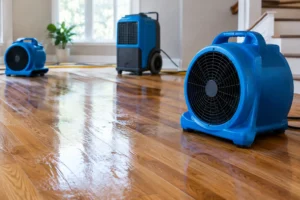
Blue centrifugal air mover for drying wet surfaces


Choosing Air Movers for Drying Wet Floors and Walls

Air movers for drying help move moisture from wet surfaces into the air. However, the right choice depends on the room, the materials and the damage. A high airflow rating alone does not make one unit the best fit.

First, check the water source and affected areas. Then, plan how to remove water, clean the space and dry each layer. GTA Restoration offers equipment rentals and drying support in Toronto and the GTA.

Call Us: 416-800-0000

How Air Movers Help Materials Dry

A drying fan sends air across a wet surface. As a result, it helps moisture leave that surface through evaporation. A dehumidifier then removes moisture from the air.

However, airflow cannot pump out standing water or fix a leak. Water removal comes first where needed. Also, a dry floor surface does not prove that the pad or subfloor beneath it is dry.

Choose the Right Type of Drying Air Mover

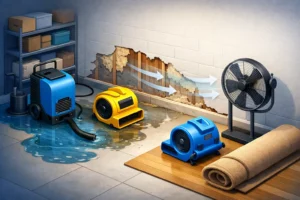
  • Low-profile units: These compact models can direct air across floors and fit in tight spaces. Some also offer several positions for walls, stairs or ceilings.
  • Centrifugal blowers: Many have a shaped outlet that directs airflow toward a surface. However, outlet design, pressure and approved uses vary by model.
  • Axial fans: These move air along the fan’s axis and can serve larger spaces. Some models also support ducting, so check the specifications.

For example, compare the manufacturer’s Velo Pro details with its Vortex fan specifications. They show why intended use and airflow both matter. These examples are not a ranking or a promise of rental stock.

Compare Power, Size and Controls

CFM means cubic feet per minute. It describes air volume, but it does not show the whole drying result. Also, compare amp draw, speed settings and weight before choosing a unit.

If ducting is part of the plan, check the model’s pressure rating and approved attachments. Meanwhile, handles and a compact shape can make moving equipment between rooms easier. Check circuit capacity before running several machines.

Check the Area Before Starting Drying Fans

Do not enter water near outlets, wiring or appliances. Instead, arrange an electrical safety check where water has affected the power supply.

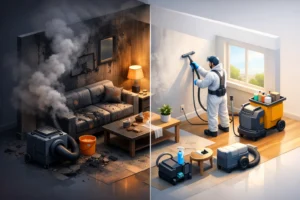
For sewage or visible mold, get a cleanup plan first. Fans may spread particles through the room. The EPA’s flood cleanup guidance explains why cleaning and safe drying must work together.

Plan Air Mover Placement and Humidity Control

Place equipment on a stable, dry surface and follow its manual. Keep air inlets clear and cords away from walkways. Then, direct airflow across the wet areas that need drying.

Pair air movers for drying with suitable moisture control. Opening windows may help in dry weather. However, humid outdoor air can slow progress. The room conditions should guide the setup.

Check Moisture Before Ending the Drying Job

Use moisture readings over time to track progress. Surface touch alone can miss water inside walls or under flooring. Therefore, the drying plan should include checks of affected layers.

Some materials need removal because they cannot be cleaned or dried well. Also, floor mats and wall-cavity systems need compatible equipment. An ordinary fan cannot replace every specialist system.

Renting Air Movers for Drying in Toronto

For a short project, rental may be a practical choice. Before booking, share the room size, wet materials and source of water. Then, ask about model availability, power needs and rental terms.

GTA Restoration can discuss equipment options or a broader drying plan. For extensive damage or hidden moisture, arrange an assessment before choosing machines.


Need Help Choosing Drying Equipment?

Discuss your wet floors, walls or drying project with GTA Restoration.

Call Us: 416-800-0000

Learn more ↴

View Rental Options | Large Dehumidifier | Equipment Rental

Share this... Spread the word!


Air Movers for Drying: 8 Rental Checks

A clear plan makes rental easier. Use these checks to discuss equipment, access and drying needs before work starts.

1. Describe the Water Source

First, explain where the water came from and whether the leak has stopped. Mention sewage or visible mold.

2. Measure the Work Area

Next, share the room size and layout. Include nearby rooms if water has spread beyond the first wet spot.

3. List Wet Materials

Floors, wallboard and carpet need different checks. Therefore, explain which surfaces and hidden layers may hold water.

4. Check Air Mover Power Needs

Also, ask about amp draw and safe power. Several machines may need more than one suitable circuit.

5. Plan Humidity Control

Airflow releases moisture into the room. Meanwhile, a suitable dehumidifier can remove that moisture from the air.

6. Confirm Rental Terms

Before booking, check the rental period, fees and return process. Ask what happens if the job needs more time.

7. Track Drying Progress

During the job, keep moisture readings and notes. These help show whether the current setup needs a change.

8. Review the Next Step

Finally, check that affected layers meet the drying goals before repairs. Report any new dampness or odour.


Need drying equipment in Toronto or the GTA?
GTA Restoration can discuss your project and rental options.

Call Us: 416-800-0000


GTA Service Centre


Air Movers for Drying FAQs

What does an air mover do?

It moves air across wet surfaces to help moisture evaporate. However, it does not collect water.

Do I also need a dehumidifier?

Often, yes. A dehumidifier removes moisture from the air while fans help wet surfaces dry.

Which type of drying fan is best?

The best fit depends on space, materials and power. Therefore, compare each model's intended use.

How many air movers will I need?

Room size alone is not enough. Also, consider wet surfaces, layout and airflow when planning equipment.

How long should drying fans run?

Use moisture readings to guide the stop point. A dry surface may still hide damp layers.


Learn more ↴


Direct Billing & Insurance Claims

Ask your insurer about coverage, deductibles and the records it needs.


Payment options

In-House Financing Available

Financing up to 24 months. No interest. No money down. Ask us about the terms.


Certifications & Insurance

View our firm certification, technician qualifications and insurance documents.

IICRC Certified Firm

GTA Restoration Inc.

Firm number 199912
Valid through
View IICRC certificate (PDF) — opens in a new tab

Business Insurance

GTA Restoration Group Inc.

$5 million general liability per occurrence
$8 million contractors pollution per claim
–

View insurance certificate (PDF) — opens in a new tab

IICRC Technician Qualifications

Tony Sokol T. Lleshi · Registration 214520
Valid through

Water Damage Restoration · Fire & Smoke Damage Restoration · Applied Microbial Remediation · Odor Control · Trauma & Crime Scene

View technician verification (PDF) — opens in a new tab

Insurance is subject to policy terms, conditions and exclusions.


Emergency? Click to Call!