...
Can Mold Grow Behind Drywall? Signs And Next Steps

A wall can look completely normal while moisture and mold develop on its hidden side. Can mold grow behind drywall? Yes, especially after a leak, flood, plumbing failure, roof issue, or long period of high humidity. Drywall’s paper facing can provide a food source, and a dark wall cavity can hold moisture long after the surface feels dry.

Why mold develops inside a wall

Mold needs moisture, a food source, and time. Drywall paper, wood framing, dust, and insulation can support growth when water enters the wall. A small plumbing leak may wet one area slowly. A burst pipe, sewer backup, or basement flood may soak a much larger section at once.

The challenge is that the outer painted surface can dry before the cavity does. Water can also travel downward or sideways through insulation, framing, and floor assemblies. That means the visible stain is not always the full size of the affected area.

Condensation can create the same problem. Cold exterior walls, poorly insulated pipes, bathroom steam, or inadequate ventilation may leave repeated moisture behind drywall. The source must be corrected before any repair. Otherwise, new drywall can conceal the same conditions that caused the damage.

Signs mold may be behind drywall

A musty odor is often one of the first clues. The smell may become stronger after rain, when the heat turns on, or when a room has been closed for several hours. Discoloration, bubbling paint, peeling baseboards, warped drywall, and soft spots can also point to water inside the wall.

Watch for unexplained recurring symptoms in one room, such as irritation of the eyes, nose, or throat. These symptoms have many possible causes, so they do not prove mold. Still, when they occur with a damp odor or water damage, the wall deserves closer attention.

In a condo, water may enter from a neighboring unit, a common plumbing line, an exterior wall, or a roof area above. Tenants should report signs promptly to the landlord or property manager. Condo owners should also check the building’s reporting process, since access to shared systems and responsibility for repairs can vary.

How hidden wall mold is assessed

Avoid cutting into a suspicious wall without first considering what may be inside. Electrical wiring, plumbing, and contaminated materials can create added risk. If there was a sewer backup or other contaminated water event, limit contact with affected materials and keep people and pets away from the area.

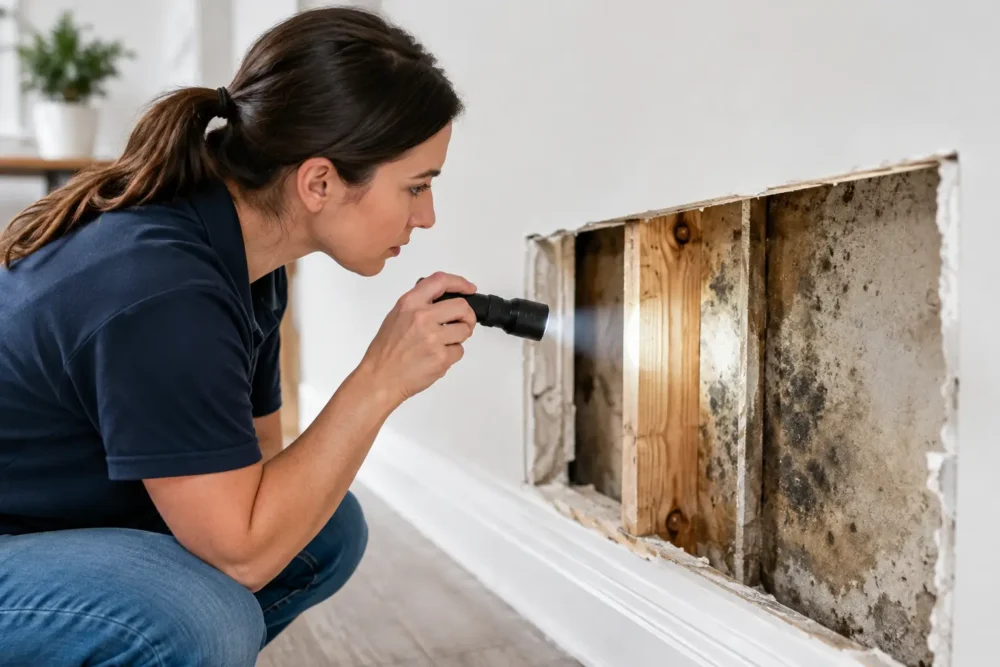
A restoration assessment usually begins with finding the moisture source and mapping where water may have traveled. Moisture readings can compare wet and dry areas. Thermal imaging may help identify temperature differences linked to damp materials, but it does not confirm mold by itself. Small, controlled openings can show the condition of the cavity when appropriate.

The goal is to make a practical decision: can materials be dried safely, or do damaged sections need removal? Drywall that is soft, swollen, heavily stained, or affected by contamination often needs to be removed so framing and insulation can be inspected and dried.

What safe cleanup usually involves

Do not paint over staining or spray fragrance to mask an odor. Those steps do not remove moisture or growth. For a small, clearly defined area, public health guidance may support careful cleaning with proper protection and moisture control. Larger, hidden, recurring, or contaminated areas need a more controlled approach.

Professional mold removal may include containing the work area, removing affected drywall and insulation, cleaning remaining structural surfaces, and using drying equipment to reduce moisture in materials. Air filtration may be used during work to help control dust and airborne particles. The exact scope depends on the water source, the material condition, and the affected area.

GTA Restoration can help assess water damage or suspected hidden mold, document conditions, remove affected materials where needed, and coordinate drying and repair work. No cleanup should begin until the water source is addressed. A repaired wall is only as sound as the leak repair behind it.

Document damage before repairs begin

Take clear photos and videos of stains, wet flooring, damaged contents, visible leaks, and the room as a whole. Note when you first noticed the problem, what happened before it appeared, and any steps already taken. Keep invoices, moisture records, estimates, and work reports in one place.

These records can help explain the loss to a landlord, condo manager, or insurer. Coverage decisions belong to the insurer and depend on the policy and circumstances. Restoration documentation can show the condition of the property and the work completed, but it cannot determine coverage.

If you suspect mold behind a wall, focus first on stopping water, limiting exposure, and getting the hidden area assessed. A small patch of damage can be manageable when found early. Waiting for a stronger odor or larger stain can allow moisture to affect more materials.

Share this... Spread the word!


Restoration Support

Hidden moisture calls for a careful response, not guesswork. GTA Restoration can support property owners and managers with assessment, drying, cleanup, and repair planning after water damage or suspected mold growth.

Moisture Source Checks

Finding the leak, condensation point, or water entry path helps prevent repeated damage after cleanup.

Water Damage Assessment

Moisture readings and visual inspection can help map affected walls, floors, and nearby materials.

Controlled Wall Access

Targeted openings may allow the wall cavity to be inspected while avoiding unnecessary demolition.

Mold Removal Planning

The cleanup plan depends on the amount of affected material, the water source, and access conditions.

Drying and Dehumidification

Drying equipment can reduce moisture in structural materials after wet drywall and insulation are removed.

Damaged Drywall Removal

Soft, swollen, contaminated, or mold-affected drywall may require removal before repair work begins.

Condo and Rental Coordination

Clear records and communication can help owners, tenants, landlords, and managers coordinate access and next steps.

Damage Documentation

Photos, readings, estimates, and work records can support a property file or insurance claim submission.

Wall and Finish Repairs

Once the source is corrected and materials are dry, damaged wall sections can be prepared for repair and finishing.

For help with suspected hidden moisture or mold in the Toronto and GTA area, call GTA Restoration at 416-800-0000.

Call Us: 416-800-0000


GTA Service Centre


Frequently Asked Questions

Can mold grow behind drywall without a visible stain?

Yes. Moisture can remain inside a wall while the painted surface looks dry. A musty odor, bubbling paint, or a history of leaks can justify an assessment.

How do professionals check for mold inside walls?

They look for the moisture source, take moisture readings, inspect surrounding materials, and may use controlled openings to view the wall cavity when needed.

Should I remove moldy drywall myself?

Small, visible areas may be manageable in limited situations, but hidden, widespread, recurring, or contaminated damage needs careful containment and removal planning.

Will drying the wall stop mold growth?

Drying is essential, but it may not remove existing growth or damaged materials. The water source must be fixed, and affected materials need evaluation.

What should I save for an insurance claim?

Keep photos, videos, dates, invoices, estimates, moisture records, and restoration reports. Early records can make the property damage easier to explain and track.


Learn more ↴


Direct Billing & Insurance Claims

Ask your insurer about coverage, deductibles and the records it needs.


Payment options

In-House Financing Available

Financing up to 24 months. No interest. No money down. Ask us about the terms.


Certifications & Insurance

View our firm certification, technician qualifications and insurance documents.

IICRC Certified Firm

GTA Restoration Inc.

Firm number 199912
Valid through

View IICRC certificate (PDF) — opens in a new tab

Business Insurance

GTA Restoration Group Inc.

$5 million general liability per occurrence
$8 million contractors pollution per claim
–

View insurance certificate (PDF) — opens in a new tab

IICRC Technician Qualifications

Richard Mark Provence · Registration 55726
Certificate expires

Water Damage Restoration · Fire & Smoke Restoration · Applied Microbial Remediation · Odor Control · Trauma & Crime Scene

View technician verification (PDF) — opens in a new tab

Insurance is subject to policy terms, conditions and exclusions.


Emergency? Click to Call!