
Tags: Cleanup, Drying, Flooding, Moisture, Restoration,


For non-emergencies use our contact form


Emergency? 24-Hours
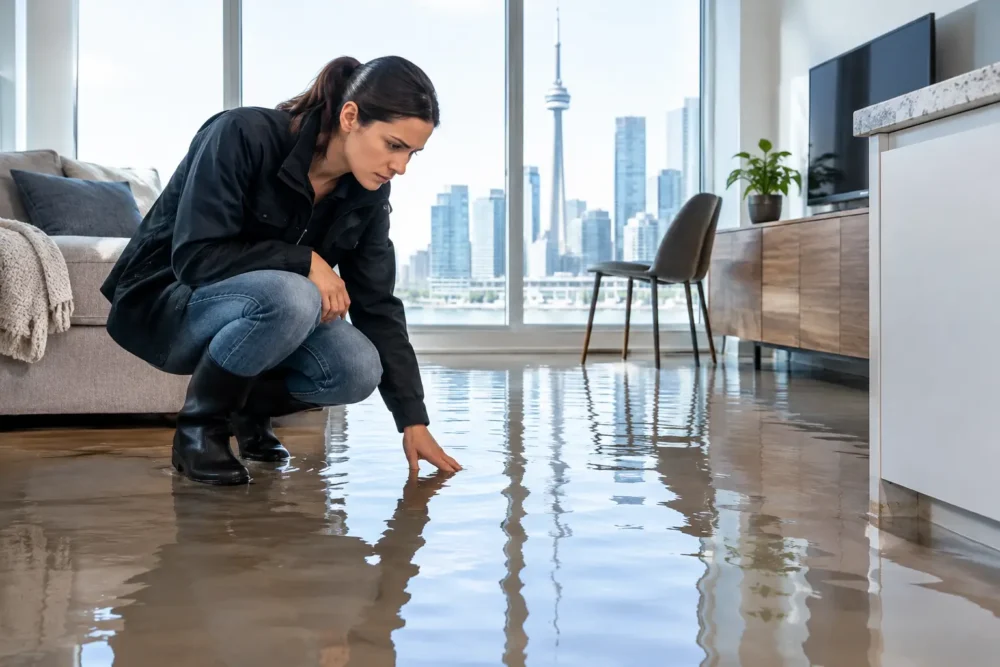
416-800-0000Hardwood can change quickly after a flood. A clear assessment and controlled drying plan help protect the rest of the property while repair decisions are made.
Standing water should be extracted as soon as it is safe. Removing it reduces the time hardwood and nearby materials remain saturated.
Moisture readings can show whether water remains inside boards, below the floor, or in nearby walls. Surface appearance alone is not enough.
A wet subfloor can keep feeding moisture into hardwood. Assessment may require access at floor edges or other affected building areas.
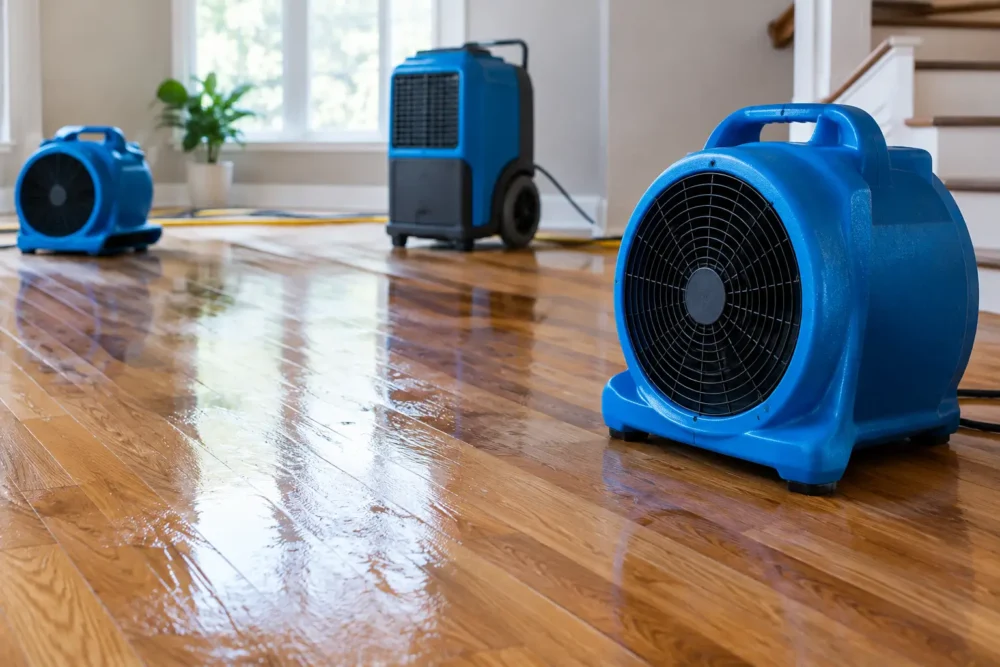
Air movers and dehumidifiers manage moisture in the room. Equipment placement and monitoring should match the flooring and water conditions.
Sewage backups and outside floodwater require added precautions. Damaged porous materials may need removal when they cannot be safely cleaned.
Water often travels behind baseboards and into lower wall sections. Targeted access can help dry these concealed areas.
In a condo, the leak source or affected materials may involve common areas or another unit. Prompt communication helps arrange necessary access.
Photos, moisture readings, estimates, and work records can support your property file. Your insurer determines coverage under the policy.
Once materials stabilize, repairs may include selective board replacement, subfloor work, or refinishing. The right option depends on the extent of damage.
If your hardwood floor is wet after a flood, arrange an assessment before the damage spreads further. Call Us: 416-800-0000
Service Areas Across Canada
GTA Restoration serves communities across Canada, including Toronto and the GTA. U.S. locations are opening. Browse our Canadian service areas below, and contact us to confirm services and availability for your address.
Search
Damage can begin quickly, especially when water reaches seams and the subfloor. Remove water promptly, but use moisture readings rather than appearance alone to judge drying progress.
Mild cupping may lessen as the wood dries under controlled conditions. Severe cupping, buckling, staining, or contamination can require repair or replacement.
Not always. Removing boards too early can disturb materials that may be dryable. An assessment can determine whether moisture is trapped below and whether removal is necessary.
It depends on the policy and the cause of water damage. Insurers make coverage decisions, while photos, readings, receipts, and restoration records can help document the claim.
Avoid contact with the water and keep the area isolated where possible. Sewer backup cleanup needs added sanitation measures, and quick professional support can help limit further property damage.
Direct Billing & Insurance Claims
Ask your insurer about coverage, deductibles and the records it needs.

In-House Financing Available
Financing up to 24 months. No interest. No money down. Ask us about the terms.
Learn more ↴ 
RELATED ARTICLES





Call Us 416-800-0000
Emergency? 24/7 Restoration Help
We cover all GTA 24/7.
Head Office:
250 Consumers Rd,
#10
Toronto, ON
M2J 4V6,
Open 24 hours
Downtown Office:
1 Toronto St,
#10
Toronto, ON
M5W 1A1,
Open 24 hours
For non-emergencies use our contact form
Not sure what you need?
Call us today to find the best product for your situation.
Head Office:
101 Lebovic Ave,
Unit #10
Scarborough,
ON, M1L 4T7
Hours
24-Hours Open
Downtown Office:
250 Yonge Street,
Unit #1A
Toronto,
ON, M5B 2L7
Hours
24-Hours Open
How to Dry Hardwood After Flooding Safely
Get a quote today


