
Tags: Mold Remediation, Mold Removal,
For non-emergencies use our contact form


Emergency? 24-Hours
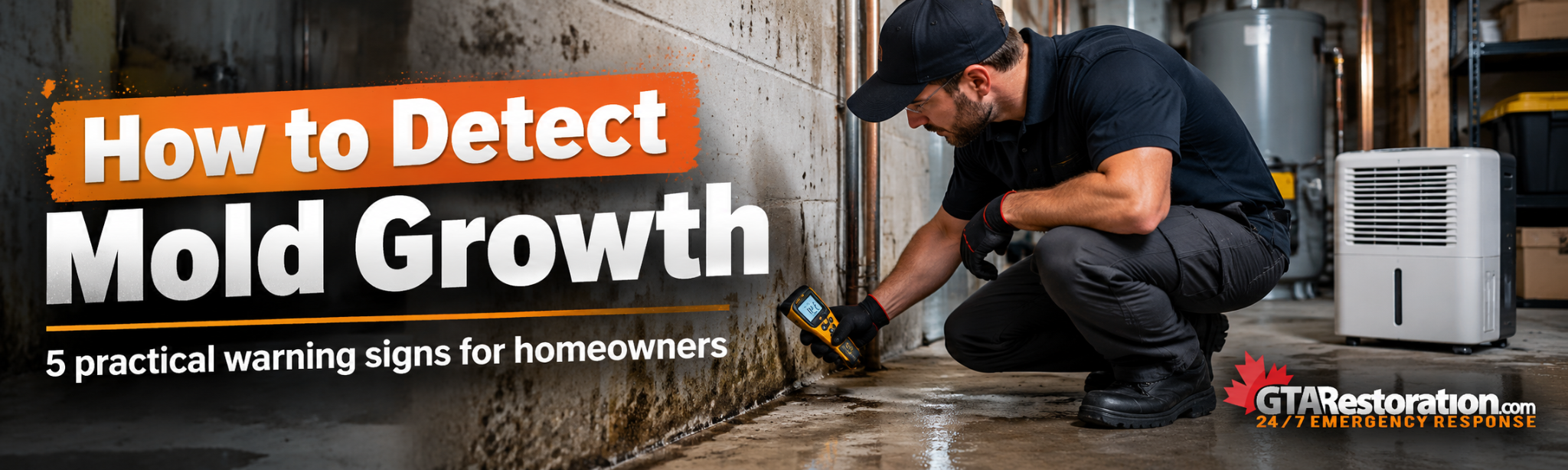
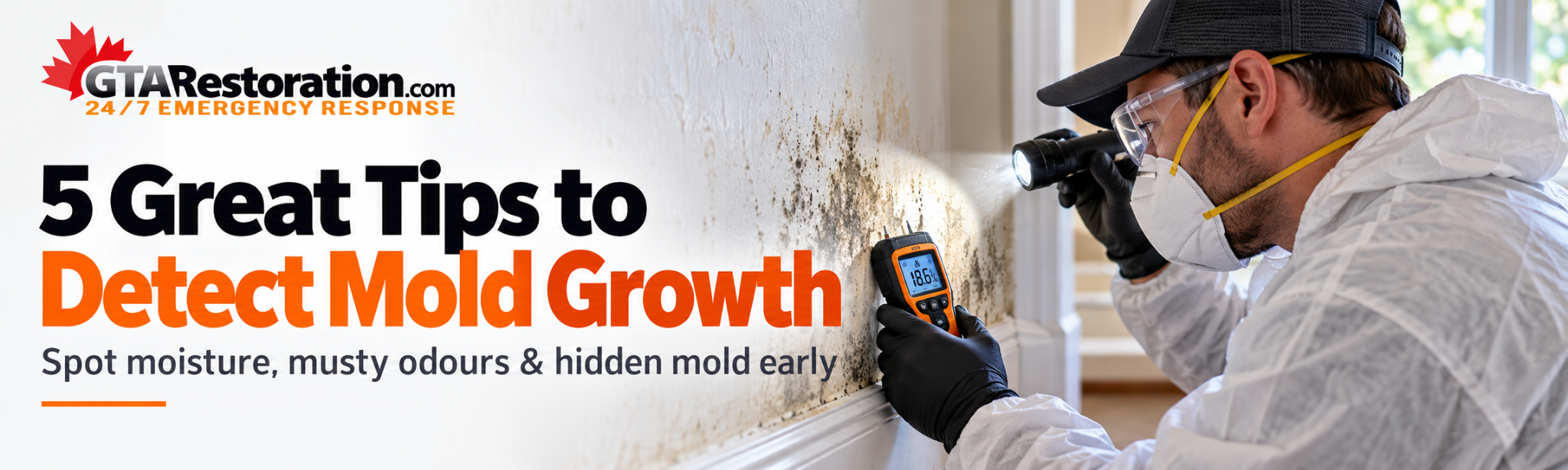
416-800-0000Learning to detect mold growth starts with moisture. Leaks, flooding, condensation and high humidity can create damp areas where mould develops. Therefore, regular inspection can help identify problems before they spread farther through building materials.
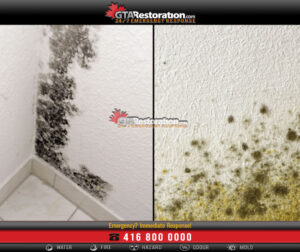
First, look for stains or discolouration on drywall, ceilings, floors, window areas and other damp surfaces. However, colour alone does not identify the type of mould.
In addition, pay attention to persistent musty or earthy smells. An odour does not prove where mold is growing, but it can justify a closer moisture inspection.
Leaks beneath sinks, around toilets and near water lines can remain hidden. Therefore, check cabinets, trim and surrounding finishes for swelling, staining or dampness.
Basements often experience humidity, condensation and foundation moisture. For this reason, inspect walls, flooring, storage areas and windows regularly.
Condensation can leave window frames and sills damp. Consequently, recurring moisture around windows may create conditions that support mould growth.
Floods and plumbing leaks can leave hidden materials wet. Therefore, inspect previously damaged areas and confirm that flooring, drywall and other materials have dried properly.
Health Canada recommends relative humidity between 30% and 50%. As a result, a hygrometer can help identify rooms where excessive humidity needs attention.
Mold may develop behind furniture, beneath flooring or inside other concealed spaces. However, avoid unnecessary demolition simply to search for growth.
Most importantly, repair leaks and correct excess humidity promptly. Otherwise, mold may return even after you clean the visible area.
Large, recurring or difficult-to-locate mould problems may require professional assessment. In addition, significant water damage can justify a closer moisture inspection.
Finally, GTA Restoration provides inspection, moisture assessment, controlled cleanup and remediation support throughout Toronto and the GTA.
Found possible mold or a persistent musty odour?
Contact GTA Restoration for professional inspection and remediation support.
Service Areas Across Canada
GTA Restoration serves communities across Canada, including Toronto and the GTA. U.S. locations are opening. Browse our Canadian service areas below, and contact us to confirm services and availability for your address.
Search
For example, visible staining, discolouration, persistent dampness and musty odours can indicate a mould or moisture problem.
First, check basements, bathrooms, plumbing areas, windows, closets and locations that previously experienced water damage.
Health Canada recommends keeping indoor relative humidity between 30% and 50%. Therefore, a hygrometer can help you monitor moisture conditions.
Usually not. Instead, Health Canada recommends finding visible mould and moisture problems first. A professional may recommend targeted testing in specific situations.
No. Although damp and mouldy environments can contribute to respiratory and irritation symptoms, those symptoms alone cannot confirm mold inside a property.
Learn more ↴ 
Latest Articles
Direct Billing & Insurance Claims
Ask your insurer about coverage, deductibles and the records it needs.

In-House Financing Available
Financing up to 24 months. No interest. No money down. Ask us about the terms.
Certifications & Insurance
View our firm certification, technician qualifications and insurance documents.

IICRC Certified Firm
GTA Restoration Inc.
Firm number 199912
Valid through
Business Insurance
GTA Restoration Group Inc.
$5 million general liability per occurrence
$8 million contractors pollution per claim
–
IICRC Technician Qualifications
Tony Sokol T. Lleshi · Registration 214520
Valid through
Water Damage Restoration · Fire & Smoke Damage Restoration · Applied Microbial Remediation · Odor Control · Trauma & Crime Scene
View technician verification (PDF) — opens in a new tabInsurance is subject to policy terms, conditions and exclusions.





Call Us 416-800-0000