
Tags: Water Damage, Water Damage Restoration,
For non-emergencies use our contact form


Emergency? 24-Hours
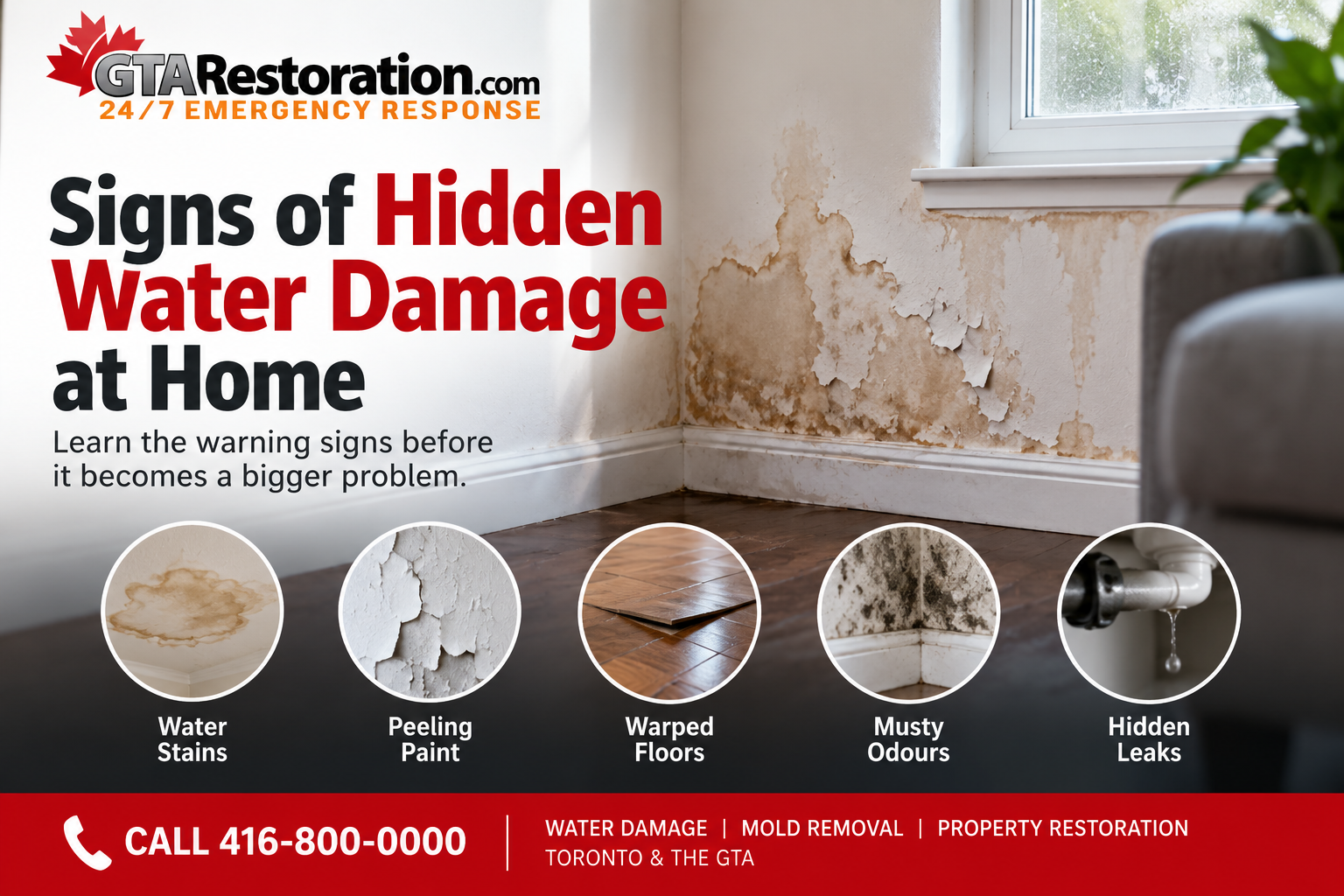
416-800-0000Hidden water damage can develop slowly behind walls, beneath flooring, or above ceilings. Therefore, recognizing early warning signs can help you address the moisture source before the damage becomes more extensive.
Yellow, brown, or dark marks on walls and ceilings can indicate previous or active moisture. As a result, new or expanding stains deserve further investigation.
A persistent musty smell may indicate damp materials or concealed moisture. In particular, check basements, cabinets, closets, and areas affected by previous leaks.
Moisture behind walls can cause paint to bubble, blister, or peel. Therefore, investigate the moisture source before repainting the affected surface.
Wood and laminate flooring may swell, buckle, or separate after moisture exposure. Likewise, damaged baseboards can indicate water near the bottom of a wall.
Inspect beneath sinks and around toilets, showers, appliances, and plumbing connections. Even a small leak can cause hidden water damage over time.
Recurring mould can indicate that moisture remains in the area. For this reason, finding and correcting the moisture source is an important part of preventing the problem from returning.
Roof, window, foundation, and exterior leaks may become noticeable after rainfall. Therefore, check basements, attics, ceilings, and exterior walls following severe weather.
High humidity can contribute to condensation and damp conditions. In addition, controlling indoor moisture can help reduce the risk of mould growth.
A sudden increase in water consumption can sometimes indicate a plumbing leak. However, confirm the source rather than relying on the water bill alone.
Moisture meters and thermal imaging can help identify areas that require closer investigation. Consequently, these tools can support an assessment when water damage is not immediately visible.
GTA Restoration provides water damage assessment, cleanup, and structural drying throughout Toronto and the GTA. In addition, our team can help identify moisture concerns following leaks, flooding, and other water events.
Concerned about hidden water damage in your home?
GTA Restoration can inspect moisture concerns and help determine the appropriate next step before the damage spreads further.
Service Areas Across Canada
GTA Restoration serves communities across Canada, including Toronto and the GTA. U.S. locations are opening. Browse our Canadian service areas below, and contact us to confirm services and availability for your address.
Search
Common warning signs include water stains, musty odours, peeling paint, warped flooring, swollen drywall, mould growth, and unexplained damp areas.
Look for stains, soft drywall, bubbling paint, musty odours, damaged baseboards, or recurring moisture. A professional moisture assessment can help investigate suspicious areas.
Yes. Persistent moisture can create conditions that support mould growth, particularly on drywall, wood, paper, insulation, and other porous materials.
Thermal imaging can identify unusual temperature patterns that may require further investigation. However, it does not see through walls or directly detect water.
Check beneath sinks, around toilets and showers, behind appliances, below plumbing lines, near windows, in basements, and beneath areas with previous leaks.
Yes. GTA Restoration can assess moisture and water damage concerns throughout Toronto and the GTA. Call 416-800-0000 for assistance.
Direct Billing & Insurance Claims
Ask your insurer about coverage, deductibles and the records it needs.

In-House Financing Available
Financing up to 24 months. No interest. No money down. Ask us about the terms.
Learn more ↴ 
RELATED ARTICLES





Call Us 416-800-0000
Emergency? 24/7 Restoration Help
We cover all GTA 24/7.
Head Office:
250 Consumers Rd,
#10
Toronto, ON
M2J 4V6,
Open 24 hours
Downtown Office:
1 Toronto St,
#10
Toronto, ON
M5W 1A1,
Open 24 hours
For non-emergencies use our contact form
Not sure what you need?
Call us today to find the best product for your situation.
Head Office:
101 Lebovic Ave,
Unit #10
Scarborough,
ON, M1L 4T7
Hours
24-Hours Open
Downtown Office:
250 Yonge Street,
Unit #1A
Toronto,
ON, M5B 2L7
Hours
24-Hours Open
Signs of Hidden Water Damage at Home
Get a quote today