...
Mold Removal and Mould Remediation Toronto - GTA Restoration

Emergency? 24-Hours

416-800-0000
  • Home
  • Services
    • Emergency Plumbers 24/7
    • Water Damage Restoration
    • Flooded Basement
    • Mold Remediation Toronto
    • Sewer Backup Remediation
    • Fire & Smoke Restoration
    • Odour Removal Toronto
    • Biohazard Scene Cleanup
    • Emergency Roofing Repair
    • Water Leak and Detection
    • Condominium Restoration
    • Basement WaterProofing
    • Property Inspection Toronto
    • Sanitizing and Disinfection
    • Insurance Claim Appraisers
    • Equipment for Rent Toronto
  • Commercial Restoration
  • Blog
  • Our Team
  • Contact
30 January 2022 - Categories: Mold Remediation

5 Great Tips How to Detect Mold Growth


Disaster Restoration Emergency Plumbing Service Blog Icon

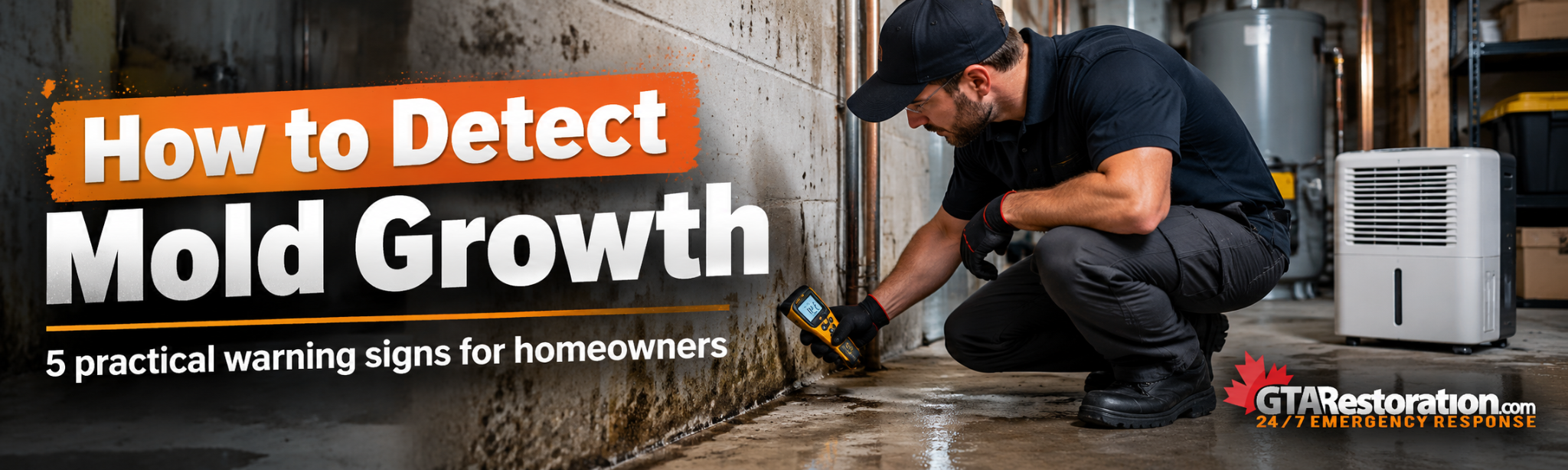
Detect mold growth with five warning signs including moisture, musty odours and visible staining


5 Great Tips How to Detect Mold Growth

Learning how to detect mold growth can help you identify moisture problems before they cause more property damage. Mold often develops where leaks, flooding, condensation or high humidity leave building materials damp.

Some growth is easy to see. However, hidden mold may remain behind furniture, beneath flooring or inside wall and ceiling cavities. Therefore, these five mold detection tips focus on visible signs, musty odours and moisture conditions rather than colour alone.

Call 416-800-0000

1. Detect Mold Growth by Looking and Smelling

First, inspect areas where moisture commonly collects. Look around basement walls, windows, sinks, tubs, laundry rooms, plumbing fixtures and other damp locations.

Visible signs of mold growth may include staining or discolouration on walls, ceilings, flooring, fabrics and other materials. In addition, a persistent musty or earthy odour can justify a closer moisture inspection even when no obvious growth appears.

Health Canada recommends looking for visible mould and excess moisture. You can review its guidance on moisture and mould in the home.

2. Check Water Leaks for Signs of Mold Growth

Next, look for the moisture source. Plumbing leaks, roof leaks, overflowing fixtures, basement flooding and appliance failures can leave drywall, flooring, wood and insulation damp enough to support mold.

For example, ceiling stains, peeling paint, warped trim or damp cabinets may point to a water problem. These clues can help you identify mold growth conditions before a larger problem develops.

If you suspect an active leak, our water leak detection service can help locate the source. After a larger water loss, our water damage restoration service can support extraction and structural drying.

3. Monitor Humidity to Detect Mold Conditions

High humidity does not confirm mold. However, it can create favourable conditions for growth. Therefore, monitoring indoor humidity can help you detect mold growth risk in rooms that regularly stay damp.

Health Canada recommends keeping relative humidity between 30% and 50%. A hygrometer can help monitor basements, bathrooms and other moisture-prone areas.

If humidity stays high, improve ventilation and use a dehumidifier where appropriate. Most importantly, investigate recurring moisture rather than relying only on equipment to control the symptoms.

4. Inspect Hidden Areas for Mold Growth

Mold can develop in places that receive little attention. Therefore, inspect behind furniture, beneath sinks, around windows, inside closets and near areas that previously experienced water damage.

Watch for bubbling paint, stained drywall, damaged trim or persistent musty odours. These mold detection tips can help identify areas that need closer inspection without unnecessary demolition.

However, avoid cutting open walls simply to search for mold. If water entered a wall, ceiling or flooring system, a professional moisture inspection may provide more useful information. Our specialty drying service can also support suitable areas with trapped moisture.

5. Know When Professional Mold Detection Is Needed

Finally, consider professional help when growth covers a large area, repeatedly returns or appears after significant flooding. Health Canada considers a single mould patch larger than three square metres extensive and recommends professional assessment and cleanup.

Routine air testing is not necessary for every concern. Instead, a professional inspection should focus on visible growth, musty odours, water damage and moisture conditions. In specific situations, targeted testing may provide useful additional information.

If you still cannot detect mold growth clearly but moisture problems continue, our mold removal and remediation team can assess the affected area and explain the next steps.

What to Do After You Detect Mold Growth

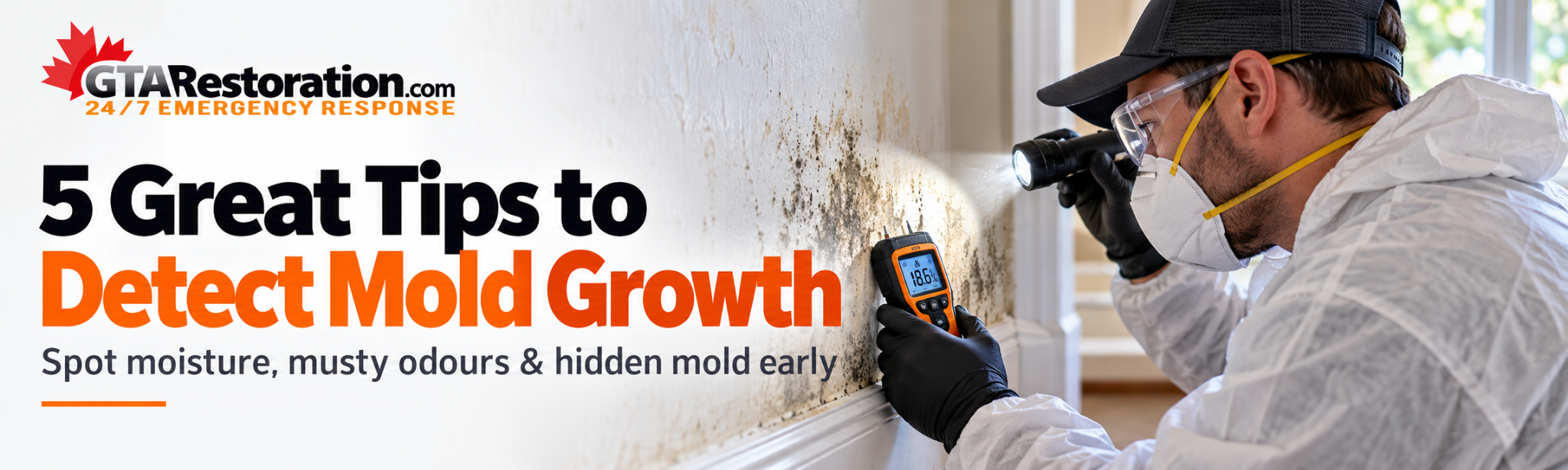
5 great tips to detect mold growth with moisture inspection and visible mold checks

Fix the Moisture Problem First

Finding mold is only part of the solution. Unless you repair the leak, reduce excess humidity or correct another moisture source, growth can return after cleanup.

For this reason, check plumbing, drainage, ventilation and previous water-damage areas. Then, dry affected materials and correct the moisture source before installing new finishes.

Use Mold Signs, Not Symptoms, for Detection

Damp and mouldy environments can contribute to eye, nose and throat irritation, coughing, wheezing and worsening asthma symptoms. However, health symptoms have many possible causes and cannot confirm mold inside a property.

Instead, use visible growth, musty odours, water damage and moisture conditions to help identify mold growth. If you have health concerns, speak with a healthcare professional separately.

Do Not Paint Over Active Mold Growth

Covering mold with paint does not solve the moisture problem. Instead, clean or remove affected materials as appropriate and allow suitable materials to dry before repairs continue.

Health Canada also advises against bleach for routine household mould cleanup. Most importantly, correct the moisture source so the problem does not return after repairs.


Need Help Detecting Mold Growth?

GTA Restoration provides mold inspection, moisture assessment, controlled remediation and drying support throughout Toronto and the GTA.

Call 416-800-0000

Learn More

Signs of Hidden Mold in Your Home | Signs of Mold Growth and How to Detect it in your Home | Best Ways to Prevent Mold | How to Remove the Musty Smell from Your Basement | Why Does Basement Smell Musty? Find the Cause
Share this... Spread the word!


Tags: Mold Remediation, Mold Removal,
☛ ☛ Related Restoration Articles You May Also Like!

Mold Removal In Toronto
The Benefits of Hiring Professional Mold Removal Services
Mold Removal & Remediation In Rockcliffe Park
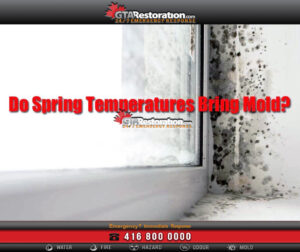
Do Spring Temperatures Bring Mold?
GTA Restoration Team Biohazard Prices
How Water Damage Causes Mold Growth
Different Types of Mold

Emergency? 24/7 Restoration Help

416-800-0000 416-800-0000

For non-emergencies use our contact form

How to Detect Mold Growth Around Your Property

Learning to detect mold growth starts with moisture. Leaks, flooding, condensation and high humidity can create damp areas where mould develops. Therefore, regular inspection can help identify problems before they spread farther through building materials.

Check for Visible Mold

First, look for stains or discolouration on drywall, ceilings, floors, window areas and other damp surfaces. However, colour alone does not identify the type of mould.

Watch for Musty Odours

In addition, pay attention to persistent musty or earthy smells. An odour does not prove where mold is growing, but it can justify a closer moisture inspection.

Inspect Plumbing Areas

Leaks beneath sinks, around toilets and near water lines can remain hidden. Therefore, check cabinets, trim and surrounding finishes for swelling, staining or dampness.

Check Basements for Moisture

Basements often experience humidity, condensation and foundation moisture. For this reason, inspect walls, flooring, storage areas and windows regularly.

Look Around Windows

Condensation can leave window frames and sills damp. Consequently, recurring moisture around windows may create conditions that support mould growth.

Inspect After Water Damage

Floods and plumbing leaks can leave hidden materials wet. Therefore, inspect previously damaged areas and confirm that flooring, drywall and other materials have dried properly.

Monitor Indoor Humidity

Health Canada recommends relative humidity between 30% and 50%. As a result, a hygrometer can help identify rooms where excessive humidity needs attention.

Check Hidden Areas Carefully

Mold may develop behind furniture, beneath flooring or inside other concealed spaces. However, avoid unnecessary demolition simply to search for growth.

Control the Moisture Source

Most importantly, repair leaks and correct excess humidity promptly. Otherwise, mold may return even after you clean the visible area.

Know When Professional Help Makes Sense

Large, recurring or difficult-to-locate mould problems may require professional assessment. In addition, significant water damage can justify a closer moisture inspection.

Professional Mold Remediation

Finally, GTA Restoration provides inspection, moisture assessment, controlled cleanup and remediation support throughout Toronto and the GTA.


Found possible mold or a persistent musty odour?
Contact GTA Restoration for professional inspection and remediation support.

Call 416-800-0000


Service Areas Across Canada

GTA Restoration serves communities across Canada, including Toronto and the GTA. U.S. locations are opening. Browse our Canadian service areas below, and contact us to confirm services and availability for your address.

Search

  • Air Duct Cleaning Montreal
  • Ajax Asbestos Removal
  • Ajax Mold Removal
  • Ajax Water Damage
  • Asbestos Removal Calgary
  • Asbestos Removal Edmonton
  • Asbestos Removal Fort Saskatchewan
  • Asbestos Removal Gloucester
  • Asbestos Removal Grimsby
  • Asbestos Removal Hamilton
  • Asbestos Removal Kanata
  • Asbestos Removal Kitchener
  • Asbestos Removal Laval
  • Asbestos Removal Lincoln
  • Asbestos Removal Montreal
  • Asbestos Removal Nepean
  • Asbestos Removal Niagara Falls
  • Asbestos Removal Orleans
  • Asbestos Removal Ottawa
  • Asbestos Removal Sherwood Park
  • Asbestos Removal Spruce Grove
  • Asbestos Removal St Catharines
  • Asbestos Removal St-Albert
  • Asbestos Removal Thorold
  • Asbestos Testing Hamilton
  • Asbestos Testing Montreal
  • Asbestos Testing Petersburg
  • Aurora Mold Removal
  • Aurora Water Damage
  • Beaconsfield Asbestos Removal
  • Brampton Asbestos Removal
  • Brampton Mold Removal
  • Brampton Water Damage
  • Burlington Asbestos Removal
  • Burlington Mold Removal
  • Burlington Water Damage
  • Burst Pipe Montreal Frozen Pipe
  • Burst Pipe Repair Edmonton
  • Burst Pipe Repair Ottawa
  • Caledon Mold Removal
  • Caledon Water Damage
  • Calgary Mold Removal
  • Calgary Water Damage
  • Cambridge Mold Removal
  • Cambridge Water Damage
  • Clarington Mold Removal
  • Concord Mold Removal
  • Concord Water Damage
  • Cooksville Mold Removal
  • Edmonton Water Damage
  • Emergency Roofing Vancouver
  • Etobicoke Asbestos Removal
  • Etobicoke Mold Removal
  • Etobicoke Water Damage
  • Fire Damage Grimsby
  • Fire Damage Lincoln
  • Fire Damage Niagara Falls
  • Fire Restoration Fort McMurray
  • Fire Damage Restoration Thorold
  • Fire Damage St Catharines
  • Flood Cleanup Grimsby
  • Flood Cleanup Lincoln
  • Flood Cleanup Niagara Falls
  • Flood Cleanup St Catharines
  • Flood Cleanup Thorold
  • London Mold Removal
  • London Water Damage
  • Markham Asbestos Removal
  • Markham Mold Removal
  • Markham Water Damage
  • Mississauga Asbestos Testing
  • Mississauga Mold Removal
  • Mississauga Water Damage
  • Mold Inspection Removal Kitchener
  • Mold Remediation Montreal
  • Mold Removal & Inspection LaSalle
  • Mold Removal Anjou
  • Mold Removal Boucherville
  • Mold Removal Brossard
  • Mold Removal Burnaby
  • Mold Removal Chambly
  • Mold Removal Chateauguay
  • Mold Removal Chomedey
  • Mold Removal Coquitlam
  • Mold Removal Dollard Des Ormeaux
  • Mold Removal Dorval
  • Mold Removal Edmonton
  • Mold Removal Fort Saskatchewan
  • Mold Removal Gloucester
  • Mold Removal Grimsby
  • Mold Removal Hamilton Inspection
  • Mold Removal Ile Bizard
  • Mold Removal in Osgoode
  • Mold Removal Beaconsfield
  • Mold Removal Kahnawake
  • Mold Removal Kanata
  • Mold Removal Kirkland
  • Mold Removal Laval
  • Mold Removal Lincoln
  • Mold Removal Longueuil
  • Mold Removal Montreal East
  • Mold Removal Mount Royal
  • Mold Removal Nepean
  • Mold Removal New Westminster
  • Mold Removal Niagara Falls
  • Mold Removal Orleans
  • Mold Removal Ottawa
  • Mold Removal Cumberland
  • Mold Remediation Hampstead
  • Mold Removal Remediation Roxboro
  • Mold Removal Richmond BC
  • Mold Removal Rideau Lakes
  • Mold Removal Rockcliffe Park
  • Mold Removal Saint Hubert
  • Mold Removal Saint Laurent
  • Mold Removal Sherwood Park
  • Mold Removal Spruce Grove
  • Mold Removal St Catharines
  • Mold Removal Ste Dorothee
  • Mold Removal St۔ Albert
  • Mold Removal Surrey
  • Mold Removal Thorold
  • Mold Removal Vancouver
  • Mold Removal Vanier
  • Mold Removal Westmount
  • Montreal Biohazard Cleanup
  • Montreal Emergency Plumber
  • Montreal Fire Restoration
  • Montreal Flood Cleanup
  • Montreal Odor Removal
  • Montreal Roofing Emergency
  • Montreal Sewer Backup Cleanup
  • Montreal Water Leak Detection
  • Montréal Asbestos Removal
  • Montréal Emergency Plumbing
  • Montréal Mold Removal
  • Montréal Pipe Burst Emergency
  • Montréal Water Damage
  • Newmarket Mold Removal
  • Newmarket Water Damage
  • North York Mold Removal
  • Oakville Mold Removal
  • Oakville Water Damage
  • Oshawa Mold Removal
  • Oshawa Water Damage
  • Ottawa Air Duct Cleaning
  • Pickering Mold Removal
  • Pickering Water Damage
  • Red Deer Water Damage
  • RedDeer Mold Removal
  • Richmond Hill Mold Removal
  • Richmond Hill Water Damage
  • Roof Repair Lincoln
  • Roof Repair Niagara Falls
  • Roof Repair St Catharines
  • Scarborough Asbestos Removal
  • Scarborough Mold Removal
  • Scarborough Water Damage
  • Sewage Cleanup Edmonton
  • Sewer Backup Lincoln
  • Sewer Backup Niagara Falls
  • Sewer Backup Ottawa
  • Sewer Backup St Catharines
  • Thornhill Mold Removal
  • Toronto & GTA Asbestos Removal
  • Toronto & GTA Mold Removal
  • Toronto Air Duct Cleaning
  • Toronto Water Damage
  • Unionville Mold Removal
  • Unionville Water Damage
  • Vancouver Asbestos Removal
  • Vancouver Biohazard Cleanup
  • Vancouver Emergency Plumber
  • Vancouver Emergency Plumbing
  • Vancouver Fire Restoration
  • Vancouver Flood Cleanup
  • Vancouver Mold Removal
  • Vancouver Odor Removal
  • Vancouver Pipe Burst Emergency
  • Vancouver Sewer Backup Cleanup
  • Vancouver Water Damage
  • Vancouver Water Leak Detection
  • Vaughan Mold Removal
  • Vaughan Water Damage
  • Vermiculite Removal Ottawa
  • Water Damage Grimsby
  • Water Damage Kanata
  • Water Damage Kitchener
  • Water Damage Lincoln
  • Water Damage Longueuil
  • Water Damage Nepean
  • Water Damage Niagara Falls
  • Water Damage Orleans
  • Water Damage Ottawa
  • Water Damage Repair Montreal
  • Water Damage Laval Montreal
  • Water Damage Restoration Thorold
  • Sewage Backup Cleanup Montreal
  • Water Damage St Catharines
  • Water Damage Vancouver
  • Water Flood Damage Repair Hamilton
  • Flood Damage Repair Hampstead
  • Whitby Water Damage
  • Woodbridge Asbestos Removal
  • Woodbridge Mold Removal
  • Woodbridge Water Damage
  • Restoration Equipment Rental

GTA Service Centre


How to Detect Mold Growth FAQs

What are common signs of mold growth?

For example, visible staining, discolouration, persistent dampness and musty odours can indicate a mould or moisture problem.

Where should I look for hidden mold?

First, check basements, bathrooms, plumbing areas, windows, closets and locations that previously experienced water damage.

What humidity level helps prevent mold?

Health Canada recommends keeping indoor relative humidity between 30% and 50%. Therefore, a hygrometer can help you monitor moisture conditions.

Do I need a mold air test?

Usually not. Instead, Health Canada recommends finding visible mould and moisture problems first. A professional may recommend targeted testing in specific situations.

Can health symptoms prove I have mold?

No. Although damp and mouldy environments can contribute to respiratory and irritation symptoms, those symptoms alone cannot confirm mold inside a property.

When should I call a mold professional?

Finally, consider professional help for large areas, recurring growth, hidden moisture or significant water damage that makes the source difficult to identify.


Direct Billing & Insurance Claims

Ask your insurer about coverage, deductibles and the records it needs.


Payment options

In-House Financing Available

Financing up to 24 months. No interest. No money down. Ask us about the terms.


Contact Us

Learn more ↴ GTA Restoration Tips

RELATED ARTICLES

  • How To Avoid Sprinkler Water Damage?
  • How To Deal With Floods & Water Damage?
  • Signs of Mould Growth In Your Property?
  • Avoid Mould Damage from Melting Snow
  • How to Prevent Water Damage In Summer
  • Avoid Mold Growth With Proper Air Flow
  • Prevent House Floods from Spring Rains
  • Prevent Frozen Burst Pipes in Winter
  • What To Do on Your Flooded Basement?

Connect with GTA Restoration

Follow our company profiles for news, photos and videos.

Facebook Company news and community updates Visit profile ↗ Instagram Photos and updates from our team Visit profile ↗ LinkedIn Business and company updates Visit profile ↗ X / Twitter Short updates from GTA Restoration Visit profile ↗ YouTube Videos on our company channel Visit profile ↗


Our Clients

Our Vendor Clients


Affiliates

Affiliates and industry logos


GTA Restoration Toronto

Copyright © 2009 - 2026 All Rights Reserved. Sitemap/Links

LinkedInInstagram Twitter Facebook YouTube

Call Us 416-800-0000

Emergency? 24/7 Restoration Help

416-800-0000

416-800-0000

We cover all GTA 24/7.

Head Office:
250 Consumers Rd,
#10
Toronto, ON
M2J 4V6,
Open 24 hours

Downtown Office:
1 Toronto St,
#10
Toronto, ON
M5W 1A1,
Open 24 hours

For non-emergencies use our contact form

    Not sure what you need?

    Call us today to find the best product for your situation.

    416-800-0000 416-800-0000

    Head Office:
    101 Lebovic Ave,
    Unit #10
    Scarborough,
    ON, M1L 4T7
    Hours
    24-Hours Open

    Downtown Office:
    250 Yonge Street,
    Unit #1A
    Toronto,
    ON, M5B 2L7
    Hours
    24-Hours Open

    5 Great Tips How to Detect Mold Growth

    Get a quote today



      GTA Restoration Assistant 24/7 Emergency Restoration Help
      Hi! I'm GTA Restoration's virtual assistant. How can I help with your property damage today?
      Emergency? Call 416-800-0000